
Euphorbiaceae
Spurge/Euphorbia family
A large, diverse family of flowering plants known for their milky latex sap. Ranging from succulent cacti-like forms to large trees, they occupy nearly every habitat. Many species are economically important, including rubber (Hevea) and cassava (Manihot).
Browse all 198 species ↓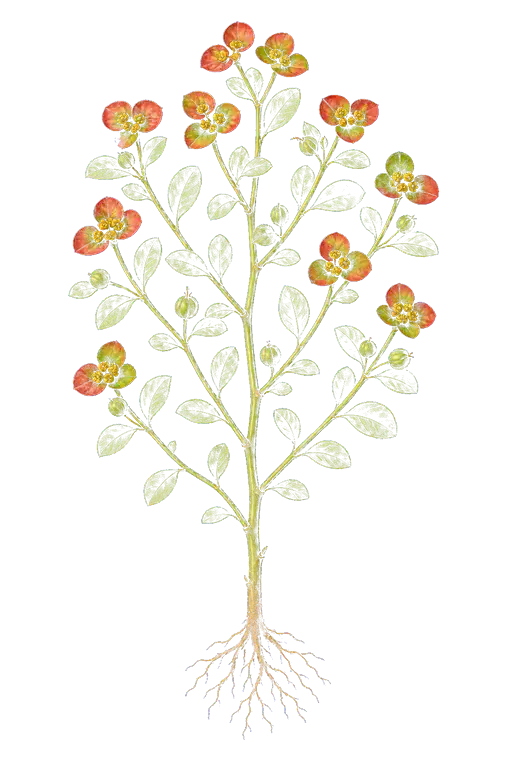
Milky, often caustic sap; small, usually unisexual flowers, frequently surrounded by colourful petal-like bracts.
The latex sap is the family's defining trait — historically a source of rubber, but capable of causing skin and eye irritation on contact.
Which Euphorbiaceae species is this?
Answer what you can see and narrow it down to a single Euphorbiaceae species.
How to recognise the Euphorbiaceae family
- 01
Milky or coloured latex
- 02
Unisexual flowers, often small
- 03
3-lobed capsule fruit common
To check whether a plant belongs to Euphorbiaceae, compare the leaf arrangement, leaf type, flower symmetry, fruit type, and one distinctive marker together. A single feature can mislead; the family pattern is the combination.
Learn the full family-identification methodTypical leaf characters
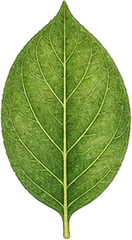

Characters typical of the family — individual species can vary.
Typical flower & fruit
- Flower symmetryActinomorphic (radially symmetrical)
- InflorescenceCyme
- FruitCapsule
Typical of the family — flowering plants only; species can vary.
Notable members
Families that can look similar
Phyllanthaceae
Compare against Phyllanthaceae when the plant shares similar leaves, flowers, or fruit. Confirm by checking the full family pattern.
Compare PhyllanthaceaeClusiaceae
Compare against Clusiaceae when the plant shares similar leaves, flowers, or fruit. Confirm by checking the full family pattern.
Compare ClusiaceaeFlacourtiaceae
Compare against Flacourtiaceae when the plant shares similar leaves, flowers, or fruit. Confirm by checking the full family pattern.
Compare FlacourtiaceaeHypericaceae
Compare against Hypericaceae when the plant shares similar leaves, flowers, or fruit. Confirm by checking the full family pattern.
Compare HypericaceaeAll 198 species in EUPHORBIACEAE
- Short-Spike CopperleafAcalypha brachystachya
- Fringed AcalyphaAcalypha ciliata
- Birch-Leaved Cat TailAcalypha fruticosa
- Cat's Tail, Chenille Plant, Red-Hot Cat's Tail, Foxtail, Red Hot PokerAcalypha hispida
- Indian AcalyphaAcalypha indica
- Toothed Bract Indian CopperleafAcalypha lanceolata
- Panicled AcalyphaAcalypha paniculata
- CopperleafAcalypha wilkesiana
- Nilgiri ActephilaActephila excelsa
- Leaf Litter PlantAgrostistachys borneensis
- Leaf-Litter PlantAgrostistachys indica
- Candle-Nut Tree, Belgaum Walnut, Candlenut Tree, Candlenut Oil Tree, Candleberry, Indian Walnut, Varnish TreeAleurites moluccanus
- Sour Currant ShrubAntidesma acidum
- Chinese Laurel, Salamander TreeAntidesma bunius
- Black Currant TreeAntidesma ghaesembilla
- Deccan AporosaAporosa lindleyana
- Indo-China AlderAporosa octandra
- Koli KukkeBaccaurea courtallensis
- Burmese GrapeBaccaurea ramiflora
- Bishopweed, Bischofia, Javawood, ToogBischofia javanica
- Umbelled BlachiaBlachia umbellata
- Bishop WoodBreynia retusa
- Officinal BreyniaBreynia vitis-idaea
- Mountain BrideliaBridelia montana
- Spinous Kino TreeBridelia retusa
- Climbing BrideliaBridelia stipularis
- Pop-Gun SeedBridelia tomentosa
- SuryavartiChrozophora rottleri
- Toxic GooseberryCleistanthus collinus
- Tree SpinachCnidoscolus aconitifolius
- Variegated CrotonCodiaeum variegatum
- Railway Weed, Riverside WeedCroton bonplandianus
- Climbing CrotonCroton caudatus
- Sahyadri CrotonCroton gibsonianus
- Devil's GoadCroton roxburghii
- Ceylon CrotonCroton zeylanicus
- Assam BoxwoodDrypetes assamica
- Oblong-Leaf BoxwoodDrypetes oblongifolia
- Indian Amulet Tree, Putranjiva, Officinal DrypetesDrypetes roxburghii
- Hedge BoxwoodDrypetes sepiaria
- Antique SpurgeEuphorbia antiquorum
- Leafless Milk HedgeEuphorbia caducifolia
- Sind Prostrate SpurgeEuphorbia clarkeana
- Strapwort SpurgeEuphorbia corrigioloides
- Caribbean Copper PlantEuphorbia cotinifolia
- Crested SpurgeEuphorbia cristata
- Fire On The MountainEuphorbia cyathophora
- Stemless SpurgeEuphorbia fusiformis
- Thornless Crown Of ThornsEuphorbia geroldii
- Green PoinsettiaEuphorbia heterophylla
- Common Spurge, Asthma Herb, Australian Asthma Herb, Pill-Bearing Spurge, Snake WeedEuphorbia hirta
- Graceful SpurgeEuphorbia hypericifolia
- PascuitaEuphorbia leucocephala
- Crown Of ThornsEuphorbia milii
- Indian Spurge TreeEuphorbia neriifolia
- Common Mil Hedge, Indian Spurge TreeEuphorbia nivulia
- Winged Seed SpurgeEuphorbia notoptera
- Prostrate SandmatEuphorbia prostrata
- Christmas Flower, PoinsettiaEuphorbia pulcherrima
- Covered-Flower SpurgeEuphorbia pycnostegia
- Common Hill SpurgeEuphorbia rothiana
- Sullu SpurgeEuphorbia royleana
- Matted SandmatEuphorbia serpens
- Crown Of ThornsEuphorbia splendens
- Milk Hedge, Indian Tree Spurge, Milk Bush, Pencil BushEuphorbia tirucalli
- Devil's BackboneEuphorbia tithymaloides
- Spiral SpurgeEuphorbia tortilis
- African Milk BushEuphorbia umbellata
- Malabar Spurge TreeEuphorbia vajravelui
- Blinding Tree, AgallochaExcoecaria agallocha
- Chinese CrotonExcoecaria cochinchinensis
- Deccan Blinding TreeExcoecaria oppositifolia
- White Catamaran TreeGivotia moluccana
- BhomaGlochidion ellipticum
- Deccan Cheese TreeGlochidion hohenackeri
- Deccan Cheese TreeGlochidion hohenackeri var. johnstonei
- Large-Leaved Abacus PlantGlochidion lanceolarium
- White Catamaran TreeGlochidion velutinum
- Umbrella Cheese TreeGlochidion zeylanicum
- Brasilian RubberHevea brasiliensis
- Willow-Leaved Water CrotonHomonoia riparia
- Sand-Box TreeHura crepitans
- Purging Nut, Physic Nut, Barbados Nut, Curcas Nut, JatrophaJatropha curcas
- Glandular JatrophaJatropha glandulifera
- Bellyache Bush, Cotton Leaf, Puppet Seed Plant, Physic Nut, Sibidigua, Tua-TuaJatropha gossypiifolia
- Spicy Jatropha, Coral Plant, Peregrina, Physic NutJatropha integerrima
- Gouty-Stemmed Jatropha, Gout Stick, Gatemala Rhubarb, TartogoJatropha podagrica
- Tanjore JatrophaJatropha tanjorensis
- Hairy JatrophaJatropha villosa
- Arara Nut-TreeJoannesia princeps
- Indian MacarangaMacaranga indica
- Indian Lotus CrotonMacaranga peltata
- Yellow-Spotted KamalaMallotus aureopunctatus
- Climbing KaamlaMallotus beddomei
- Kamala Tree, Monkey Face TreeMallotus philippensis
- Resinous KamalaMallotus resinosus
- Rusty KamalaMallotus tetracoccus
- Tapioca, CassavaManihot esculenta
- Ceara Rubber Tree, Manicoba RubberManihot glaziovii
- Mercury DoughwoodMicrococca mercurialis
- Paracroton Pendulus Subsp. ZeylanicusParacroton pendulus subsp. zeylanicus
- Devil's Backbone, Zigzag Plant, Jacob's LadderPedilanthus tithymaloides
- Star Gooseberry, GrosellaPhyllanthus acidus
- Carry-Me-Seed, PhyllanthusPhyllanthus amarus
- NiruriPhyllanthus debilis
- Indian Gooseberry, Emblic MyrobalanPhyllanthus emblica
- Gulf LeafflowerPhyllanthus fraternus
- Deccan GooseberryPhyllanthus leschenaultii
- Madras Leaf-FlowerPhyllanthus maderaspatensis
- Lebombo PotatobushPhyllanthus pinnatus
- Wild GooseberryPhyllanthus polyphyllus
- Potato-SmellPhyllanthus reticulatus
- Kozhikode Leaf-FlowerPhyllanthus rheedei
- Mascarene Island Leaf-FlowerPhyllanthus tenellus
- ChamberbitterPhyllanthus urinaria
- Seed-Under-LeafPhyllanthus virgatus
- Philippine Tung TreeReutealis trisperma
- Castor Plant, Castorbean, Krapata, Palma Christi, RicinRicinus communis
- Tiger's Milk SpruceSapium insigne
- Chines Tallow TreeSapium sebiferum
- Chikurmanis, SauropusSauropus androgynus
- Creeping SebastianaSebastiania chamaelea
- Spinous FluggeaSecurinega leucopyrus
- False LimeSuregada multiflora
- African Milk BushSynadenium grantii
- Forget-Me-Not, Indian Stinging NettleTragia involucrata
- Cannabis Leaf NettleTragia plukenetii
- Gamari, Gutel, Fals White TeakTrewia nudiflora
- Tunge Oil TreeVernicia fordii
- Acalypha alnifolia
- Antidesma menasu
- Antidesma zeylanicum
- Aporosa bourdillonii
- Aporosa fusiformis
- Baliospermum montanum
- Blachia calycina
- Blachia denudata
- Blachia reflexa
- Bridelia cinerascens
- Bridelia crenulata
- Chrozophora prostrata
- Cleidion javanicum
- Cleidion nitidum
- Cleidion spiciflorum
- Cleistanthus malabaricus
- Cleistanthus patulus
- Cleistanthus travancorensis
- Croton hirtus
- Croton laccifer
- Croton malabaricus
- Croton scabiosus
- Dalechampia velutina
- Dimorphocalyx glabellus
- Dimorphocalyx glabellus var. lawianus
- Dimorphocalyx lawianus
- Drypetes confertiflora
- Drypetes porteri
- Drypetes venusta
- Epiprinus mallotiformis
- Euphorbia deccanensis
- Euphorbia deccanensis var. nallamalayana
- Euphorbia elegans
- Euphorbia indica
- Euphorbia kadapensis
- Euphorbia longistyla
- Euphorbia senguptae
- Excoecaria crenulata
- Fahrenheitia zeylanica
- Glochidion candolleanum
- Glochidion tirupathiense
- Glochidion tomentosum
- Homonoia retusa
- Lasiococca comberi
- Mallotus repandus
- Mallotus stenanthus
- Margaritaria indica
- Meineckia longipes
- Micrococca beddomei
- Mischodon zeylanicus
- Paracroton integrifolius
- Phyllanthus airy-shawii
- Phyllanthus gageanus
- Phyllanthus gardnerianus
- Phyllanthus indofischeri
- Phyllanthus longiflorus
- Phyllanthus megacarpus
- Phyllanthus narayanswamii
- Phyllanthus rotundifolius
- Phyllanthus scabrifolius
- Phyllanthus singampattianus
- Phyllanthus talbotii
- Reidia floribunda
- Sauropus bacciformis
- Sauropus quadrangularis
- Sauropus saksenanus
- Securinega virosa
- Suregada angustifolia
- Trewia polycarpa
Identify any Euphorbiaceae plant in seconds
Point your camera and SASYA names the species on-device — offline and private.
Download SASYA — Free