
Gangiva / Blinding Tree
Excoecaria agallocha
Also known as Agallocha
- Habit
- Tree
- Found in India
- Kerala, Maharashtra, West Bengal & more
- Flowering
- February-June
Plant Details
- Scientific name
- Excoecaria agallocha
- Genus
- Excoecaria
- Family
- Euphorbiaceae
- Habit
- Tree
- Habitat
- Banks of backwaters and mangrove forests
- Native to
- India to Pacific Islands
- Distribution
- India, Sri Lanka to Formosa, Malaysia, Pacific Islands, Australia, Ryu Kyu Islands
- Found in India
- Kerala, Maharashtra, West Bengal, Andaman & Nicobar Islands, Goa, Puducherry
- Flowering & fruiting
- February-June
- Conservation status
- Least Concern (LC)
Leaf characters
- Arrangement
- Alternate
- Margin
- Variable


Typical of the Euphorbiaceae family — a field-mark hint, not measured for this exact species.
Flower & fruit characters
Typical of the Euphorbiaceae family — flowering plants only; individual species can differ.
Local Names
- Hindi
- Gangiva, Tejbala, গেওয়া
- Bengali
- gewa, গেওয়া
- Tamil
- தில்லை tillai, அகதி akati, ஆக்கொல்லி akkolli
- Kannada
- hara, haro, haaro gida
- Malayalam
- കോമട്ടി koomatti, കടപ്പാല
- Marathi
- गेवा geva
About Gangiva
Blinding Tree (Excoecaria agallocha) is a tree belonging to the Euphorbiaceae family (Spurge/Euphorbia family). Members of this family are generally characterised by alternate/opposite simple/compound leaves, cyathium/raceme/spike flower clusters, capsule (regma) fruit. It is typically found in banks of backwaters and mangrove forests. Native to India to Pacific Islands, it is distributed across India, Sri Lanka to Formosa, Malaysia, Pacific Islands, Australia, Ryu Kyu Islands. Flowering and fruiting are typically seen during February-June. The species is valued in traditional medicine. Its conservation status has been assessed as Least Concern (LC).
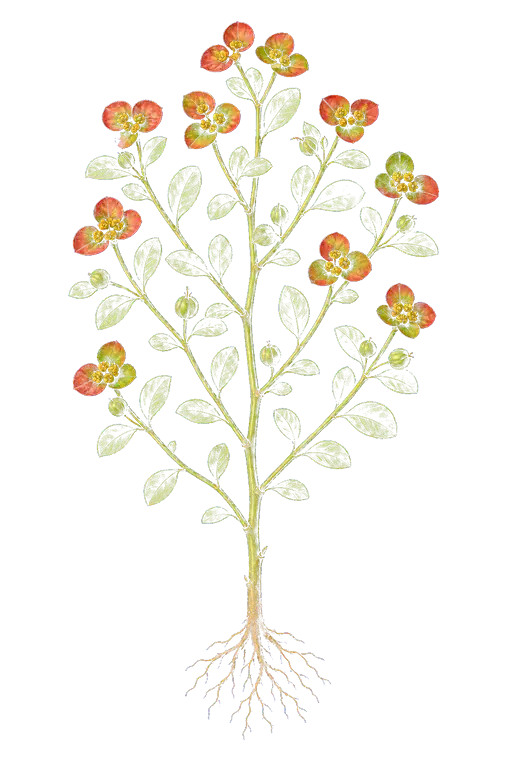
Euphorbiaceae
Spurge/Euphorbia family
Gangiva belongs to the Euphorbiaceae family.
The illustration represents the family — not necessarily this exact species.
Explore the Euphorbiaceae family →Snap it. Know it.
Point your camera at Gangiva or any plant and SASYA identifies it instantly — on-device, offline, and private.