Rabar / Brasilian Rubber
Hevea brasiliensis
- Habit
- Tree
- Found in India
- Kerala, Maharashtra, Tamil Nadu & more
- Flowering
- May-June
How to identify Rabar
Identify Rabar by combining habit, leaf characters, flower or fruit details, location, and its family pattern. Do not rely on one feature alone.
- Look for a tree habit.
- Check the distinctive field mark: Commercially tapped for natural rubber latex.
- Confirm leaf type: Trifoliate.
- Confirm leaf margin: Entire (smooth edge).
- Confirm flower colour: Green.
- Confirm fruit type: Capsule.
- In season, compare flowering and fruiting time: May-June.
Plant Details
- Scientific name
- Hevea brasiliensis
- Genus
- Hevea
- Family
- Euphorbiaceae
- Habit
- Tree
- Habitat
- Cultivated
- Habitat type
- Cultivated
- Native to
- Brazil, Venezuela, Peru, Ecuador and Colombia
- Distribution
- Widely cultivated in Tropics
- Found in India
- Kerala, Maharashtra, Tamil Nadu, Tripura, Andaman & Nicobar Islands
- Flowering & fruiting
- May-June
- Conservation status
- Not Evaluated (NE)
Leaf characters
- Leaf type
- TrifoliaterecordedA compound leaf made of exactly three leaflets.“The leaves have three leaflets and are spirally arranged.” — Wikipedia, CC BY-SA 4.0
- Leaf margin
- Entire (smooth edge)recorded
- Leaf surface
- Glabrous (smooth, hairless)recorded
Typical of the family
- Arrangement
- Alternate
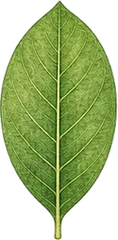
Characters marked “recorded” are for Rabar itself; the rest are typical of the Euphorbiaceae family.
Flower & fruit characters
- Flower colour
- GreenrecordedGreen or greenish
- Fruit type
- CapsulerecordedA dry fruit from a fused ovary that splits open at maturity to release seeds.“The fruit is a capsule that contains three large seeds;” — Wikipedia, CC BY-SA 4.0
Typical of the family
- Flower symmetry
- Actinomorphic (radially symmetrical)
- Inflorescence
- Cyme
- Fruit
- Capsule
Characters marked “recorded” are for Rabar itself; the rest are typical of the Euphorbiaceae family — flowering plants only.
Local Names
- Hindi
- रबड़,रबर rabar
- Bengali
- প্যারা রাবার
- Tamil
- பிரேசிலிய ரப்பர் மரம்
- Telugu
- రబ్బరు చెట్టు
- Kannada
- ರಬ್ಬರಿನಮರ
- Malayalam
- റബ്ബർ, റബ്ബർ മരം, Hevea brasiliensis
About Rabar
Brasilian Rubber (Hevea brasiliensis) is a tree in the Euphorbiaceae family. In India it has been recorded in Kerala, Maharashtra, Tamil Nadu and 2 other states. It is cultivated. Flowering and fruiting run from May to June.
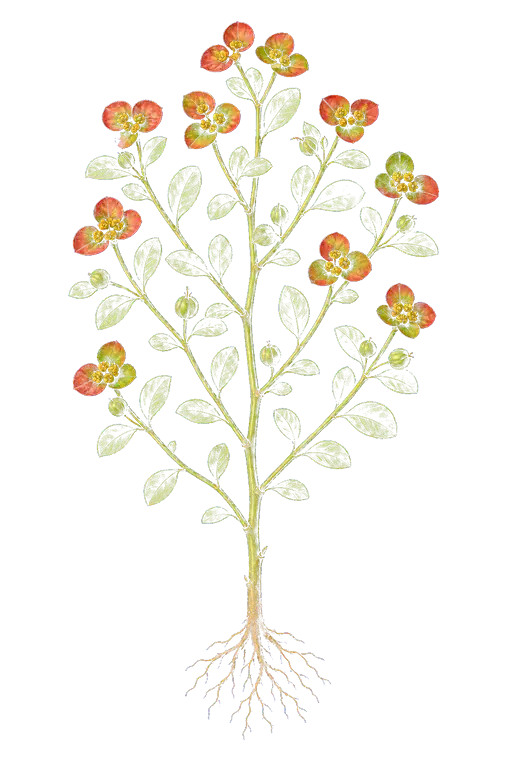
Euphorbiaceae
Spurge/Euphorbia family
Rabar belongs to the Euphorbiaceae family.
The illustration represents the family — not necessarily this exact species.
Explore the Euphorbiaceae familySnap it. Know it.
Point your camera at Rabar or any plant and SASYA identifies it instantly — on-device, offline, and private.
Common plant problems
If you are starting from symptoms instead of a diagnosis, use the plant disease symptom checker to narrow the cause before treating.
All plant problem & care guides