
Sherni / Willow-Leaved Water Croton
Homonoia riparia
- Habit
- Shrub
- Found in India
- Karnataka, Andaman & Nicobar Islands, Maharashtra & more
- Flowering
- December-May
How to identify Sherni
Identify Sherni by combining habit, leaf characters, flower or fruit details, location, and its family pattern. Do not rely on one feature alone.
- Look for a shrub habit.
- Confirm leaf margin: Toothed (serrate/dentate edge).
- Confirm leaf surface: Tomentose (woolly, matted hairs).
- Confirm flower colour: Green.
- In season, compare flowering and fruiting time: December-May.
- In India, compare location records such as Karnataka, Andaman & Nicobar Islands, Maharashtra, Kerala and nearby regions.
- Confirm it sits within the Euphorbiaceae family pattern, then compare close relatives before deciding it is Sherni.
Plant Details
- Scientific name
- Homonoia riparia
- Genus
- Homonoia
- Family
- Euphorbiaceae
- Habit
- Shrub
- Habitat
- Along river and stream banks
- Habitat type
- Wetland
- Distribution
- India, Southeast Asia, China, Formosa, New Guinea, Moluccas, Sunda Islands, Malaysia
- Found in India
- Karnataka, Andaman & Nicobar Islands, Maharashtra, Kerala, Assam, Meghalaya, Odisha, Tamil Nadu, Madhya Pradesh, Uttarakhand, Gujarat, Mizoram, Sikkim, West Bengal, Arunachal Pradesh
- Flowering & fruiting
- December-May
- Conservation status
- Least Concern (LC)
Leaf characters
- Leaf margin
- Toothed (serrate/dentate edge)recorded
- Leaf surface
- Tomentose (woolly, matted hairs)recorded
Typical of the family
- Arrangement
- Alternate
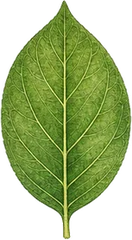

Characters marked “recorded” are for Sherni itself; the rest are typical of the Euphorbiaceae family.
Flower & fruit characters
- Flower colour
- GreenrecordedGreen or greenish
Typical of the family
- Flower symmetry
- Actinomorphic (radially symmetrical)
- Inflorescence
- Cyme
- Fruit
- Capsule
Characters marked “recorded” are for Sherni itself; the rest are typical of the Euphorbiaceae family — flowering plants only.
Local Names
- Hindi
- शेरनी Sherni, Sherni
- Tamil
- காட்டலரி kattalari, Kattalari
- Telugu
- అడవి గన్నేరు Adavi ganneru, Adavi ganneru
- Kannada
- ಹೊಳೆ ನಗೆ hole nage, ನೀರುಕಣಿಗಲು Niru kanigalu, Niru kanigalu
- Malayalam
- neervanchi, puzhavanchi, Neervanchi
- Marathi
- रान कणेर raan kaner, शेरणी sherni, Raan kaner
- Sanskrit
- Kshudrapashanabheda
- Odia
- Thotthori
About Sherni
A member of the Euphorbiaceae family, Willow-Leaved Water Croton (Homonoia riparia) is a shrub. In India it has been recorded in Karnataka, Andaman & Nicobar Islands, Maharashtra and 12 other states. It grows in along river and stream banks. Flowering and fruiting run from December to May.
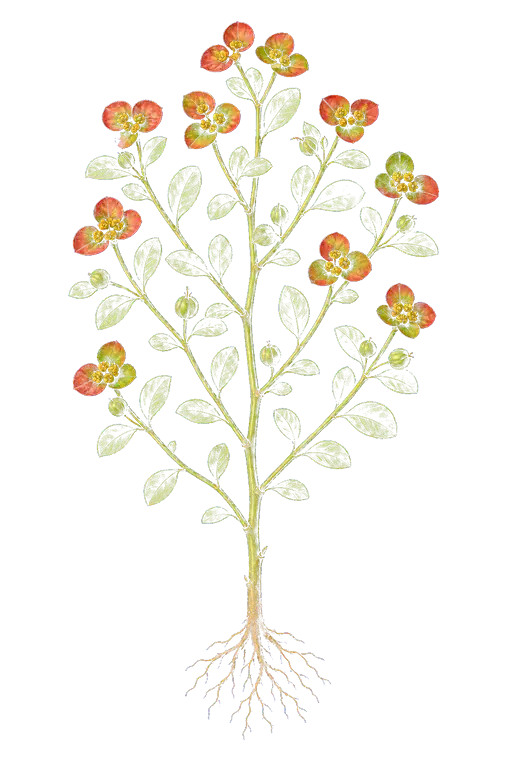
Euphorbiaceae
Spurge/Euphorbia family
Sherni belongs to the Euphorbiaceae family.
The illustration represents the family — not necessarily this exact species.
Explore the Euphorbiaceae familySnap it. Know it.
Point your camera at Sherni or any plant and SASYA identifies it instantly — on-device, offline, and private.
Common plant problems
If you are starting from symptoms instead of a diagnosis, use the plant disease symptom checker to narrow the cause before treating.
All plant problem & care guides