
Kukkuta / Rusty Kamala
Mallotus tetracoccus
- Habit
- Tree
- Found in India
- Tamil Nadu, Karnataka, Assam & more
- Flowering
- June-April
How to identify Kukkuta
Identify Kukkuta by combining habit, leaf characters, flower or fruit details, location, and its family pattern. Do not rely on one feature alone.
- Look for a tree habit.
- Confirm leaf arrangement: Alternate.
- Confirm leaf type: Simple.
- Confirm flower colour: Green.
- Confirm flower arrangement: Panicle.
- In season, compare flowering and fruiting time: June-April.
- In India, compare location records such as Tamil Nadu, Karnataka, Assam, Kerala and nearby regions.
Plant Details
- Scientific name
- Mallotus tetracoccus
- Genus
- Mallotus
- Family
- Euphorbiaceae
- Habit
- Tree
- Habitat
- Evergreen, semi-evergreen and shola forests, also in the plains
- Habitat type
- Forest
- Distribution
- Sri Lanka, India, Myanmar, Himalayas, South China
- Found in India
- Tamil Nadu, Karnataka, Assam, Kerala, West Bengal, Sikkim, Arunachal Pradesh, Meghalaya
- Flowering & fruiting
- June-April
- Conservation status
- Not Evaluated (NE)
Leaf characters
- Leaf arrangement
- AlternaterecordedOne leaf per node, arranged in a spiral or zigzag up the stem.“The thinly leathery leaves are simple, alternate, and spirally arranged on the twigs.” — Wikipedia, CC BY-SA 4.0
- Leaf type
- SimplerecordedA single, undivided leaf blade.“The thinly leathery leaves are simple, alternate, and spirally arranged on the twigs.” — Wikipedia, CC BY-SA 4.0
- Leaf shape
- OvaterecordedEgg-shaped, broader near the base.“The lamina is 8–25 cm long x 6.5–20 cm broad, and variable in shape from young saplings to large trees, ranging from more or less circular to deltoid or broadly egg-shaped.” — Wikipedia, CC BY-SA 4.0
- Leaf margin
- ToothedrecordedA saw-like or jagged edge (serrate or dentate).“The leaf margin is entire or glandular dentate (toothed or lobed).” — Wikipedia, CC BY-SA 4.0
- Leaf surface
- PubescentrecordedCovered in short, soft hairs.“The underside of leaves is velvety white due to stellate hairs, contrasting with the bright green and glabrous upper surface.” — Wikipedia, CC BY-SA 4.0
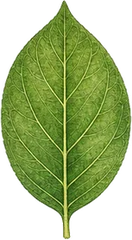

Typical of the family

Characters marked “recorded” are for Kukkuta itself; the rest are typical of the Euphorbiaceae family.
Flower & fruit characters
- Flower colour
- GreenrecordedGreen or greenish
- Flower arrangement
- PaniclerecordedA branching cluster of clusters.“The inflorescences are terminal, branched, panicles about 12–20 cm long, on stout peduncles, holding rusty tomentose buds and yellow or yellowish-white flowers.” — Wikipedia, CC BY-SA 4.0
- Fruit type
- CapsulerecordedA dry fruit from a fused ovary that splits open at maturity to release seeds.“The fruiting pedicel is about 5 mm long attached to a fruit (1 cm in diameter) which is a depressed roundish capsule covered in gray tomentose and softly spiny stellate hairs.” — Wikipedia, CC BY-SA 4.0
Typical of the family
- Flower symmetry
- Actinomorphic (radially symmetrical)
- Inflorescence
- Cyme
- Fruit
- Capsule
Characters marked “recorded” are for Kukkuta itself; the rest are typical of the Euphorbiaceae family — flowering plants only.
Local Names
- Nepali
- जोगी मालता jogi-malata, कस्रे मालता kasre-malata
- Bengali
- মারলেয়া marleya, পেঠালি pethali
- Kannada
- ಕುಕ್ಕುಟ kukkuta, ತಂಬಿಟ್ಟು thambittu, ಉಪ್ಪಾಲ uppaala
- Malayalam
- ആടുകണ്ണി aadukanni, വട്ടക്കുമ്പിൾ vattakkumpil, വട്ടക്കുമ്പിൾ
- Marathi
- चौपुडी शेंदरी chaupudi shendri
About Kukkuta
Rusty Kamala (Mallotus tetracoccus) belongs to the Euphorbiaceae family, where it grows as a tree. In India it has been recorded in Tamil Nadu, Karnataka, Assam and 5 other states. It grows in evergreen, semi-evergreen and shola forests, also in the plains. Flowering and fruiting run from June to April.
Uses
Locally it is long used in traditional medicine, tapped for gum or resin and burnt as firewood or charcoal. Those medicinal uses are traditional attributions, not medical advice.
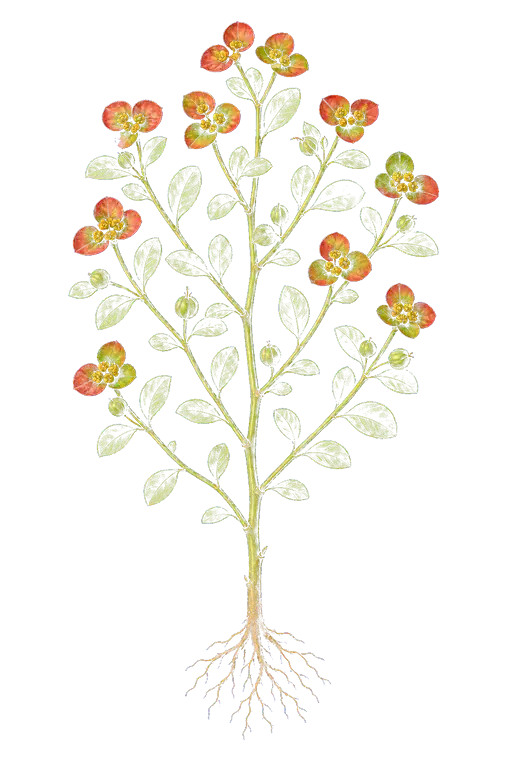
Euphorbiaceae
Spurge/Euphorbia family
Kukkuta belongs to the Euphorbiaceae family.
The illustration represents the family — not necessarily this exact species.
Explore the Euphorbiaceae familySnap it. Know it.
Point your camera at Kukkuta or any plant and SASYA identifies it instantly — on-device, offline, and private.
Common plant problems
If you are starting from symptoms instead of a diagnosis, use the plant disease symptom checker to narrow the cause before treating.
All plant problem & care guides