Bara Dudhi / Common Spurge
Euphorbia hirta
Also known as Asthma Herb, Australian Asthma Herb, Pill-Bearing Spurge, Snake Weed
- Habit
- Herb
- Found in India
- Maharashtra, Kerala, Telangana & more
- Flowering
- Throughout the year
How to identify Bara Dudhi
Identify Bara Dudhi by combining habit, leaf characters, flower or fruit details, location, and its family pattern. Do not rely on one feature alone.
- Look for a herb habit.
- Check the distinctive field mark: Common hairy prostrate roadside weed.
- Confirm leaf arrangement: Opposite.
- Confirm leaf type: Simple.
- Confirm flower colour: Green.
- Confirm fruit type: Capsule.
- In season, compare flowering and fruiting time: Throughout the year.
Plant Details
- Scientific name
- Euphorbia hirta
- Genus
- Euphorbia
- Family
- Euphorbiaceae
- Habit
- Herb
- Habitat
- Degraded forests, roadsides, open places and cultivated fields
- Habitat type
- Forest, Cultivated, Wasteland
- Native to
- Tropical America
- Distribution
- Pantropical
- Found in India
- Maharashtra, Kerala, Telangana, Tamil Nadu, Andhra Pradesh, West Bengal, Gujarat, Karnataka, Rajasthan, Uttarakhand, Uttar Pradesh, Odisha, Madhya Pradesh, Chhattisgarh, Assam, Goa, Mizoram, Bihar, Delhi, Puducherry, Punjab, Chandigarh, Haryana, Himachal Pradesh, Jharkhand, Andaman & Nicobar Islands, Jammu & Kashmir, Arunachal Pradesh, Lakshadweep, Manipur, Meghalaya, Nagaland, Sikkim, Tripura
- Flowering & fruiting
- Throughout the year
- Conservation status
- Not Evaluated (NE)
Leaf characters
- Leaf arrangement
- OppositerecordedTwo leaves arise from the stem at the same point, facing each other.“Leaves occur in opposite pairs on the stem.” — Wikipedia, CC BY-SA 4.0
- Leaf type
- SimplerecordedA single, undivided leaf blade.“The leaves have an oblique base and are simple, elliptical to slightly rhombic, hairy (on both upper and lower surfaces but particularly on the veins on the lower leaf surface), wi” — Wikipedia, CC BY-SA 4.0
- Leaf shape
- EllipticrecordedWidest at the middle, tapering evenly at both ends.“The leaves have an oblique base and are simple, elliptical to slightly rhombic, hairy (on both upper and lower surfaces but particularly on the veins on the lower leaf surface), wi” — Wikipedia, CC BY-SA 4.0
- Leaf margin
- ToothedrecordedA saw-like or jagged edge (serrate or dentate).“The leaves have an oblique base and are simple, elliptical to slightly rhombic, hairy (on both upper and lower surfaces but particularly on the veins on the lower leaf surface), wi” — Wikipedia, CC BY-SA 4.0
- Leaf surface
- PubescentrecordedCovered in short, soft hairs.“The leaves have an oblique base and are simple, elliptical to slightly rhombic, hairy (on both upper and lower surfaces but particularly on the veins on the lower leaf surface), wi” — Wikipedia, CC BY-SA 4.0
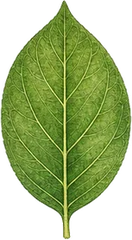
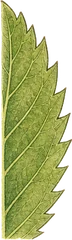
Typical of the family
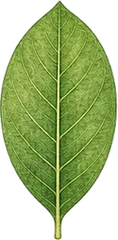
Characters marked “recorded” are for Bara Dudhi itself; the rest are typical of the Euphorbiaceae family.
Flower & fruit characters
- Flower colour
- GreenrecordedGreen or greenish
- Fruit type
- CapsulerecordedA dry fruit from a fused ovary that splits open at maturity to release seeds.“The fruit is a capsule with three valves (creating 3 sides), uniformly appressed hairy, containing tiny (0.7–0.9 mm), oblong, four-sided orange to pink or red seeds.” — Wikipedia, CC BY-SA 4.0
Typical of the family
- Flower symmetry
- Actinomorphic (radially symmetrical)
- Inflorescence
- Cyme
- Fruit
- Capsule
Characters marked “recorded” are for Bara Dudhi itself; the rest are typical of the Euphorbiaceae family — flowering plants only.
Local Names
- Hindi
- बड़ा दुधी Bara dudhi, बड़ी दुधी
- Nepali
- आँख्ले झार Ankhle Jhaar, दुधे Dudhe, दुधे झार Dudhe Jhaar
- Bengali
- Barokarni, দুধিয়া
- Tamil
- Ammam Paccharisi, அம்மன் பச்சரிசி, அம்மான் பச்சரிசி
- Telugu
- Nanabalu, రెడ్డివారి నానబాలు
- Kannada
- ಹಚ್ಚೆಗಿಡ Hachchedida, ಕೆಂಪುನೆನೆ ಅಕ್ಕಿ ಸೊಪ್ಪು Kempu nene akki soppu, ಅಚ್ಚೆಚ್ಚೆ Accheche
- Malayalam
- Nelapalai, ചിത്തിരപ്പാല, നിലപ്പാല
- Marathi
- दुधी Dudhi, दुधी, नायटी
Bara Dudhi in India
This low, hairy weed, known as बड़ा दुधी Bara dudhi (Hindi), Ammam Paccharisi (Tamil), Nanabalu (Telugu), ಹಚ್ಚೆಗಿಡ Hachchedida (Kannada), Nelapalai (Malayalam), दुधी Dudhi (Marathi), is one of the most common milky-sapped weeds around Indian homes and gardens. Euphorbia hirta is found across Maharashtra, Kerala, Telangana, Tamil Nadu, Andhra Pradesh, Gujarat, especially in disturbed, sunny ground.
Uses
It has a long history of traditional folk and Ayurvedic use, particularly for respiratory complaints (hence its English name 'asthma herb') — an attributed traditional use, not a medical claim.
How to Identify Bara Dudhi
A low, spreading, hairy annual herb that oozes white milky sap when broken. Leaves are small, oval and toothed, growing in opposite pairs, often with a faint dark blotch. Tiny cup-shaped flower clusters sit in the leaf axils, followed by small three-lobed capsules.
Frequently Asked Questions
- What is Common Spurge called in different Indian languages?
- बड़ा दुधी Bara dudhi (Hindi); Ammam Paccharisi (Tamil); Nanabalu (Telugu); ಹಚ್ಚೆಗಿಡ Hachchedida (Kannada); Nelapalai (Malayalam); दुधी Dudhi (Marathi); Barokarni (Bengali).
- Why is it called 'asthma herb' in English?
- It has a long history of traditional use for respiratory complaints in several folk medicine systems, which is the origin of its common English name — not a claim of proven medical effect.
- Is the milky sap dangerous?
- Like many spurges (Euphorbia species), the sap can irritate skin and eyes on contact, so it's best handled carefully and washed off promptly.
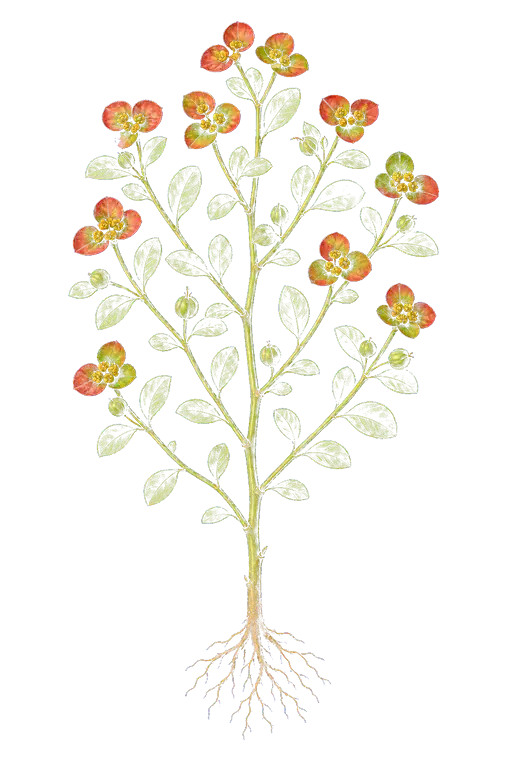
Euphorbiaceae
Spurge/Euphorbia family
Bara Dudhi belongs to the Euphorbiaceae family.
The illustration represents the family — not necessarily this exact species.
Explore the Euphorbiaceae familySnap it. Know it.
Point your camera at Bara Dudhi or any plant and SASYA identifies it instantly — on-device, offline, and private.
Common plant problems
If you are starting from symptoms instead of a diagnosis, use the plant disease symptom checker to narrow the cause before treating.
All plant problem & care guidesMore in Euphorbiaceae
View all EuphorbiaceaeSources: GBIF — Euphorbia hirta (India distribution & vernacular names) (CC BY 4.0) · Wikipedia — Euphorbia hirta (background/comprehension only) (CC BY-SA 4.0)