
A closer look at the living world.
Let’s read between the leaves.
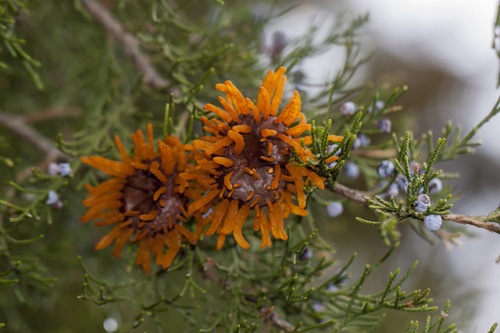
Rust, recognised by the v2 research classifier. Selected head-only result; CC0 / iNaturalist. Teaching an offline plant doctor to spot rust
I wanted a phone to name a plant’s problem, privately. Rust taught me why a better score could still leave someone more worried—and what I changed.
Read the field note
Field notes / Kodaikanal Looking for Rare Plants in Kodaikanal, and Finding Mostly Visitors
On a holiday in Kodaikanal I went looking for rare plants. Most of what I found was introduced, from gorse and Crofton weed to dawn flower. What each one is, and why the Palani Hills grasslands are shrinking.
Read the field note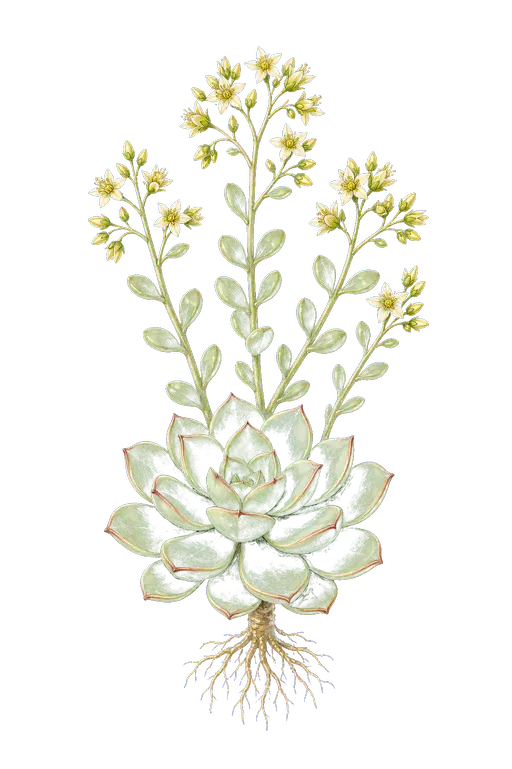
Crassulaceae family study / The article begins with Kalanchoe, a member of this family. Beyond Count Balancing: Using Vision-Language Models to Build Visually Diverse Training Datasets
How we used SigLIP embeddings to discover and fix hidden biases in a 788K-image plant classification dataset — flower color dominance, taxonomic synonyms, and data contamination.
Read the field note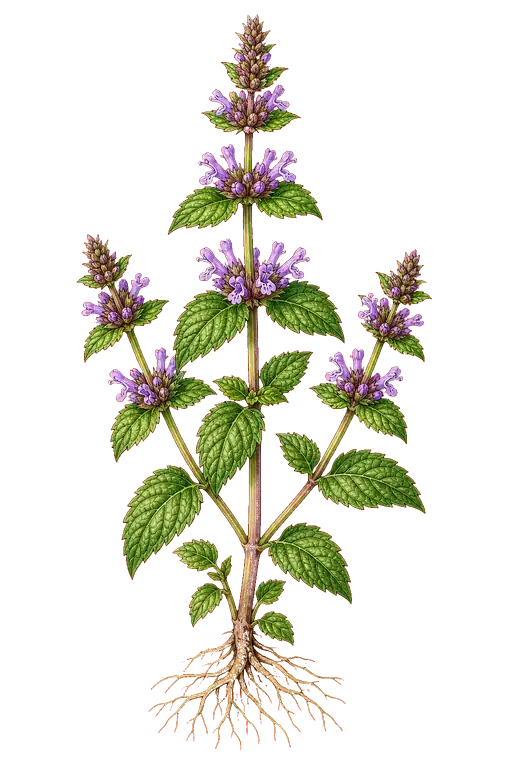
Lamiaceae family study / One of the family patterns explored in this article. Identifying Plant Families by Pattern: Turning a Printed Key into Data
Most plant apps answer 'what is this?'. Family-level pattern recognition answers 'how would I know?'. Here is how we encoded the patterns method as a trait ontology, what it can resolve, and where the data runs out.
Read the field note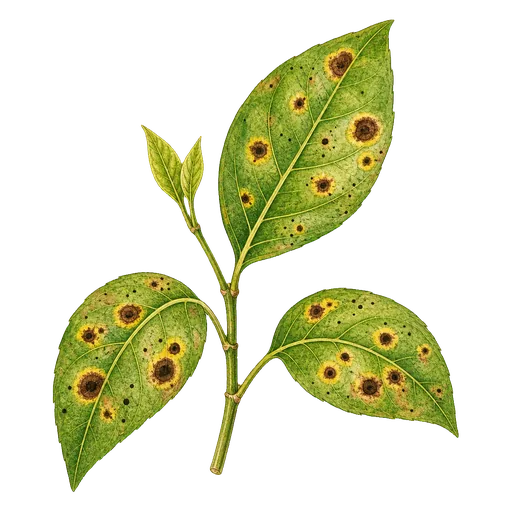
Leaf spotting / A symptom illustration, rather than a diagnosis. Choosing a Model for Plant Disease Detection: Datasets, Architectures, and Training
A practical guide to plant disease detection: how to actually use a dataset like PlantVillage, how to choose a model architecture for your use case, and why fine-tuning an existing model usually beats training one from scratch.
Read the field note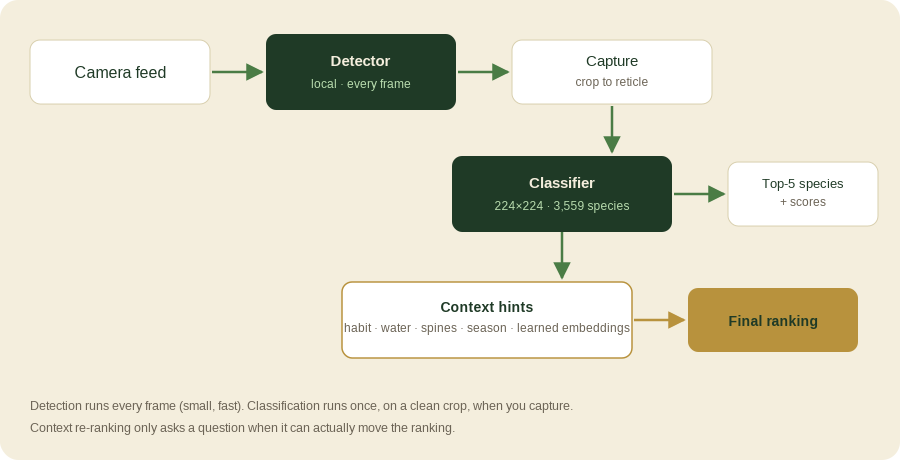
Under the hood / Detection, classification and context How SASYA Identifies a Plant — On Your Phone, Offline
An engineering deep-dive into SASYA's two-stage vision pipeline: a real-time detector that finds the plant, a 3,559-way classifier that names it, and the context re-ranking and learned embeddings that make a single photo more reliable.
Read the field note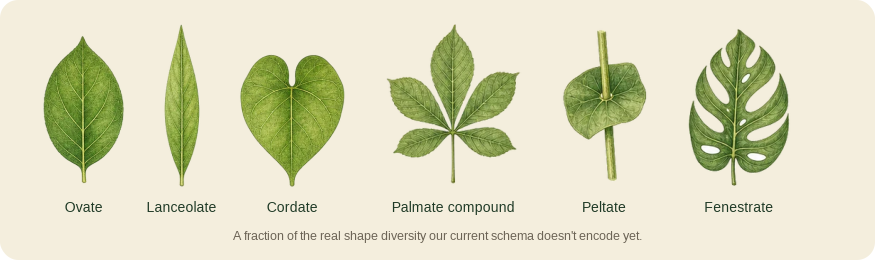
Reading leaves / Six shapes in the feature schema Encoding Leaf Morphology as a Feature Schema
How SASYA turns the botanical vocabulary of leaf shape, margin, and venation into a structured, filterable trait schema — and where that data actually comes from.
Read the field note