
Ratanjot / Purging Nut
Jatropha curcas
Also known as Physic Nut, Barbados Nut, Curcas Nut, Jatropha
- Habit
- Tree
- Found in India
- Maharashtra, Tamil Nadu, Karnataka & more
- Flowering
- Throughout the year
How to identify Ratanjot
Identify Ratanjot by combining habit, leaf characters, flower or fruit details, location, and its family pattern. Do not rely on one feature alone.
- Look for a tree habit.
- Check the distinctive field mark: Seeds pressed for biodiesel (physic nut).
- Confirm leaf arrangement: Alternate.
- Confirm leaf margin: Lobed.
- Confirm flower colour: Red.
- Confirm fruit type: Capsule.
- In season, compare flowering and fruiting time: Throughout the year.
Plant Details
- Scientific name
- Jatropha curcas
- Genus
- Jatropha
- Family
- Euphorbiaceae
- Habit
- Tree
- Native to
- New World tropics
- Distribution
- Tropics of the World
- Found in India
- Maharashtra, Tamil Nadu, Karnataka, Odisha, Chhattisgarh, Madhya Pradesh, Uttarakhand, Assam, West Bengal, Kerala, Telangana, Rajasthan, Andhra Pradesh, Mizoram, Bihar, Gujarat, Haryana, Himachal Pradesh, Tripura, Andaman & Nicobar Islands, Arunachal Pradesh, Jammu & Kashmir, Jharkhand, Manipur, Meghalaya, Delhi, Puducherry, Punjab, Sikkim, Uttar Pradesh
- Flowering & fruiting
- Throughout the year
- Conservation status
- Not Evaluated (NE)
Leaf characters
- Leaf arrangement
- AlternaterecordedOne leaf per node, arranged in a spiral or zigzag up the stem.“In general, the leaves are green to pale green, alternate to subopposite, and three- to five-lobed with a spiral phyllotaxis.” — Wikipedia, CC BY-SA 4.0
- Leaf margin
- LobedrecordedThe edge is divided into rounded or pointed sections that don't reach the midrib.“In general, the leaves are green to pale green, alternate to subopposite, and three- to five-lobed with a spiral phyllotaxis.” — Wikipedia, CC BY-SA 4.0
- Leaf surface
- Glabrous (smooth, hairless)recorded

Typical of the family
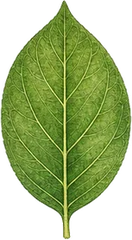

Characters marked “recorded” are for Ratanjot itself; the rest are typical of the Euphorbiaceae family.
Flower & fruit characters
- Flower colour
- Redrecorded
- Fruit type
- CapsulerecordedA dry fruit from a fused ovary that splits open at maturity to release seeds.“Seeds: the seeds are mature when the capsule changes from green to yellow.” — Wikipedia, CC BY-SA 4.0
Typical of the family
- Flower symmetry
- Actinomorphic (radially symmetrical)
- Inflorescence
- Cyme
- Fruit
- Capsule
Characters marked “recorded” are for Ratanjot itself; the rest are typical of the Euphorbiaceae family — flowering plants only.
Local Names
- Hindi
- जमाल घोटा Jamal ghota, रतनजोत Ratanjot, जंगली अरंडी Jangli arandi, ratanjyor
- Nepali
- सजीवन
- Bengali
- Bagbherenda, Bherenda, Sada verenda, সাদা ভেরেন্ডা
- Tamil
- Kattukkotai
- Telugu
- Nepalam, Adavi amudam, అడవి ఆముదము చెట్టు
- Kannada
- Kananeranda, ಕಾಚಿ ಗಿಡ
- Malayalam
- Kattamank, Katalavanakku, കടലാവണക്ക്
- Marathi
- Mogli Erand, Maraharalu, मोगली एरंड
Ratanjot in India
This shrub, known as जमाल घोटा Jamal ghota (Hindi), Kattukkotai (Tamil), Nepalam (Telugu), Kananeranda (Kannada), Kattamank (Malayalam), Mogli Erand (Marathi), is grown both as a living fence and for its oil-rich seeds. Jatropha curcas is found across Maharashtra, Tamil Nadu, Karnataka, Odisha, Chhattisgarh, Madhya Pradesh, tolerant of poor soils and drought.
Uses
Its seed oil has been studied and used as a biodiesel feedstock, and the shrub is commonly planted as a living, browsing-resistant boundary fence since livestock generally avoid it — but its seeds are toxic if eaten and should never be ingested.
How to Identify Ratanjot
A shrub with smooth, pale grey bark and broad, shallowly lobed leaves. Small greenish-yellow flowers cluster at the branch tips, followed by oval capsules that ripen yellow to brown and split into three sections, each releasing a black seed.
Frequently Asked Questions
- What is Purging nut called in different Indian languages?
- जमाल घोटा Jamal ghota (Hindi); Kattukkotai (Tamil); Nepalam (Telugu); Kananeranda (Kannada); Kattamank (Malayalam); Mogli Erand (Marathi); Bagbherenda (Bengali).
- Are jatropha seeds edible?
- No — the seeds are toxic if eaten and should never be consumed, despite superficially resembling other edible nuts.
- Why is it grown for biodiesel?
- Its seeds are rich in oil that can be processed into biodiesel, and because the shrub tolerates poor soil and low rainfall, it's been promoted for cultivation on land unsuited to food crops.
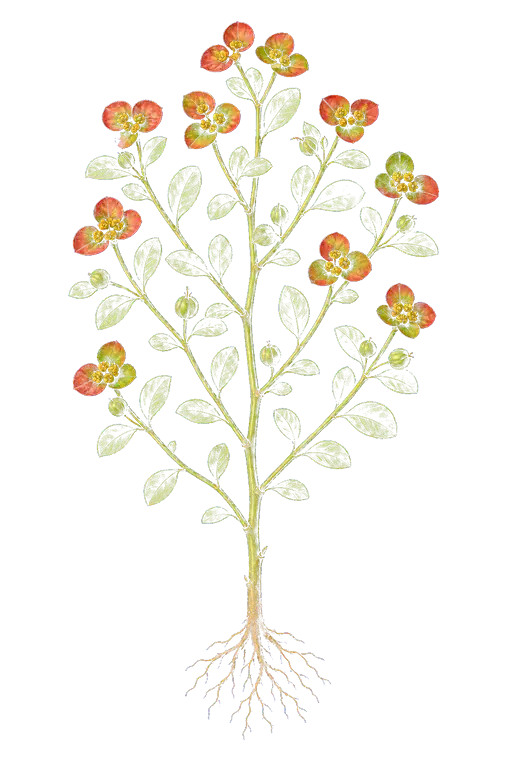
Euphorbiaceae
Spurge/Euphorbia family
Ratanjot belongs to the Euphorbiaceae family.
The illustration represents the family — not necessarily this exact species.
Explore the Euphorbiaceae familySnap it. Know it.
Point your camera at Ratanjot or any plant and SASYA identifies it instantly — on-device, offline, and private.
Common plant problems
If you are starting from symptoms instead of a diagnosis, use the plant disease symptom checker to narrow the cause before treating.
All plant problem & care guidesMore in Euphorbiaceae
View all EuphorbiaceaeSources: GBIF — Jatropha curcas (India distribution & vernacular names) (CC BY 4.0) · Wikipedia — Jatropha curcas (background/comprehension only) (CC BY-SA 4.0)