
Verbenaceae
Verbena/Teak family
A family of trees, shrubs, and herbs widespread in tropical and subtropical regions. Includes teak (Tectona grandis) — the world's premier hardwood — as well as ornamental lantanas and verbenas. Characterised by opposite leaves and 4-lobed corollas.
Browse all 62 species ↓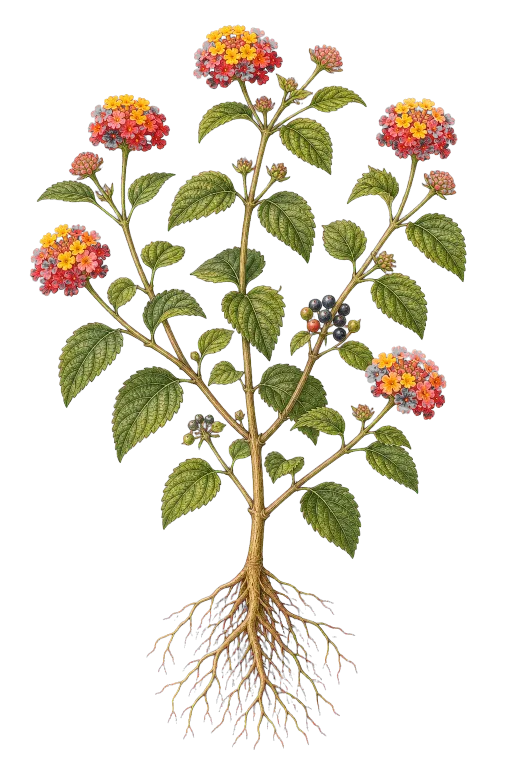
Opposite or whorled leaves on square-ish stems, with slightly irregular tubular flowers in elongated spikes and often wavy-edged petals.
Easily mistaken for the Mint family at a glance — the wavy petal edges and generally milder aroma are the giveaway.
Which Verbenaceae species is this?
Answer what you can see and narrow it down to a single Verbenaceae species.
How to recognise the Verbenaceae family
- 01
Opposite or whorled leaves
- 02
4–5-lobed tubular flowers in spikes
- 03
Drupe or schizocarp fruit
To check whether a plant belongs to Verbenaceae, compare the leaf arrangement, leaf type, flower symmetry, fruit type, and one distinctive marker together. A single feature can mislead; the family pattern is the combination.
Learn the full family-identification methodTypical leaf characters
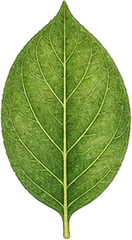
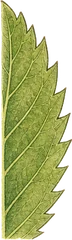
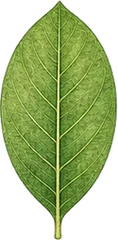
Characters typical of the family — individual species can vary.
Typical flower & fruit
- Flower symmetryZygomorphic (bilaterally symmetrical)
- InflorescenceCyme
- FruitDrupe
Typical of the family — flowering plants only; species can vary.
Notable members
Families that can look similar
Acanthaceae
Compare against Acanthaceae when the plant shares similar leaves, flowers, or fruit. Confirm by checking the full family pattern.
Compare AcanthaceaeLamiaceae
Compare against Lamiaceae when the plant shares similar leaves, flowers, or fruit. Confirm by checking the full family pattern.
Compare LamiaceaeScrophulariaceae
Compare against Scrophulariaceae when the plant shares similar leaves, flowers, or fruit. Confirm by checking the full family pattern.
Compare ScrophulariaceaeOleaceae
Compare against Oleaceae when the plant shares similar leaves, flowers, or fruit. Confirm by checking the full family pattern.
Compare OleaceaeAll 62 species in VERBENACEAE
- Grey MangroveAvicennia marina var. acutissima
- Grey Mangrove, Grey AvicenniaAvicennia marina var. marina
- Indian MangroveAvicennia officinalis
- Large-Leaf Beauty BerryCallicarpa macrophylla
- Velvet Beauty Berry, Great Woolly Malayan LilacCallicarpa tomentosa
- Fiddle Wood; Spiny FiddlewoodCitharexylum spinosum
- Chinese GlorybowerClerodendrum chinense
- Clerodendron, Tree Of Little StarsClerodendrum heterophyllum
- Common Hedge Bower, Glory Bower, Embrert, Garden Quinine, Sorcerers Bush, Wild JasmineClerodendrum inerme
- Hill GlorybowerClerodendrum infortunatum
- Clerodendron, Orange Tower Flower, Pagoda FlowerClerodendrum paniculatum
- Chinese Glory Bower, Cashmere Bouqet, Galse Pikake, Blory Bush, Scent MalliClerodendrum philippinum
- Sage GlorybowerClerodendrum phlomidis
- Starburst BushClerodendrum quadriloculare
- Bharangi, Blue Flowered Glory Tree, Beetle KillerClerodendrum serratum var. serratum
- Flaming GlorybowerClerodendrum splendens
- Bleeding-Heart, Glory BowerClerodendrum thomsoniae
- Hill Glory BowerClerodendrum viscosum
- Shower OrchidCongea tomentosa
- SkyflowerDuranta erecta
- Golden Dew Drop, Duranta, Honey Drops, Pigeon BerryDuranta repens
- White Teak, Coomb Teak, Candahar Tree, Cashmeri Teak, Gamari, KambariGmelina arborea
- White Teak, Asian BushbeechGmelina asiatica
- Ching-Chai, Hedgehog, Parrot's BeakGmelina philippensis
- Chinese Hat PlantHolmskioldia sanguinea
- Lantana, Shrub Verbena, Wild SageLantana camara
- Indian LantanaLantana indica
- Indian LantanaLantana indica var. albiflora
- Creeping LantanaLantana montevidensis
- Indian White LantanaLantana veronicifolia
- Fever TeaLippia javanica
- Purple Wreath, Queen's Wreath, Sandpaper VinePetrea volubilis
- Turkey Tangle Frogfruit, Capeweed, Carper Weed, Creeping Lip Plant, Creeping Vervain, Purple LippiaPhyla nodiflora
- Leathery PremnaPremna coriacea
- Dusky Fire Brand MarkPremna latifolia
- Indian Headache TreePremna obtusifolia
- Indian Headache TreePremna serratifolia
- Wooly-Leaved Fire Brand TeakPremna tomentosa
- Heart-Leaf Velvet BurPriva cordifolia
- White PorterweedStachytarpheta cayennensis
- RattailStachytarpheta dichotoma
- Indian SnakeweedStachytarpheta indica
- Devil's Coach Whip, Brazilian Tea, Oron's Rod, Jamaican Vervain, Wild VerbenaStachytarpheta jamaicensis
- The Variable Stachytarphyta, Pink SnakeweedStachytarpheta mutabilis
- Nettle-Leaved VervainStachytarpheta urticifolia
- Pinwheel CreeperSymphorema involucratum
- South Indian SymphoremaSymphorema polyandrum
- Teak Wood Tree, Indian OakTectona grandis
- Sandpaper VerbenaVerbena rigida
- Peacock Chaste Tree, Tail Chaste Tree, Peacock's Foot TreeVitex altissima
- White-Wood Chaste TreeVitex leucoxylon
- Common Chaste, Five-Leaved Chaste Tree, Negundo, Negundo ChastetreeVitex negundo
- Malayan TeakVitex pinnata
- Three-Leaved Chaste Tree, Arabian Lilac, Hand Of Mary, Indian Privet, Indian Three-Leaved VitexVitex trifolia
- Scrambling ClerodendrumVolkameria inermis
- Avicennia alba
- Clerodendrum nutans
- Clerodendrum serratum var. dentatum
- Lantana wightiana
- Premna corymbosa
- Svensonia hyderabadensis
- Vitex peduncularis
Identify any Verbenaceae plant in seconds
Point your camera and SASYA names the species on-device — offline and private.
Download SASYA — Free