

Nirgundi / Common Chaste
Vitex negundo
Also known as Five-Leaved Chaste Tree, Negundo, Negundo Chastetree
- Habit
- Shrub
- Found in India
- Maharashtra, Tamil Nadu, Karnataka & more
- Flowering
- January-September
How to identify Nirgundi
Identify Nirgundi by combining habit, leaf characters, flower or fruit details, location, and its family pattern. Do not rely on one feature alone.
- Look for a shrub habit.
- Check the distinctive field mark: Aromatic leaves, very common hedge plant.
- Confirm leaf arrangement: Palmately compound, usually 5 leaflets.
- Confirm leaf type: Palmately compound.
- Confirm flower colour: Purple.
- Confirm flower arrangement: Panicle.
- Use the leaf pattern: opposite leaf arrangement, compound leaves, toothed leaf margins, palmate venation.
Plant Details
- Scientific name
- Vitex negundo
- Genus
- Vitex
- Family
- Verbenaceae
- Habit
- Shrub
- Habitat
- Common in all areas along streams, roadside and fencing villages
- Distribution
- India, Sri Lanka, Afghanistan, Himalayas, Myanmar, Malesia, Indo-China
- Found in India
- Maharashtra, Tamil Nadu, Karnataka, Uttarakhand, Gujarat, Rajasthan, Kerala, West Bengal, Andhra Pradesh, Madhya Pradesh, Chhattisgarh, Punjab, Telangana, Himachal Pradesh, Jammu & Kashmir, Delhi, Assam, Jharkhand, Meghalaya, Arunachal Pradesh, Bihar, Chandigarh, Puducherry
- Flowering & fruiting
- January-September
- Conservation status
- Not Evaluated (NE)
Leaf characters
- Leaf arrangement
- Palmately compound, usually 5 leafletsrecorded
- Leaf type
- Palmately compoundrecordedLeaflets radiate outward from a single point, like fingers on a hand.“Its leaves are digitate, with five lanceolate leaflets, sometimes three.” — Wikipedia, CC BY-SA 4.0
- Leaf shape
- LanceolaterecordedLong and narrow, tapering to a point, like a lance head.“Its leaves are digitate, with five lanceolate leaflets, sometimes three.” — Wikipedia, CC BY-SA 4.0
- Leaf margin
- ToothedrecordedA saw-like or jagged edge (serrate or dentate).“The leaf edges are toothed or serrated and the bottom surface is covered in hair.” — Wikipedia, CC BY-SA 4.0
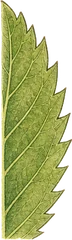
Typical of the family

Characters marked “recorded” are for Nirgundi itself; the rest are typical of the Verbenaceae family.
Flower & fruit characters
- Flower colour
- PurplerecordedPurple or violet
- Flower arrangement
- PaniclerecordedA branching cluster of clusters.“The numerous flowers are borne in panicles 10 to 20 cm (3.9 to 7.9 in) in length.” — Wikipedia, CC BY-SA 4.0
- Fruit type
- DruperecordedA fleshy fruit with a single hard stone/pit enclosing the seed.“The fruit is a succulent drupe, 4 mm (0.16 in) in diameter, rounded to egg-shaped.” — Wikipedia, CC BY-SA 4.0
Typical of the family
- Flower symmetry
- Zygomorphic (bilaterally symmetrical)
- Inflorescence
- Cyme
- Fruit
- Drupe
Characters marked “recorded” are for Nirgundi itself; the rest are typical of the Verbenaceae family — flowering plants only.
Local Names
- Hindi
- भूतवेशी Bhut-Veshi, नदीकान्त Nadi-Kant, इन्द्राणी Indrani,निर्गुंडी nirgundi
- Nepali
- इन्द्रायणी Indraayanee, सिमली Simalee
- Bengali
- নিসিন্দা Nishinda, নিশিন্দা, নিসিন্দা
- Tamil
- கருநொச்சி Karu-Nocchi, நொச்சி Nocchi, வெண்ணொச்சி Vennocchi, நொச்சி
- Telugu
- నల్ల వావిలి Nalla Vaavili, నిర్గుండి Nirgundi, శంబళి Sambali
- Kannada
- ಬಿಳಿಲಕ್ಕಿ Bililakki, ಇಂದ್ರಾಣಿ Indrani, ಕರಿ ಲಕ್ಕಿ Karilakki
- Malayalam
- കരിനൊച്ചി Karinochi, നൊച്ചി Nochi, കരിനൊച്ചി
- Marathi
- इंद्राणी Indrani, लिंगुर Lingur, निगूड Niguda, निरगुडी
- Gujarati
- સિંધવર
- Odia
- ନିର୍ଗୁଣ୍ଡି
- Punjabi
- ਨਿਰਗੁੰਡੀ
- Assamese
- নিসিন্দা
- Urdu
- سنگھار
Nirgundi in India
Nirgundi is a common aromatic shrub of riverbanks and waste ground, valued in Ayurveda — भूतवेशी Bhut-Veshi (Hindi), கருநொச்சி Karu-Nocchi (Tamil), నల్ల వావిలి Nalla Vaavili (Telugu), ಬಿಳಿಲಕ್ಕಿ Bililakki (Kannada), കരിനൊച്ചി Karinochi (Malayalam), इंद्राणी Indrani (Marathi). Vitex negundo is recorded across Maharashtra, Tamil Nadu, Karnataka, Uttarakhand, Gujarat, Rajasthan, often forming thickets along water.
Uses
Its leaves are a well-known traditional remedy associated with joint and muscle pain in Ayurveda — an attributed use described for information, not medical advice. The aromatic leaves are also used as a grain protectant, and the shrub is planted to bind riverbanks.
How to Identify Nirgundi
A large aromatic shrub with grey, downy twigs and leaves divided palmately into (usually) five lance-shaped leaflets — the central one largest. It bears slender branched spikes of small bluish-purple flowers; crushed leaves are strongly scented.
Frequently Asked Questions
- What is Common Chaste called in different Indian languages?
- भूतवेशी Bhut-Veshi (Hindi); கருநொச்சி Karu-Nocchi (Tamil); నల్ల వావిలి Nalla Vaavili (Telugu); ಬಿಳಿಲಕ್ಕಿ Bililakki (Kannada); കരിനൊച്ചി Karinochi (Malayalam); इंद्राणी Indrani (Marathi); নিসিন্দা Nishinda (Bengali); સિંધવર (Gujarati); ନିର୍ଗୁଣ୍ଡି (Odia); ਨਿਰਗੁੰਡੀ (Punjabi).
- What is nirgundi used for?
- Nirgundi leaves are a classical Ayurvedic remedy associated with joint and muscle pain; this is a traditional, attributed use and not medical advice.
- How do you identify nirgundi?
- Look for an aromatic shrub with leaves split into five lance-shaped leaflets and slender spikes of small bluish-purple flowers, usually near water.
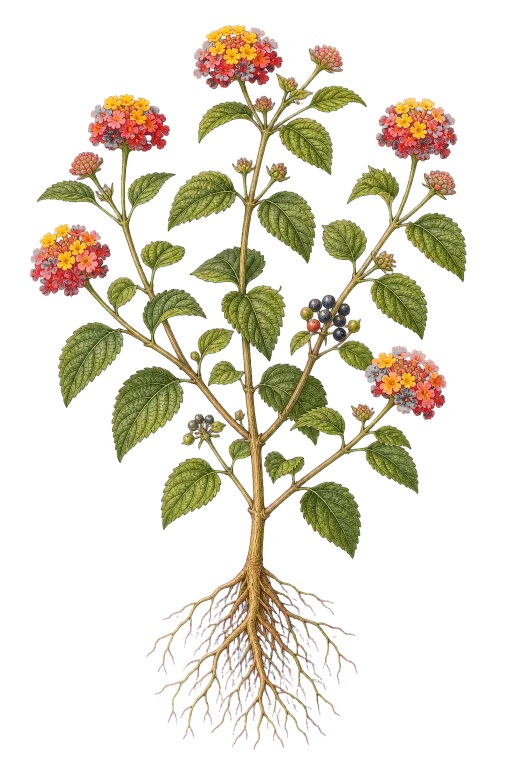
Verbenaceae
Verbena/Teak family
Nirgundi belongs to the Verbenaceae family.
The illustration represents the family — not necessarily this exact species.
Explore the Verbenaceae familySnap it. Know it.
Point your camera at Nirgundi or any plant and SASYA identifies it instantly — on-device, offline, and private.
Common plant problems
If you are starting from symptoms instead of a diagnosis, use the plant disease symptom checker to narrow the cause before treating.
All plant problem & care guidesMore in Verbenaceae
View all VerbenaceaeSources: GBIF — Vitex negundo (India distribution & vernacular names) (CC BY 4.0) · iNaturalist — Vitex negundo (regional names, India observations) (CC BY 4.0) · Wikipedia — Vitex negundo (background/comprehension only) (CC BY-SA 4.0)