
Safed Sambal / Three-Leaved Chaste Tree
Vitex trifolia
Also known as Arabian Lilac, Hand Of Mary, Indian Privet, Indian Three-Leaved Vitex
- Habit
- Shrub
- Found in India
- Karnataka, Kerala, Goa & more
- Flowering
- May-December
How to identify Safed Sambal
Identify Safed Sambal by combining habit, leaf characters, flower or fruit details, location, and its family pattern. Do not rely on one feature alone.
- Look for a shrub habit.
- Check the distinctive field mark: Leaves usually in threes (trifolia).
- Confirm leaf arrangement: Palmately compound, usually 3 leaflets.
- Confirm flower colour: Purple.
- Confirm flower arrangement: Panicle.
- In season, compare flowering and fruiting time: May-December.
- In India, compare location records such as Karnataka, Kerala, Goa, Haryana and nearby regions.
Plant Details
- Scientific name
- Vitex trifolia
- Genus
- Vitex
- Family
- Verbenaceae
- Habit
- Shrub
- Habitat
- Coastal areas and plains
- Habitat type
- Coastal
- Distribution
- South and Southeast Asia, Australia, and Pacific Islands
- Found in India
- Karnataka, Kerala, Goa, Haryana, Himachal Pradesh, Maharashtra, Tamil Nadu
- Flowering & fruiting
- May-December
- Conservation status
- Not Evaluated (NE)
Leaf characters
- Leaf arrangement
- Palmately compound, usually 3 leafletsrecorded
Typical of the family

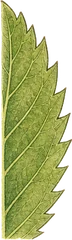

Characters marked “recorded” are for Safed Sambal itself; the rest are typical of the Verbenaceae family.
Flower & fruit characters
- Flower colour
- PurplerecordedPurple or violet
- Flower arrangement
- PaniclerecordedA branching cluster of clusters.“The flowers are born in panicles or clusters up to 25 cm (10 in) in length.” — Wikipedia, CC BY-SA 4.0
Typical of the family
- Flower symmetry
- Zygomorphic (bilaterally symmetrical)
- Inflorescence
- Cyme
- Fruit
- Drupe
Characters marked “recorded” are for Safed Sambal itself; the rest are typical of the Verbenaceae family — flowering plants only.
Local Names
- Hindi
- सफेद संबल Safed Sambal, सम्भालू Sambhalu
- Nepali
- सिमली Simalee, सिमाली
- Bengali
- পানি সমালু Pani Samalu
- Tamil
- சிந்துவாரம் Cintuvaram, சிறுநொச்சி Ciru-Nocci, கருநொச்சி Karu-Nocci
- Telugu
- చిరు వావిలి Chiru Vaavili, నీల వావిలి Neela Vaavili, నీరు వావిలి Neeru Vaavili
- Kannada
- ಕರ್ಪೂರನೆಕ್ಕಿ Karpuranekki, ಮರಳುನೆಕ್ಕಿ Maralunekki, ನಿರ್ಗುಂಡಿ Nirgundi
- Malayalam
- കരുനൊച്ചി Karunochi, വെള്ളനൊച്ചി Vellanochi, കരിനൊച്ചി
- Marathi
- लिंगूर Lingur, निगूड Niguda, निर्गुंडी Nirgundi
Safed Sambal in India
This shrub, known as सफेद संबल Safed Sambal (Hindi), சிந்துவாரம் Cintuvaram (Tamil), చిరు వావిలి Chiru Vaavili (Telugu), ಕರ್ಪೂರನೆಕ್ಕಿ Karpuranekki (Kannada), കരുനൊച്ചി Karunochi (Malayalam), लिंगूर Lingur (Marathi), is a common sight along coasts and roadsides. Vitex trifolia is found across Andaman and Nicobar, Karnataka, Kerala, Goa, Haryana, Himachal Pradesh, tolerant of sandy and saline soil.
Uses
It's grown as a hedge and windbreak shrub, particularly in coastal areas, and its aromatic leaves have a history of traditional folk use in some regions — an attributed traditional use, not a medical claim.
How to Identify Safed Sambal
A shrub with three-part (trifoliate) leaves, grey-green above and paler, felted underneath. Small tubular, lavender-blue flowers cluster at the branch tips, followed by small round black fruit.
Frequently Asked Questions
- What is Three-leaved Chaste Tree called in different Indian languages?
- सफेद संबल Safed Sambal (Hindi); சிந்துவாரம் Cintuvaram (Tamil); చిరు వావిలి Chiru Vaavili (Telugu); ಕರ್ಪೂರನೆಕ್ಕಿ Karpuranekki (Kannada); കരുനൊച്ചി Karunochi (Malayalam); लिंगूर Lingur (Marathi); পানি সমালু Pani Samalu (Bengali).
- How is it different from Nirgundi (Vitex negundo)?
- Both are related Vitex species with similar aromatic, hand-shaped leaves, but Vitex trifolia typically has three leaflets rather than the five of Vitex negundo, and is more associated with coastal habitats.
- Why is it planted along coasts?
- It tolerates sandy, salty soil and wind well, making it a useful hedge and windbreak shrub in coastal areas.
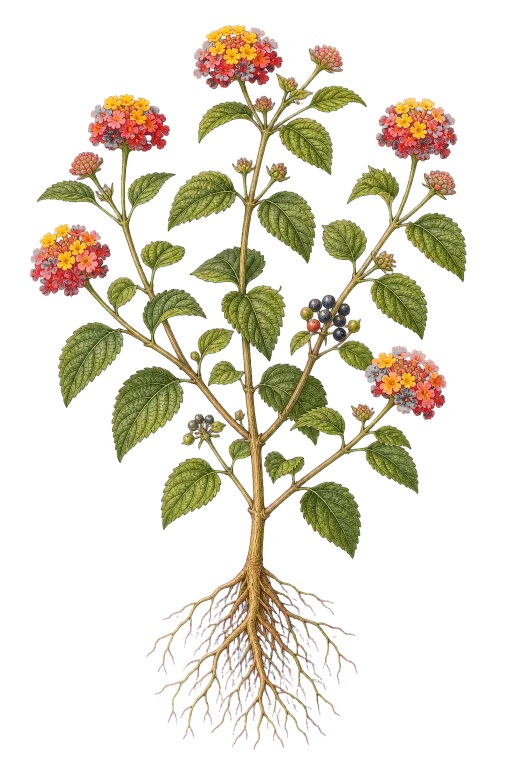
Verbenaceae
Verbena/Teak family
Safed Sambal belongs to the Verbenaceae family.
The illustration represents the family — not necessarily this exact species.
Explore the Verbenaceae familySnap it. Know it.
Point your camera at Safed Sambal or any plant and SASYA identifies it instantly — on-device, offline, and private.
Common plant problems
If you are starting from symptoms instead of a diagnosis, use the plant disease symptom checker to narrow the cause before treating.
All plant problem & care guidesMore in Verbenaceae
View all VerbenaceaeSources: GBIF — Vitex trifolia (India distribution & vernacular names) (CC BY 4.0) · Wikipedia — Vitex trifolia (background/comprehension only) (CC BY-SA 4.0)