

Typical of the Lamiaceae family
Salvia rosmarinus
Sagargandha / Rosemary सागरगंधा
Hindi name · See all regional names ↓
- Found in India
- Gujarat, Karnataka, Uttarakhand
Sagargandha in regional languages
Find the name you know, then compare it with the botanical profile. Columns list recorded aliases; they are not paired translations. A Latin spelling appears only when it is present in the source record.
| Language | Regional script | Recorded Latin spelling |
|---|---|---|
| Hindi | सागरगंधा | Sagargandha |
See the original recorded names
- Hindi
- सागरगंधा Sagargandha
Toxicity & contact hazards
What the sources report, with their scope intact. A missing rating stays unknown; a non-toxic listing doesn’t rule out irritation, injury or other hazards.
Reported toxicity
ASPCA lists rosemary as non-toxic to dogs, cats and horses.
Ecology & growing context
- Native status · Kew WCVP
- WCVP native range does not include India Kew dataset ↗
Kew WCVP dataset; accepted-name match. Dataset matching is separate from an individual regional review. Recorded worldwide native range: Medit.. Not listed native does not establish introduction or absence from India.
- Explore nearby plants
- Gujarat →Karnataka →Uttarakhand →
Occurrence records show where a plant has been recorded; they do not establish that it is native there. Compare local habitat and growing conditions when choosing plants for a garden.
How to identify Sagargandha
Identify Sagargandha by combining habit, leaf characters, flower or fruit details, location, and its family pattern. Do not rely on one feature alone.
- Check the distinctive field mark: Needle-like evergreen leaves (rosemary).
- Confirm leaf shape: Sagittate (arrowhead-shaped).
- Confirm leaf surface: Tomentose.
- Confirm flower colour: Blue.
- In India, compare location records such as Gujarat, Karnataka, Uttarakhand.
- Confirm it sits within the Lamiaceae family pattern, then compare close relatives before deciding it is Sagargandha.
Plant Details
- Scientific name
- Salvia rosmarinus
- Genus
- Salvia
- Family
- Lamiaceae
- Found in India
- Gujarat, Karnataka, Uttarakhand
- Conservation status
- Not Evaluated (NE)
Leaf characters
- Leaf shape
- Sagittate (arrowhead-shaped)recorded
- Leaf surface
- TomentoserecordedDensely covered in matted, woolly hairs.“The leaves are evergreen, 2–4 cm (3⁄4–1+1⁄2 in) long and 2–5 mm (1⁄16–3⁄16 in) broad, green above, and white below, with dense, short, woolly hair.” — Wikipedia, CC BY-SA 4.0
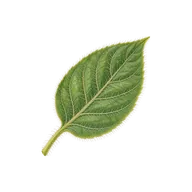
Typical of the family
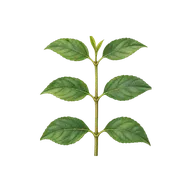
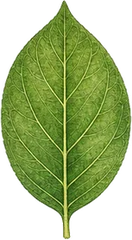
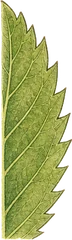

Characters marked “recorded” are for Sagargandha itself; the rest are typical of the Lamiaceae family.
Flower & fruit characters
- Flower colour
- Bluerecorded
Typical of the family
- Inflorescence
- Cyme
- Fruit
- Nutlets

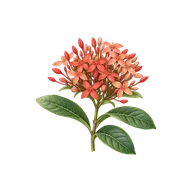
Characters marked “recorded” are for Sagargandha itself; the rest are typical of the Lamiaceae family — flowering plants only.
Sagargandha in India
Rosemary is an aromatic herb in the mint family, recorded by SASYA from Gujarat, Karnataka and Uttarakhand. In Hindi it is recorded as सागरगंधा Sagargandha. In India it is mostly a cultivated culinary, ornamental and aromatic plant rather than a common wild herb.
Uses
Rosemary leaves are used as a culinary herb, and the plant is grown for fragrance, ornamental hedges and aromatic oil. Uses here are culinary and cultural context, not medical advice.
How to Identify Sagargandha
Identify rosemary by the strong resinous aroma, narrow needle-like leaves with rolled edges, woody stems, and small pale blue to lilac flowers. As a Lamiaceae plant it has opposite leaves and aromatic foliage, but rosemary is firmer, woodier and much more needle-leaved than mint, basil or coleus.
Frequently Asked Questions
- How do I identify rosemary?
- Crush a leaf and smell it: rosemary has a strong resinous aroma. Also check the narrow needle-like leaves, woody stems and small pale blue-lilac flowers.
- What is rosemary called in Hindi?
- SASYA records the Hindi name सागरगंधा, transliterated as Sagargandha.
- Can rosemary grow in India?
- Yes, it is cultivated in India, especially where drainage is good and humidity is not excessive. SASYA records include Gujarat, Karnataka and Uttarakhand.
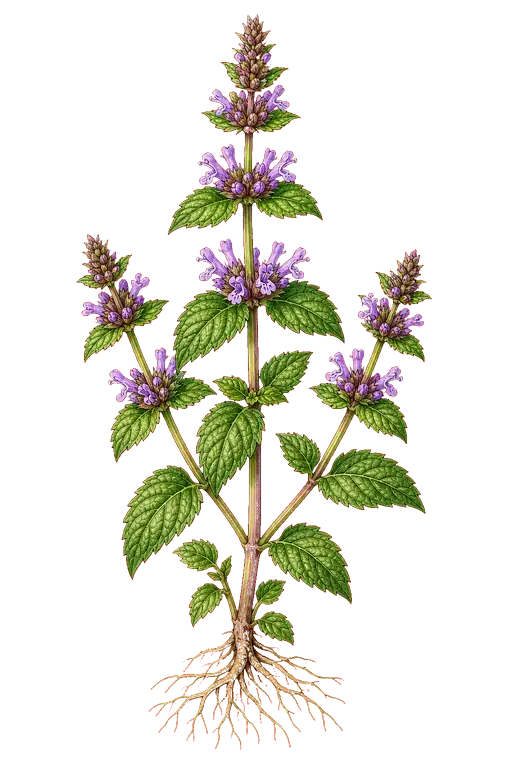
Lamiaceae
Mint/Sage family
Sagargandha belongs to the Lamiaceae family.
The illustration represents the family — not necessarily this exact species.
Explore the Lamiaceae familySnap it. Know it.
Point your camera at Sagargandha or any plant and SASYA identifies it instantly — on-device, offline, and private.
Common plant problems
If you are starting from symptoms instead of a diagnosis, use the plant disease symptom checker to narrow the cause before treating.
All plant problem & care guidesMore in Lamiaceae
View all LamiaceaeSources: GBIF — Salvia rosmarinus (CC BY 4.0) · iNaturalist — Salvia rosmarinus (CC BY 4.0)