How to identify it
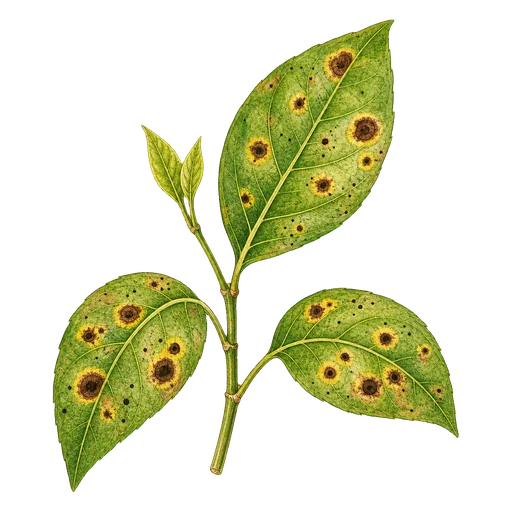
- Small brown, black, or tan spots scattered on the leaves
- Spots often have a yellow halo or ring around them
- Spots may have a darker centre or tiny dark specks (fungal fruiting bodies)
If left untreated
- Spots enlarge and merge into larger dead patches
- Affected leaves yellow and drop
- In wet conditions it spreads quickly to new leaves
What it could be confused with
Bacterial Leaf Spot — Bacterial spots often look water-soaked or greasy with a translucent edge and can smell; fungal spots are drier with a defined ring and sometimes visible specks. Treatment overlaps (improve airflow, keep leaves dry); copper helps bacterial cases.
Sunburn Scorch — Sunburn makes large bleached or brown dry patches on the side facing the light, not many small separate spots, and it doesn't spread to other leaves.
Nutrient Deficiency — Deficiency causes broad yellowing or discoloration in a pattern (old vs new leaves, between veins), not discrete spots with rings.
What causes it
- Fungal spores (e.g. Septoria, Alternaria, Anthracnose) or bacteria on the leaf surface
- Spread by water splashing onto leaves and by contact
Plants commonly affected
- Dracaena
- Dieffenbachia
- Pothos
- Ivy
- Rubber plant
- Schefflera
How to treat it
Do this first
- Isolate the plant and remove the most affected leaves (bin, don't compost)
- Stop misting and stop watering over the leaves
Cultural fixes
- Water at the soil only and let foliage stay dry
- Improve air circulation and space plants out
- Give brighter, indirect light
- Avoid crowding leaves against walls or other plants
Organic treatments
- Neem oil spray on all leaf surfaces, repeated weekly
- Copper-based fungicide/bactericide for stubborn or bacterial cases
Chemical treatment (last resort)
- Last resort: a labelled broad-spectrum fungicide (e.g. chlorothalonil or mancozeb). Follow the label exactly; ventilate; keep away from children and pets.
In India
- Neem oil and copper oxychloride are widely available at Indian nurseries
- Carbendazim/mancozeb fungicides are sold at agri shops; follow label dosage
How to prevent it
- Keep foliage dry; water the soil, not the leaves
- Maintain good airflow and avoid overcrowding
- Quarantine and inspect new plants before grouping them
- Remove fallen, infected leaves promptly
Will the plant recover?
Manageable if caught early. Spotted leaves won't recover, but new growth comes in clean once the spread is stopped and conditions are corrected.
Frequently asked questions
Why does my plant have brown spots with yellow rings?
That ringed-spot pattern is classic leaf spot disease, a fungal or bacterial infection. Remove affected leaves, keep the foliage dry, improve airflow, and treat with neem or a copper spray.
Will leaf spot spread to my other plants?
Yes, the spores spread by water splash and contact, so isolate the affected plant and avoid wetting leaves until it is under control.
Should I cut off leaves with spots?
Remove the worst-affected leaves to reduce the spore load, but don't strip the plant bare; leave enough healthy foliage for it to recover.
Is leaf spot caused by overwatering?
Not directly, but wet leaves and high humidity from overwatering or misting create the conditions fungi need. Keeping foliage dry is the main prevention.
Sources
- Royal Horticultural Society (RHS) — Leaf spot (fungal)
- University of Minnesota Extension — Leaf spot diseases of houseplants
- Clemson Cooperative Extension — Houseplant diseases & disorders
General guidance for home growers — always follow product labels and local regulations before using any treatment.
Check your plant with SASYA
Identify any plant, check a leaf for common problems and set watering reminders — on-device, private and free. Health checks and reminders are on Android now, coming to iPhone next.