How to identify it
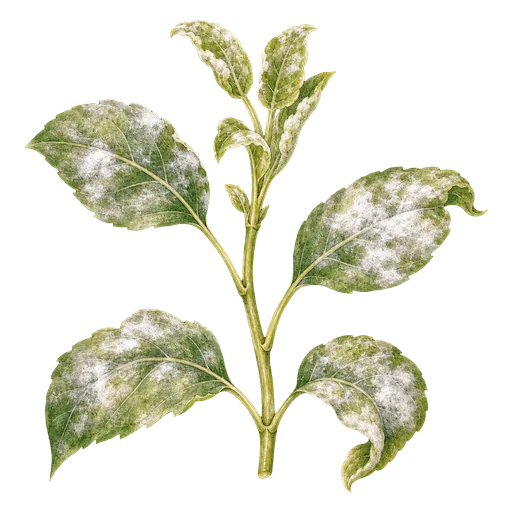
- White or grey powdery patches on the upper surface of leaves
- Patches start small and round, then spread to cover whole leaves
- Coating can be gently rubbed off (unlike pigment or variegation)
If left untreated
- Leaves yellow, curl, twist, or distort as infection grows
- New growth comes in stunted or deformed
- Heavily infected leaves brown and drop early
What it could be confused with
Downy Mildew — Downy mildew grows on the UNDERSIDE of leaves and looks fuzzy/greyish, with yellow angular blotches on the top surface. Powdery mildew sits on the TOP surface and is dry/dusty.
Dust Or Hard Water Residue — Dust and mineral residue wipe off completely and don't regrow or spread; mildew returns and expands over days, and the leaf tissue underneath becomes damaged.
Spider Mite Stippling — Mites cause fine yellow speckling and webbing, not a continuous powdery film.
What causes it
- Fungal spores (several species) that thrive on leaf surfaces
- Spores spread by air, splashing water, and contact between plants
Plants commonly affected
- African violet
- Begonia
- Jade and other succulents
- Kalanchoe
- Poinsettia
- Ivy
- Roses (indoor/patio)
How to treat it
Do this first
- Isolate the plant from others to stop spores spreading
- Remove and bin (do not compost) heavily affected leaves
- Move the plant somewhere with better airflow and brighter, indirect light
Cultural fixes
- Increase air circulation (space plants out, a gentle fan helps)
- Water at the soil, keep water off the leaves
- Avoid over-fertilising, especially high-nitrogen feeds
- Reduce ambient humidity if it is very high
Organic treatments
- Potassium bicarbonate or baking-soda spray (about 1 tsp baking soda + a few drops mild soap per litre of water), applied to all leaf surfaces
- Neem oil spray, repeated weekly until clear
- Diluted milk spray (1 part milk to 2-3 parts water) on minor cases
Chemical treatment (last resort)
- Last resort: a labelled fungicide for powdery mildew (e.g. myclobutanil or sulphur-based). Follow the product label exactly; ventilate; keep away from children and pets.
In India
- Neem oil and sulphur dusts are widely and cheaply available at Indian nurseries
- Look for Bavistin (carbendazim) or sulphur-based fungicides at agri/garden shops if organic methods fail; follow label dosage
How to prevent it
- Keep plants well-spaced with good airflow
- Avoid wetting leaves when watering
- Don't over-fertilise
- Quarantine new plants for a couple of weeks before grouping them
- Inspect leaf surfaces regularly so you catch it early
Will the plant recover?
Very treatable when caught early; most plants fully recover. Existing damaged leaves won't heal but new growth comes in clean once the fungus is controlled.
Frequently asked questions
What is the white powdery stuff on my plant's leaves?
It is most likely powdery mildew, a common fungal disease. It shows up as white or grey talc-like patches on the top of leaves that spread over time and can be gently rubbed off.
Will powdery mildew kill my plant?
Rarely on its own if treated. It weakens the plant and damages leaves, but most plants recover fully once you improve airflow and treat the fungus. Left unchecked for a long time it can seriously stunt growth.
How do I get rid of powdery mildew naturally?
Isolate the plant, remove badly affected leaves, improve air circulation, and spray all leaf surfaces with a potassium-bicarbonate or neem-oil solution weekly until it clears.
Is powdery mildew contagious to my other plants?
Yes. The spores spread through the air and by contact, so move the affected plant away from others until it is under control.
Can I just wipe powdery mildew off?
Wiping removes the visible coating but not the fungus in the leaf, so it comes back. Treat with a fungicidal spray and fix the conditions (airflow, humidity) that let it grow.
Sources
- Royal Horticultural Society (RHS) — Powdery mildews
- University of Minnesota Extension — Powdery mildew on houseplants
- Missouri Botanical Garden — Powdery mildew plant care guide
General guidance for home growers — always follow product labels and local regulations before using any treatment.
Check your plant with SASYA
Identify any plant, check a leaf for common problems and set watering reminders — on-device, private and free. Health checks and reminders are on Android now, coming to iPhone next.