
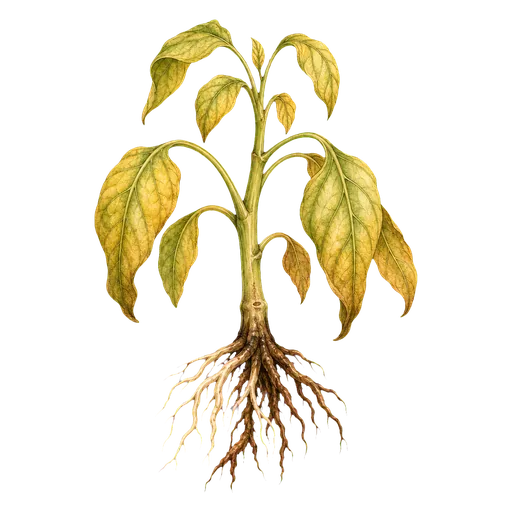
How to identify it
- Leaves yellow and wilt even though the soil is wet
- Soft, mushy, brown stem base or roots (healthy roots are firm and pale)
- A musty, rotten smell from the soil
- Soil stays soggy for days and may grow fungus gnats or mould
If left untreated
- Wilting worsens as more roots die and can no longer take up water
- Leaves brown, drop, and the plant collapses if untreated
What it could be confused with
Underwatering Drought — Underwatering wilts the plant too, but the soil is bone dry and leaves are crisp; with overwatering the soil is wet and the stem/roots are soft and mushy.
Nutrient Deficiency — Deficiency yellows leaves in a pattern with firm healthy roots and normal soil moisture; root rot has wet soil, mushy roots, and a smell.
Pest Damage — Pests leave visible insects, webbing, or sticky residue; root rot is a soil/root problem with none of those signs.
What causes it
- Watering too often / soil never drying out
- Pots without drainage holes, or water left sitting in the saucer
- Heavy, water-retentive soil or an oversized pot
- Low light and cool temperatures slowing water use
Plants commonly affected
- Succulents and cacti (very sensitive)
- Snake plant, ZZ plant
- Most houseplants if left in soggy soil
How to treat it
Do this first
- Stop watering immediately
- Remove the plant from its pot and inspect the roots
- Cut away all mushy, brown, smelly roots with clean scissors, keeping firm pale roots
- Repot into fresh, well-draining mix in a pot with drainage holes
Cultural fixes
- Water only when the top 2-3 cm of soil is dry; empty the saucer after watering
- Move to brighter light so the plant uses water faster
- Use a pot with drainage and a grittier, faster-draining mix
Organic treatments
- Take healthy stem cuttings as a backup if much of the root system is lost
- A cinnamon dusting on cut roots is a mild traditional antifungal
Chemical treatment (last resort)
- Severe cases: a labelled fungicide drench for root rot pathogens (Pythium/Phytophthora). Follow the label; this is a last resort after repotting.
In India
- Add perlite, coarse sand, or cocopeat to open up heavy soil; all cheaply available in India
How to prevent it
- Always use pots with drainage holes and never let them sit in water
- Water when the soil is partly dry, not on a fixed schedule
- Use a mix suited to the plant (grittier for succulents)
- Reduce watering in winter and low light
Will the plant recover?
Recoverable if caught before most roots are lost — repotting and drying out often saves the plant. If the stem base is fully mushy, propagating healthy cuttings is the better bet.
Frequently asked questions
Why is my plant wilting if the soil is still wet?
Wilting in wet soil is a classic sign of root rot from overwatering — the roots have rotted and can no longer take up water. Stop watering, check the roots, trim the mushy ones, and repot.
How do I save a plant with root rot?
Take it out of the pot, cut away all soft brown roots, keep the firm pale ones, and repot into fresh well-draining soil in a pot with drainage. Then water only when the soil partly dries.
How do I know if I'm overwatering?
Signs include yellowing leaves, soggy soil that never dries, a musty smell, fungus gnats, and a soft stem base. Let the top few centimetres of soil dry out before watering again.
Can a plant recover from overwatering?
Often yes, if caught early — drying it out, trimming dead roots, and repotting can save it. If most of the roots and stem are mushy, propagate healthy cuttings instead.
Sources
- Royal Horticultural Society (RHS) — Root rots / waterlogging
- University of Minnesota Extension — Overwatering and root rot
- Missouri Botanical Garden — Root and stem rot
General guidance for home growers — always follow product labels and local regulations before using any treatment.
Check your plant with SASYA
Identify any plant, check a leaf for common problems and set watering reminders — on-device, private and free. Health checks and reminders are on Android now, coming to iPhone next.