
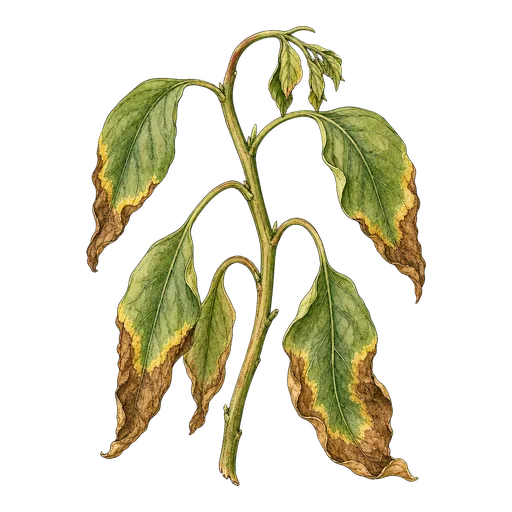
How to identify it
- Leaves droop or curl inward, but lift again within hours of watering
- Browning starts at the leaf edges and tips and works inward, dry and papery to the touch
- The whole pot feels light; soil is pale, hard, and may have pulled away from the sides
- Water runs straight down the gap and out of the drainage holes without wetting the soil
- Oldest, lowest leaves yellow and drop first as the plant sheds what it cannot supply
If left untreated
- Leaf drop spreads from the base upward
- Fine feeder roots die back, so the plant drinks poorly even once you resume watering
- Flower buds and young fruit are aborted
- Growth stalls; repeated cycles leave permanent bare stems
What it could be confused with
Overwatering & Root Rot — the giveaway is the same in both: a drooping plant. Feel the soil. Dry, light, and shrinking away from the pot is drought; wet, heavy, and sour-smelling is rot. Drought browning is crisp; rot browning is soft, dark and limp.
Leaf Sunburn & Scorch — scorch is worst on the leaves facing the light source and can appear on a well-watered plant. Drought browning affects the whole plant fairly evenly, oldest leaves first.
Nutrient Deficiency — deficiency yellows the leaf tissue in a pattern (between veins, or on old growth) while the leaf stays supple. Drought leaves turn dry and brittle.
Salt & Fertiliser Burn — also browns leaf tips, but on soil that is being watered normally, usually with a white crust on the surface or pot rim.
What causes it
- Watering too little, or too lightly — a splash that wets only the top centimetre
- Long gaps between waterings in hot, dry, or windy conditions
- Root-bound plants: roots have filled the pot and there is almost no soil left to hold water
- Peat-based compost that has dried out completely and now repels water
- Small terracotta pots, which breathe and dry far faster than plastic or glazed pots
- Hot dry air from a fan, heater, or air conditioner pointed at the plant
Plants commonly affected
- Thin-leaved plants with high water demand — ferns, calathea, peace lily, hydrangea
- Anything in a small or terracotta pot during summer
- Recently repotted or newly planted stock with roots not yet established
- Balcony and terrace plants in full afternoon sun
How to treat it
Do this first
- Water thoroughly until it runs freely from the drainage holes, then wait and water again
- If the soil has shrunk from the sides, bottom-water: stand the pot in a tray of water for 20-30 minutes so the root ball rehydrates evenly instead of the water running down the gap
- Move the plant out of direct sun and wind while it recovers
- Trim off leaves that are fully crisp — they will not recover and only cost the plant water
Cultural fixes
- Water by weight and feel, not by calendar: lift the pot, or push a finger 3-4 cm in
- Water deeply and less often rather than a little every day — shallow watering grows shallow roots
- Mulch the soil surface, or top-dress with compost, to slow evaporation
- Repot root-bound plants into a slightly larger pot with fresh medium
- Group plants together to raise local humidity, and move them off hot windowsills in summer
Recovery care
- Do not fertilise a drought-stressed plant until it is growing again — damaged roots cannot take up salts and will burn
- Expect some leaf drop even after correct watering; that is the plant balancing its canopy to its surviving roots
- Prune back badly defoliated stems once new growth appears, so energy goes to living tissue
In India
- Through the pre-monsoon months of April-June, terrace and balcony pots may need watering twice a day; check in the evening as well as the morning
- Water early morning or after sunset — midday watering is largely lost to evaporation
- Coir-based potting mixes, common locally, dry faster than they look; the surface reads dry while the core is still damp, so check deeper before watering again
- After a long dry spell, the first heavy monsoon rain on hard, hydrophobic soil mostly runs off — loosen the surface so it soaks in
How to prevent it
- Match pot size, medium, and position to the plant's water demand
- Keep a saucer under thirsty plants to catch and re-absorb runoff
- Check plants more often during heatwaves, and before and after travel
- Choose drought-tolerant species (sansevieria, zz plant, succulents) for spots you cannot water reliably
Will the plant recover?
Usually, if the stems are still flexible and green under a scratch of the bark. A plant that lifts within a few hours of a thorough watering has lost only turgor and will be fine. Crisp leaves will not turn green again — recovery shows as new growth, not as repaired old leaves. If stems are brittle and snap dry, and no green shows under the surface, that section is dead.
Frequently asked questions
How do I tell underwatering from overwatering?
Both cause drooping, so judge by the soil, not the leaves. Dry, light, shrinking from the pot means underwatering. Wet, heavy, and sour-smelling means overwatering and probable root rot. Drought browning is crisp and papery; rot browning is soft and dark.
Why is water running straight through the pot?
The compost has dried out completely and turned water-repellent, so water runs down the gap between the root ball and the pot instead of soaking in. Bottom-water the pot in a tray for 20-30 minutes to rewet the whole root ball.
Will crispy brown leaves turn green again?
No. Once leaf tissue has dried and browned it is dead and will not recolour. Trim those leaves off and judge recovery by new growth instead.
Should I fertilise a plant that has dried out?
Not until it is actively growing again. Drought damages the fine roots that absorb nutrients, and fertiliser salts on a stressed root system cause further burn.
Sources
- Royal Horticultural Society (RHS) — Watering: houseplants
- University of Maryland Extension — Watering indoor plants
- Missouri Botanical Garden — Watering house plants
General guidance for home growers — always follow product labels and local regulations before using any treatment.
Not sure what your plant is?
Identify any plant on-device with SASYA — offline, private, and free.