
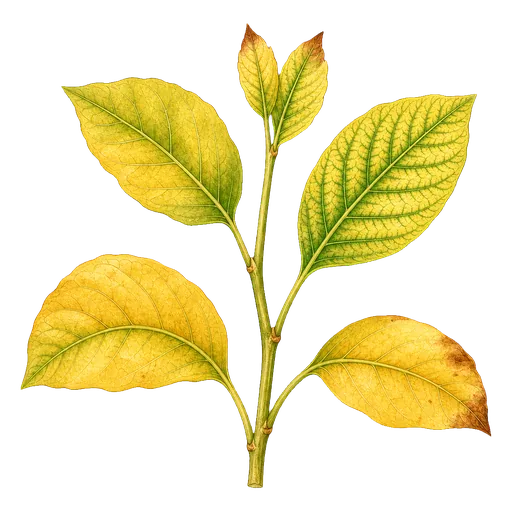
How to identify it
- Nitrogen: older, lower leaves yellow first and overall growth is pale and slow
- Iron: newest leaves yellow while the veins stay green (interveinal yellowing on top growth)
- Magnesium: older leaves yellow between the veins, veins stay green
- Calcium: new leaves distort with brown, scorched tips
If left untreated
- Yellowing spreads and leaves may brown and drop
- Growth slows; new leaves come in small or weak
What it could be confused with
Overwatering Root Rot — Overwatering also yellows leaves, but the soil stays wet, the stem base may be mushy, and the plant wilts despite damp soil. Deficiency shows a clear vein/old-vs-new pattern with healthy roots.
Fungal Leaf Spot — Leaf spot is discrete spots with rings; deficiency is broad smooth yellowing in a pattern.
Natural Aging — It's normal for the occasional oldest leaf to yellow and drop. Deficiency affects many leaves with a consistent pattern.
What causes it
- Depleted potting mix (nutrients used up, usually after 6-12 months)
- Not feeding during the growing season
- Root problems or wrong soil pH locking out nutrients
- Pot-bound roots with no fresh soil to draw from
Plants commonly affected
- Fast-growing foliage plants (pothos, philodendron)
- Heavy feeders (citrus, hibiscus)
- Any plant overdue for repotting or feeding
How to treat it
Do this first
- Identify the pattern (old vs new leaves, between veins) to narrow down the nutrient
- Feed with a balanced liquid houseplant fertiliser at label strength
Cultural fixes
- Resume regular feeding through the growing season (spring-summer)
- Repot into fresh potting mix if the plant is pot-bound or the soil is old
- Check that drainage and watering are correct so roots can take up nutrients
Organic treatments
- Iron chlorosis (yellow new leaves, green veins): a chelated iron feed; check pot drainage and pH
- Magnesium (yellow between veins on old leaves): a dilute Epsom-salt solution as a one-off
- Worm compost or seaweed feed for a gentle general boost
Chemical treatment (last resort)
- Use a balanced N-P-K houseplant fertiliser; don't over-apply — excess salts burn roots
In India
- Liquid houseplant fertilisers, vermicompost, and Epsom salt are all easily available in India
How to prevent it
- Feed regularly during the growing season at the recommended strength
- Repot or refresh the top layer of soil every 1-2 years
- Match watering and drainage to the plant so roots stay healthy
Will the plant recover?
Usually quick and complete to fix once the right nutrient is supplied. Existing yellow leaves may stay discoloured, but new growth comes in green and healthy.
Frequently asked questions
Why are my plant's leaves turning yellow?
A common cause is nutrient deficiency. The pattern tells you which: old leaves yellowing points to nitrogen, yellow new leaves with green veins points to iron, and yellowing between veins on old leaves points to magnesium. Resume regular feeding to fix it.
My new leaves are yellow but the veins are green — what's wrong?
That's classic iron chlorosis. Use a chelated iron feed and check that the pot drains well and the soil pH isn't too high, which can lock iron away from the roots.
Will fertilizer fix yellow leaves?
If the cause is a deficiency, yes — new growth will come in green. But yellowing from overwatering won't be fixed by feeding, so confirm the soil isn't constantly wet first.
How often should I feed my houseplants?
Most houseplants benefit from a balanced liquid feed every 2-4 weeks during the growing season (spring and summer) and little to none in winter.
Sources
- Royal Horticultural Society (RHS) — Plant nutrition and feeding
- University of Minnesota Extension — Fertilizing houseplants
- Missouri Botanical Garden — Nutrient deficiencies
General guidance for home growers — always follow product labels and local regulations before using any treatment.
Check your plant with SASYA
Identify any plant, check a leaf for common problems and set watering reminders — on-device, private and free. Health checks and reminders are on Android now, coming to iPhone next.