How to identify it
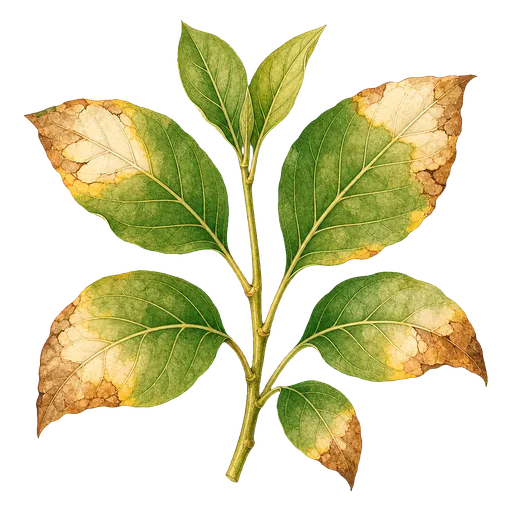
- Bleached, faded, or brown dry patches on the side of leaves facing the light
- Affected areas are dry and papery, often with a yellow border
- Damage is on exposed leaves/sides, not scattered randomly
If left untreated
- Scorched tissue dies and stays brown — it does not recover
- Severe cases dry out whole leaves
What it could be confused with
Fungal Leaf Spot — Leaf spot is many small spots with rings that spread to other leaves; scorch is large bleached dry patches on sun-facing tissue that doesn't spread.
Underwatering Drought — Drought crisps whole leaf edges and tips across the plant; sunburn is localised to the most light-exposed areas.
Pest Damage — No insects, webbing, or sticky residue with scorch — it's purely light/heat damage.
What causes it
- Too much direct sun for a plant that prefers indirect light
- Sudden move from low light to strong sun without acclimating
- Magnified heat through glass, or water droplets focusing sunlight
- Hot, dry drafts from heaters intensifying the stress
Plants commonly affected
- Shade-loving foliage (calathea, maranta, ferns, peace lily)
- Plants recently moved from a nursery or low-light spot
- Variegated plants (less pigment, more prone to burning)
How to treat it
Do this first
- Move the plant out of direct sun to a brighter-but-indirect spot
- Don't cut healthy green parts of scorched leaves; only remove fully dead leaves
Cultural fixes
- Acclimate plants gradually when increasing light (a little more each day over 1-2 weeks)
- Use a sheer curtain to diffuse harsh window sun
- Avoid watering droplets sitting on leaves in strong light
In India
- Indian summer sun is intense — even "full sun" houseplants often need afternoon shade or a sheer screen
How to prevent it
- Match the plant to the right light level and acclimate to changes slowly
- Filter intense midday/afternoon sun with a sheer curtain
- Keep shade-loving plants out of direct sun
Will the plant recover?
Not a disease and not contagious. Scorched patches stay brown, but the plant is otherwise fine and new growth is normal once it's in the right light.
Frequently asked questions
Can houseplants get sunburned?
Yes. Too much direct sun, or a sudden move into strong light, scorches leaves — you'll see bleached or brown dry patches on the side facing the light. Move the plant to bright indirect light.
Should I cut off sunburned leaves?
Only remove fully dead leaves. If a leaf is mostly green with a scorched patch, leave it — it still feeds the plant. The brown areas won't turn green again but won't spread.
How do I stop my plant getting sunburned?
Increase light gradually over a week or two when moving a plant, diffuse harsh window sun with a sheer curtain, and keep shade-loving plants out of direct midday and afternoon sun.
Is leaf scorch contagious to my other plants?
No. Sunburn and scorch are light/heat damage, not a disease, so it won't spread between plants.
Sources
- Royal Horticultural Society (RHS) — Scorch and light damage
- University of Minnesota Extension — Light for indoor plants
- Missouri Botanical Garden — Leaf scorch
General guidance for home growers — always follow product labels and local regulations before using any treatment.
Check your plant with SASYA
Identify any plant, check a leaf for common problems and set watering reminders — on-device, private and free. Health checks and reminders are on Android now, coming to iPhone next.