
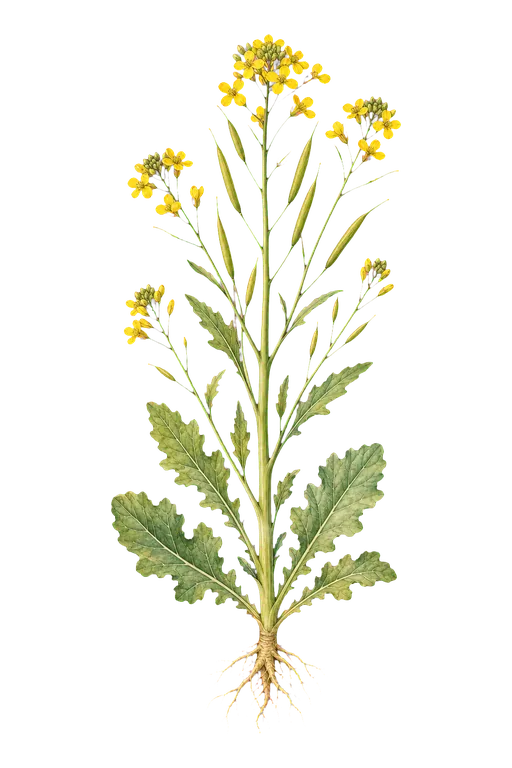
Sarson / Mustard
Brassica juncea
Also known as Common Indian Mustard, Chinese Mustard, Brown Mustard
- Habit
- Herb
- Found in India
- Rajasthan, Maharashtra, Bihar & more
- Flowering
- Throughout the year
Plant Details
- Scientific name
- Brassica juncea
- Genus
- Brassica
- Family
- Brassicaceae
- Habit
- Herb
- Native to
- Central Asia
- Distribution
- Central Asia to tropics of the World, Europe
- Found in India
- Rajasthan, Maharashtra, Bihar, Uttarakhand, Telangana, Gujarat
- Flowering & fruiting
- Throughout the year
- Conservation status
- Not Evaluated (NE)
Leaf characters
- Arrangement
- Alternate
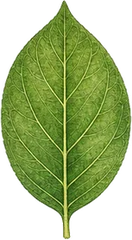
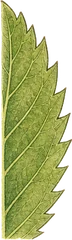

Typical of the Brassicaceae family — a field-mark hint, not measured for this exact species.
Flower & fruit characters
Typical of the Brassicaceae family — flowering plants only; individual species can differ.
Local Names
- Hindi
- Sarson सरसों,राई rai
- Nepali
- रायो
- Bengali
- লাই শাক
- Tamil
- கடுகுக் கீரை
- Telugu
- భారతీయ ఆవాలు
- Kannada
- ಸಾಸಿವೆ Saasive, ಸಾಸುವೆ Saasuve, ಸಾಸಿಮೆ Saasime
- Marathi
- मोहरी Mohari
Sarson in India
Mustard, called Sarson सरसों (Hindi), கடுகுக் கீரை (Tamil), భారతీయ ఆవాలు (Telugu), ಸಾಸಿವೆ Saasive (Kannada), मोहरी Mohari (Marathi), লাই শাক (Bengali), is North India's signature winter oilseed crop. Brassica juncea is grown across Rajasthan, Maharashtra, Bihar, Uttarakhand, Telangana, Gujarat, flowering in fields of solid yellow through the cooler months.
Uses
Seeds are pressed for pungent mustard oil, a staple cooking oil in much of North and East India; the young leaves are cooked as sarson ka saag, classically served with makki di roti in Punjab.
How to Identify Sarson
An erect annual herb with lower leaves that are lobed and stalked, upper leaves narrower and clasping the stem. Small four-petalled yellow flowers are carried in loose clusters at the stem tips, followed by narrow, beaked seed pods (siliques) held at an angle to the stem.
Frequently Asked Questions
- What is Mustard called in different Indian languages?
- Sarson सरसों (Hindi); கடுகுக் கீரை (Tamil); భారతీయ ఆవాలు (Telugu); ಸಾಸಿವೆ Saasive (Kannada); मोहरी Mohari (Marathi); লাই শাক (Bengali).
- Is mustard oil the same as mustard greens?
- No — both come from the same plant, but mustard oil is pressed from the seeds while sarson ka saag is cooked from the young leaves.
- Why do mustard fields look solid yellow?
- The plants are grown densely and flower together across the whole field in winter, producing the characteristic sheet of yellow seen across North Indian farmland.
Brassicaceae
Mustard family
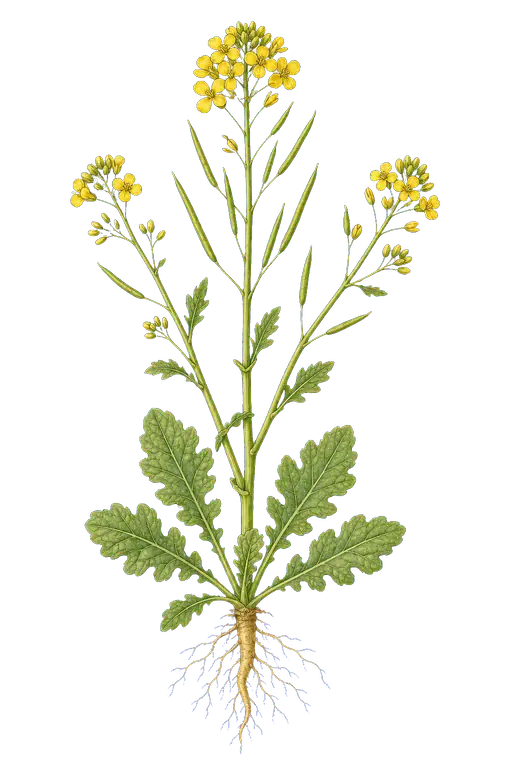
Sarson belongs to the Brassicaceae family.
The illustration represents the family — not necessarily this exact species.
Explore the Brassicaceae family →Snap it. Know it.
Point your camera at Sarson or any plant and SASYA identifies it instantly — on-device, offline, and private.
Common plant problems
All plant problem & care guides →More in Brassicaceae
View all Brassicaceae →Sources: GBIF — Brassica juncea (India distribution & vernacular names) (CC BY 4.0) · Wikipedia — Brassica juncea (background/comprehension only) (CC BY-SA 4.0)