
Meliaceae
Mahogany/Neem family
The mahogany family of trees and shrubs, containing some of the world's most prized timbers including mahogany (Swietenia) and toon (Toona). Neem (Azadirachta indica) — renowned for its medicinal and pesticidal properties — is perhaps the most globally utilised member.
Browse all 27 species ↓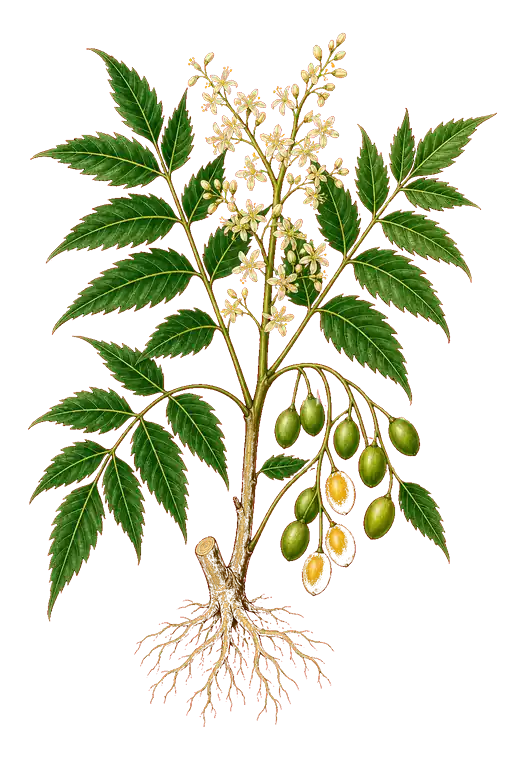
Pinnately compound, often aromatic leaves on trees prized for timber; the stamens fuse edge-to-edge into a distinctive tube encircling the ovary, a structure that persists and stays visible even after the petals fall.
Home to some of the world's most valuable hardwood timbers (mahogany, toon) alongside neem, whose intensely bitter limonoid compounds are used across traditional medicine and as a natural pesticide.
Which Meliaceae species is this?
Answer what you can see and narrow it down to a single Meliaceae species.
How to recognise the Meliaceae family
- 01
Pinnate leaves, often aromatic
- 02
Stamens fused into a tube
- 03
Capsule, drupe, or berry; large seeds
To check whether a plant belongs to Meliaceae, compare the leaf arrangement, leaf type, flower symmetry, fruit type, and one distinctive marker together. A single feature can mislead; the family pattern is the combination.
Learn the full family-identification methodTypical leaf characters
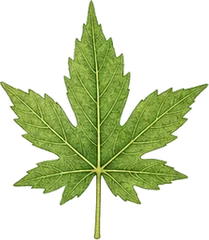
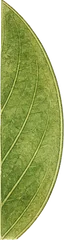
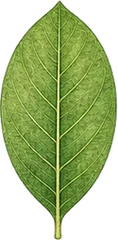
Characters typical of the family — individual species can vary.
Typical flower & fruit
- Flower symmetryActinomorphic (radially symmetrical)
- InflorescencePanicle
- FruitCapsule
Typical of the family — flowering plants only; species can vary.
Notable members
Families that can look similar
Sapindaceae
Compare against Sapindaceae when the plant shares similar leaves, flowers, or fruit. Confirm by checking the full family pattern.
Compare SapindaceaeRutaceae
Compare against Rutaceae when the plant shares similar leaves, flowers, or fruit. Confirm by checking the full family pattern.
Compare RutaceaeAnacardiaceae
Compare against Anacardiaceae when the plant shares similar leaves, flowers, or fruit. Confirm by checking the full family pattern.
Compare AnacardiaceaeEuphorbiaceae
Compare against Euphorbiaceae when the plant shares similar leaves, flowers, or fruit. Confirm by checking the full family pattern.
Compare EuphorbiaceaeAll 27 species in MELIACEAE
- Chakoola TreeAglaia elaeagnoidea
- Four-Petal AglaiaAglaia lawii
- Chinese Perfume PlantAglaia odorata
- Mangalore AglaiaAglaia perviridis
- Simple-Leaved AglaiaAglaia simplicifolia
- Pithraj Tree, Rohituka TreeAphanamixis polystachya
- The Neem Tree, Margosa, Indian Lilac, Neem, Nimbay, PichumardaAzadirachta indica
- Spanish CedarCedrela odorata
- Indian Redwood, Chittagong Wood Tree, ChikrassyChukrasia tabularis
- Oriental PurpleberryCipadessa baccifera
- White CedarDysoxylum malabaricum
- African MahoganyKhaya grandifoliola
- African MahoganyKhaya senegalensis
- Persian Lilac, Bastard Cedar, Bead Tree, Indian Lilac, Persian Lilac, Pride Of India, White CedarMelia azedarach
- China Berry, Great Neem Tree, Big Leaved MahoganyMelia dubia
- Goanese IpecacNaregamia alata
- Indian Mahogany, Indian RedwoodSoymida febrifuga
- Honduras Mahogany, Large-Leaved MahagonySwietenia macrophylla
- West Indian Mahogany, Small-Leaved MahagonySwietenia mahagoni
- Sandal Neem, Toon Tree, Red Cedar, Moulmin Cedar, The Toon Tree, Indian Mahogany Tree, Sandal Neem, Red Cedar, Australian RedcendarToona ciliata
- Native HoneysuckleTurraea villosa
- Three-Leaf WalsuraWalsura trifoliolata var. trifoliolata
- Aglaia bourdillonii
- Aglaia canarana
- Dysoxylum binectariferum
- Reinwardtiodendron anamalaiense
- Trichilia connaroides
Identify any Meliaceae plant in seconds
Point your camera and SASYA names the species on-device — offline and private.
Download SASYA — Free