
Bakain / Persian Lilac
Melia azedarach
Also known as Bastard Cedar, Bead Tree, Indian Lilac, Pride Of India, White Cedar
- Habit
- Tree
- Found in India
- Maharashtra, Uttarakhand, Bihar & more
- Flowering
- January-September
How to identify Bakain
Identify Bakain by combining habit, leaf characters, flower or fruit details, location, and its family pattern. Do not rely on one feature alone.
- Look for a tree habit.
- Check the distinctive field mark: Clusters of small yellow berries persist after leaf fall.
- Confirm leaf arrangement: Alternate.
- Confirm leaf type: Pinnately compound.
- Confirm flower colour: Purple.
- Confirm fruit type: Drupe.
- In season, compare flowering and fruiting time: January-September.
Plant Details
- Scientific name
- Melia azedarach
- Genus
- Melia
- Family
- Meliaceae
- Habit
- Tree
- Habitat
- Moist and dry deciduous forests
- Habitat type
- Forest
- Native to
- W.Himalayas
- Distribution
- Himalayas, India, Myanmar, China, Pakistan, Iran, Turkey, Africa, Australia
- Found in India
- Maharashtra, Uttarakhand, Bihar, Tamil Nadu, West Bengal, Mizoram, Rajasthan, Karnataka, Gujarat, Assam, Delhi, Madhya Pradesh, Punjab, Kerala, Uttar Pradesh, Himachal Pradesh, Haryana, Telangana, Tripura, Arunachal Pradesh, Chandigarh, Puducherry, Chhattisgarh, Manipur, Andhra Pradesh, Jammu & Kashmir, Nagaland, Odisha
- Flowering & fruiting
- January-September
- Conservation status
- Not Evaluated (NE)
Leaf characters
- Leaf arrangement
- AlternaterecordedOne leaf per node, arranged in a spiral or zigzag up the stem.“The leaves are up to 50 centimetres (20 inches) long, alternate, long-petioled, two or three times compound (odd-pinnate);” — Wikipedia, CC BY-SA 4.0
- Leaf type
- Pinnately compoundrecordedLeaflets are arranged in rows along a central stalk, like a feather.“The leaves are up to 50 centimetres (20 inches) long, alternate, long-petioled, two or three times compound (odd-pinnate);” — Wikipedia, CC BY-SA 4.0
- Leaf margin
- ToothedrecordedA saw-like or jagged edge (serrate or dentate).“the leaflets are dark green above and lighter green below, with serrate margins.” — Wikipedia, CC BY-SA 4.0
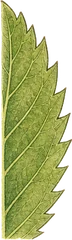
Typical of the family

Characters marked “recorded” are for Bakain itself; the rest are typical of the Meliaceae family.
Flower & fruit characters
- Flower colour
- PurplerecordedPurple or violet“The flowers are small and fragrant, with five pale purple or lilac petals, growing in clusters.” — Wikipedia, CC BY-SA 4.0
- Fruit type
- DruperecordedA fleshy fruit with a single hard stone/pit enclosing the seed.“The fruit is a drupe, marble-sized, light yellow at maturity, hanging on the tree all winter, and gradually becoming wrinkled and almost white.” — Wikipedia, CC BY-SA 4.0
Typical of the family
- Flower symmetry
- Actinomorphic (radially symmetrical)
- Inflorescence
- Panicle
- Fruit
- Capsule
Characters marked “recorded” are for Bakain itself; the rest are typical of the Meliaceae family — flowering plants only.
Local Names
- Hindi
- Bakain बकैन,बकायन bakayan
- Nepali
- बकेनु Bakenu, बकाइनो Bakaaino, महानीम Mahaaneem
- Bengali
- Bakarjam, ঘোড়ানিম
- Tamil
- காட்டு வேம்பூ Kattu vembhu, 12.தோழிக்குரைத்த பத்து
- Kannada
- ಕಾಡು ಬೇವು
- Malayalam
- ശീമവേപ്പ്
- Marathi
- Bakan-nimb बकाणनिंब, बकान नीम, बकाणनिंब
Bakain in India
This fast-growing tree, known as Bakain बकैन (Hindi), காட்டு வேம்பூ Kattu vembhu (Tamil), ಕಾಡು ಬೇವು (Kannada), ശീമവേപ്പ് (Malayalam), Bakan-nimb बकाणनिंब (Marathi), Bakarjam (Bengali), is a familiar shade and avenue tree across much of India. Melia azedarach is found across Maharashtra, Uttarakhand, Bihar, Tamil Nadu, West Bengal, Rajasthan, tolerating a wide range of soils and climates.
Uses
It's widely planted for quick shade along roads and in courtyards, and its light wood has been used for furniture and packing cases — but the small yellow berries are toxic if eaten in quantity and should never be consumed.
How to Identify Bakain
A deciduous tree with large, doubly compound (bipinnate) leaves made of many toothed leaflets — easily confused with neem at a glance, though bakain's leaflets are more sharply toothed. Clusters of small, fragrant lilac flowers appear in spring, followed by round yellow berries that persist on the bare branches through winter.
Frequently Asked Questions
- What is Persian Lilac called in different Indian languages?
- Bakain बकैन (Hindi); காட்டு வேம்பூ Kattu vembhu (Tamil); ಕಾಡು ಬೇವು (Kannada); ശീമവേപ്പ് (Malayalam); Bakan-nimb बकाणनिंब (Marathi); Bakarjam (Bengali).
- Are bakain berries edible?
- No — the small yellow berries are toxic if eaten in quantity and should not be consumed.
- How is bakain different from neem?
- Both have similar bipinnate compound leaves, but bakain (Melia azedarach) has more sharply toothed leaflets and lilac flowers, while neem (Azadirachta indica) has white flowers and an intensely bitter smell when crushed.
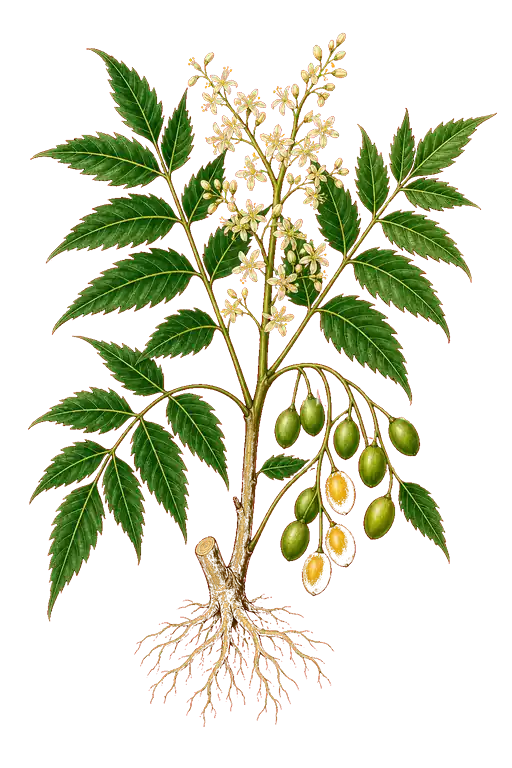
Meliaceae
Mahogany/Neem family
Bakain belongs to the Meliaceae family.
The illustration represents the family — not necessarily this exact species.
Explore the Meliaceae familySnap it. Know it.
Point your camera at Bakain or any plant and SASYA identifies it instantly — on-device, offline, and private.
Common plant problems
If you are starting from symptoms instead of a diagnosis, use the plant disease symptom checker to narrow the cause before treating.
All plant problem & care guidesMore in Meliaceae
View all MeliaceaeSources: GBIF — Melia azedarach (India distribution & vernacular names) (CC BY 4.0) · Wikipedia — Melia azedarach (background/comprehension only) (CC BY-SA 4.0)