Anacardiaceae family
Cashew family
25 catalogue species · Order Sapindales
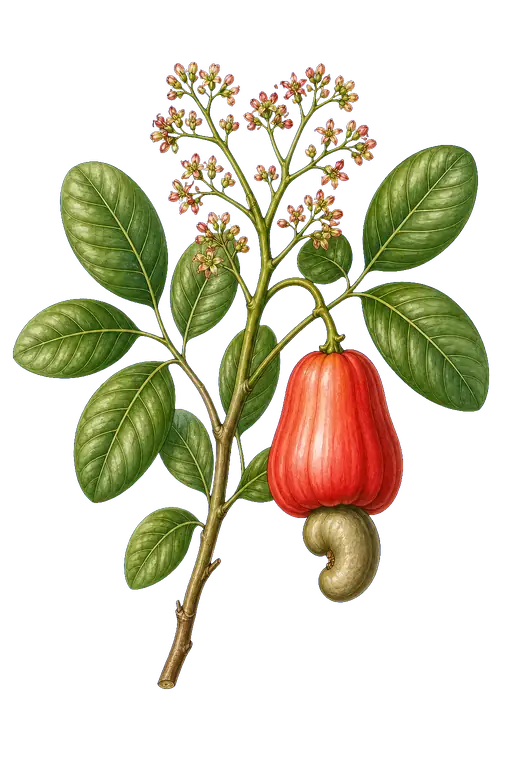
The cashew and mango family of trees and shrubs, producing resinous or allergenic sap. Includes mango (Mangifera indica), cashew (Anacardium occidentale), pistachio, and poison ivy. The sap can cause contact dermatitis; the dried resin is used in varnishes and lacquers.
Explore the species roster ↓Field identification keys
Compare several features together. These are typical family patterns; individual species can vary. Observe without tasting or handling unfamiliar plants.
- Stem cross-section
- Round
- Leaf arrangement
- Alternate
- Flower symmetry
- Actinomorphic
- Fruit
- Drupe
- Distinctive marker
- Resinous, sometimes milky bark; matures as a single-seeded drupe
Species in Anacardiaceae
25 of 25 species
Native status is regional. Range tags distinguish Kew WCVP dataset matches from individual reviews. Pet-filter records report no known toxicity to cats and dogs; some sources cover a genus or cultivar. Review the source context. Missing values are excluded, and no rating establishes suitability to eat or freedom from other hazards.
| Botanical name | Common & regional names | Origin & reviewed pet status |
|---|---|---|
| Mangifera indica | Aam Mango Tree / Cuckoo's joy
+8 languages
| Native: Assam ↗︎ Kew datasetKew WCVP dataset; accepted-name match. Dataset matching is separate from an individual regional review. Recorded worldwide native range: Assam to China (S. Yunnan). |
| Lannea coromandelica | Jhingan Wodier / Jhingam
+8 languages
| Native: Andaman Is., Assam, India, Nicobar Is. ↗︎ Kew datasetKew WCVP dataset; accepted-name match. Dataset matching is separate from an individual regional review. Recorded worldwide native range: Indian Subcontinent to China (S. Yunnan to SW. Guangdong) and Indo-China. |
| Semecarpus anacardium | Bhela Indian Marking Nut Tree / Oriental Cashew Nut / Dhobi Nut Tree
+5 languages
| Native: Assam, India, West Himalaya ↗︎ Kew datasetKew WCVP dataset; accepted-name match. Dataset matching is separate from an individual regional review. Recorded worldwide native range: Indian Subcontinent to Myanmar. |
| Anacardium occidentale | Kaju Cashew-nut Tree / Cashew Apple
+6 languages
| Introduced: India ↗︎ Kew datasetKew WCVP dataset; accepted-name match. Dataset matching is separate from an individual regional review. Recorded worldwide native range: Trinidad to S. Trop. America. |
| Nothopegia beddomei | Ambata Malabar Top-Fruit Tree
| Native: India ↗︎ Kew datasetKew WCVP dataset; accepted-name match. Dataset matching is separate from an individual regional review. Recorded worldwide native range: SW. India, Sri Lanka. |
| Holigarna grahamii | Dodda Ele Holegaara Blistering Varnish Tree
| Native: India ↗︎ Kew datasetKew WCVP dataset; accepted-name match. Dataset matching is separate from an individual regional review. Recorded worldwide native range: W. India. |
| Holigarna nigra | Cherei Black-Flowered Varnish Tree
| Native: India ↗︎ Kew datasetKew WCVP dataset; accepted-name match. Dataset matching is separate from an individual regional review. Recorded worldwide native range: SW. India. |
| Holigarna arnottiana | Ranbiba Jungle Marking nut
| Native: India ↗︎ Kew datasetKew WCVP dataset; accepted-name match. Dataset matching is separate from an individual regional review. Recorded worldwide native range: SW. India. |
| Spondias pinnata | Ambara Indian Hog-Plum / Wild Mango / Hog plum
+6 languages
| Native: Andaman Is., Assam, India ↗︎ Kew datasetKew WCVP dataset; accepted-name match. Dataset matching is separate from an individual regional review. Recorded worldwide native range: Indian Subcontinent to China (S. Yunnan, S. Guangxi) and Malesia. |
| Buchanania axillaris | Piyala Cuddapah Almond
+2 languages
| Native: India ↗︎ Kew datasetKew WCVP dataset; accepted-name match. Dataset matching is separate from an individual regional review. Recorded worldwide native range: India, Sri Lanka. |
| Nothopegia racemosa | Naayi Chera Chestnutleaf Top-Fruit Tree
+2 languages
| Native: India ↗︎ Kew datasetKew WCVP dataset; listed synonym of Nothopegia castaneifolia. Dataset matching is separate from an individual regional review. Recorded worldwide native range: India (SW. Maharashtra, NW. Karnataka). |
| Buchanania lanzan | Chironji Calumpong nut / Almondette tree / Cheronjee / Cuddapah almond
+5 languages
| Native: India, West Himalaya ↗︎ Kew datasetKew WCVP dataset; accepted-name match. Dataset matching is separate from an individual regional review. Recorded worldwide native range: Indian Subcontinent to China (S. Yunnan) and Indo-China. |
| Rhus mysorensis | Dasni Indian Sumac
+1 languages
| Native: India ↗︎ Kew datasetKew WCVP dataset; listed synonym of Searsia mysorensis. Dataset matching is separate from an individual regional review. Recorded worldwide native range: S. Pakistan to India. |
| Holigarna ferruginea | Charei
| Native: India ↗︎ Kew datasetKew WCVP dataset; accepted-name match. Dataset matching is separate from an individual regional review. Recorded worldwide native range: SW. India. |
| Semecarpus auriculata | Mancharei
| Not yet reviewed |
| Gluta travancorica | Chenkurinji Redwood tree
| Native: India ↗︎ Kew datasetKew WCVP dataset; accepted-name match. Dataset matching is separate from an individual regional review. Recorded worldwide native range: SW. India. |
| Nothopegia travancorica | Avukarum Travancore Top-Fruit Tree
| Native: India ↗︎ Kew datasetKew WCVP dataset; accepted-name match. Dataset matching is separate from an individual regional review. Recorded worldwide native range: SW. India. |
| Schinus terebinthifolia | Brazilian Pepper | Not listed native: India ↗︎ Kew datasetKew WCVP dataset; accepted-name match. Dataset matching is separate from an individual regional review. Recorded worldwide native range: Brazil to NE. Argentina. Not listed native does not establish introduction or absence from India. |
| Nothopegia colebrookiana | Nothopegia colebrookiana
| Not yet reviewed |
| Semecarpus kathalekanensis | Doddele Holegaara
| Native: India ↗︎ Kew datasetKew WCVP dataset; accepted-name match. Dataset matching is separate from an individual regional review. Recorded worldwide native range: India (Karnataka). |
| Pleiogynium solandri | Burdekin Plum | Not listed native: India ↗︎ Kew datasetKew WCVP dataset; listed synonym of Pleiogynium timoriense. Dataset matching is separate from an individual regional review. Recorded worldwide native range: S. Vietnam to S. Pacific. Not listed native does not establish introduction or absence from India. |
| Nothopegia heyneana | Nothopegia heyneana | Native: India ↗︎ Kew datasetKew WCVP dataset; accepted-name match. Dataset matching is separate from an individual regional review. Recorded worldwide native range: S. India. |
| Spondias indica | Spondias indica | Native: India ↗︎ Kew datasetKew WCVP dataset; listed synonym of Solenocarpus indicus. Dataset matching is separate from an individual regional review. Recorded worldwide native range: SW. India. |
| Nothopegia aureofulva | Nothopegia aureofulva | Native: India ↗︎ Kew datasetKew WCVP dataset; accepted-name match. Dataset matching is separate from an individual regional review. Recorded worldwide native range: SW. India. |
| Nothopegia vajravelui | Nothopegia vajravelui | Native: India ↗︎ Kew datasetKew WCVP dataset; accepted-name match. Dataset matching is separate from an individual regional review. Recorded worldwide native range: India (Karnataka, Tamil Nadu). |
Alternate, often trifoliate or pinnate leaves with resinous or milky sap, and small flowers maturing into a single-seeded drupe.
Includes mango and cashew alongside skin-irritating relatives like poison ivy — resinous sap across this family is worth some caution.
Which Anacardiaceae species is this?
Answer what you can see and narrow it down to a single Anacardiaceae species.
How to recognise the Anacardiaceae family
- 01
Resinous, sometimes allergenic sap
- 02
Alternate leaves, usually pinnate
- 03
Drupe fruit with single seed
To check whether a plant belongs to Anacardiaceae, compare the leaf arrangement, leaf type, flower symmetry, fruit type, and one distinctive marker together. A single feature can mislead; the family pattern is the combination.
Learn the full family-identification methodTypical leaf characters
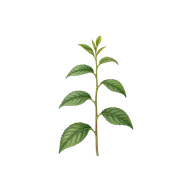
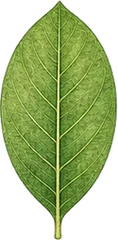
Characters typical of the family — individual species can vary.
Typical flower & fruit
- Flower symmetryActinomorphic (radially symmetrical)
- InflorescencePanicle
- FruitDrupe
Typical of the family — flowering plants only; species can vary.
Families that can look similar
Rutaceae
Compare against Rutaceae when the plant shares similar leaves, flowers, or fruit. Confirm by checking the full family pattern.
Compare RutaceaeMeliaceae
Compare against Meliaceae when the plant shares similar leaves, flowers, or fruit. Confirm by checking the full family pattern.
Compare MeliaceaeSapindaceae
Compare against Sapindaceae when the plant shares similar leaves, flowers, or fruit. Confirm by checking the full family pattern.
Compare SapindaceaeBurseraceae
Compare against Burseraceae when the plant shares similar leaves, flowers, or fruit. Confirm by checking the full family pattern.
Compare BurseraceaeMeet Anacardiaceae in the field
Point your camera, explore possible matches and compare the field marks. Identification runs on your phone, offline and private.
Download SASYA — Free