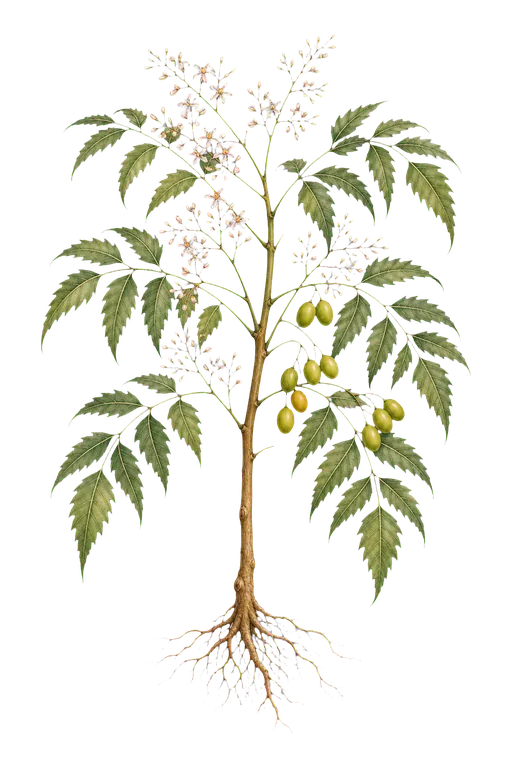
Neem / The Neem Tree
Azadirachta indica
Also known as Margosa, Indian Lilac, Nimbay, Pichumarda
- Habit
- Tree
- Found in India
- Tamil Nadu, Telangana, Maharashtra & more
- Flowering
- March-September
How to identify Neem
Identify Neem by combining habit, leaf characters, flower or fruit details, location, and its family pattern. Do not rely on one feature alone.
- Look for a tree habit.
- Check the distinctive field mark: Intensely bitter leaves and fruit (neem).
- Confirm leaf arrangement: Opposite.
- Confirm leaf type: Pinnately compound.
- Confirm flower colour: White.
- Confirm flower arrangement: Panicle.
- Use the leaf pattern: alternate leaf arrangement, compound leaves, toothed leaf margins, pinnate venation.
Plant Details
- Scientific name
- Azadirachta indica
- Genus
- Azadirachta
- Family
- Meliaceae
- Habit
- Tree
- Habitat
- Dry deciduous forests, gardens, roadsides
- Habitat type
- Forest, Cultivated, Wasteland
- Native to
- India, China
- Distribution
- Tropical Asia
- Found in India
- Tamil Nadu, Telangana, Maharashtra, Andhra Pradesh, Rajasthan, Gujarat, Delhi, Karnataka, West Bengal, Uttar Pradesh, Odisha, Kerala, Madhya Pradesh, Chhattisgarh, Bihar, Assam, Haryana, Uttarakhand, Puducherry, Goa, Punjab, Jharkhand, Daman & Diu, Tripura, Chandigarh, Himachal Pradesh, Manipur, Andaman & Nicobar Islands, Arunachal Pradesh, Jammu & Kashmir
- Flowering & fruiting
- March-September
- Conservation status
- Not Evaluated (NE)
Leaf characters
- Leaf arrangement
- OppositerecordedTwo leaves arise from the stem at the same point, facing each other.“The opposite, pinnate leaves are 20–40 cm (8–16 in) long, with 20 to 30 medium to dark green leaflets about 3–8 cm (1+1⁄4–3+1⁄4 in) long.” — Wikipedia, CC BY-SA 4.0
- Leaf type
- Pinnately compoundrecordedLeaflets are arranged in rows along a central stalk, like a feather.“The opposite, pinnate leaves are 20–40 cm (8–16 in) long, with 20 to 30 medium to dark green leaflets about 3–8 cm (1+1⁄4–3+1⁄4 in) long.” — Wikipedia, CC BY-SA 4.0
Typical of the family
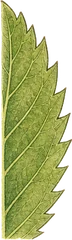
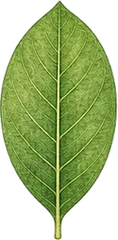
Characters marked “recorded” are for Neem itself; the rest are typical of the Meliaceae family.
Flower & fruit characters
- Flower colour
- Whiterecorded“White and fragrant flowers are arranged in more-or-less drooping axillary panicles which are up to 25 cm (10 in) long.” — Wikipedia, CC BY-SA 4.0
- Flower arrangement
- PaniclerecordedA branching cluster of clusters.“White and fragrant flowers are arranged in more-or-less drooping axillary panicles which are up to 25 cm (10 in) long.” — Wikipedia, CC BY-SA 4.0
- Fruit type
- DruperecordedA fleshy fruit with a single hard stone/pit enclosing the seed.“The fruit is a smooth (glabrous), olive-like drupe which varies in shape from elongate oval to nearly roundish, and when ripe is 14–28 mm (1⁄2–1+1⁄8 in) by 10–15 mm (3⁄8–5⁄8 in).” — Wikipedia, CC BY-SA 4.0
Typical of the family
- Flower symmetry
- Actinomorphic (radially symmetrical)
- Inflorescence
- Panicle
- Fruit
- Capsule
Characters marked “recorded” are for Neem itself; the rest are typical of the Meliaceae family — flowering plants only.
Local Names
- Hindi
- नीम Neem, Balnimb, nimba,नीम nim
- Nepali
- नीम Neem, नीम
- Bengali
- Neem, Nimgach, নিম
- Tamil
- வேப்பை Veppai, Sengumaru, வேம்பு, Vepa, Veppu
- Telugu
- వెపా Vepa, వేప చెట్టు, నిమ్బ (సంస్కృతం)
- Kannada
- Turakabevu, Kahi-beyu, ಬೆವು
- Malayalam
- Ariyaveppu, Aryaveppu, ആര്യവേപ്പ്
- Marathi
- Nimbay, Nimb, कडूनींब
- Sanskrit
- निम्बः
- Gujarati
- Limdo, કડવો લીમડો, લીમડો
- Odia
- ନିମ୍ବ
- Punjabi
- ਨਿੰਮ
- Assamese
- নিম
- Urdu
- نیم
- Sinhala
- කොහොඹ
Neem in India
The neem tree is one of India's most familiar shade trees, known as नीम Neem (Hindi), வேப்பை Veppai (Tamil), వెపా Vepa (Telugu), Turakabevu (Kannada), Ariyaveppu (Malayalam), Nimbay (Marathi). Azadirachta indica is recorded in large numbers across the country — GBIF data show it concentrated in Tamil Nadu, Telangana, Andhra Pradesh, Maharashtra, Gujarat, Rajasthan — and it lines streets, schoolyards and field bunds almost everywhere below the hills.
Uses
Few trees are put to as many traditional uses. Neem twigs are a classic daatun (chewing stick), the leaves are added to stored grain and to bathwater, and the tree features widely in Ayurvedic and home remedies — all attributed traditional uses rather than medical advice. Cold-pressed neem oil from the seeds is a well-known garden pest deterrent.
How to Identify Neem
A fast-growing evergreen tree with pinnate leaves made of many curved, sharply toothed leaflets. Sprays of small white, honey-scented flowers appear from spring, followed by olive-like yellow fruits. The quickest field check is the bitter smell of a crushed leaf.
Frequently Asked Questions
- What is The Neem Tree called in different Indian languages?
- नीम Neem (Hindi); வேப்பை Veppai (Tamil); వెపా Vepa (Telugu); Turakabevu (Kannada); Ariyaveppu (Malayalam); Nimbay (Marathi); Neem (Bengali); Limdo (Gujarati); ନିମ୍ବ (Odia); ਨਿੰਮ (Punjabi); निम्बः (Sanskrit).
- Is neem the same as curry leaf?
- No. Both have compound leaves, but neem (Azadirachta indica, family Meliaceae) is intensely bitter and not used in cooking, whereas curry leaf (Murraya koenigii, family Rutaceae) is aromatic and used in tempering.
- Is neem safe to use?
- Neem leaves and twigs have a long history of traditional household and Ayurvedic use, but neem oil and extracts should not be taken internally without expert guidance — treat any medicinal use as traditional, not medical advice.
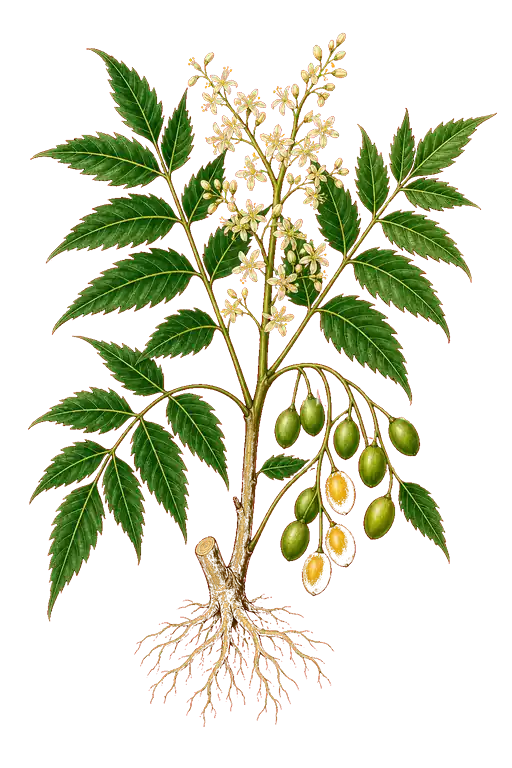
Meliaceae
Mahogany/Neem family
Neem belongs to the Meliaceae family.
The illustration represents the family — not necessarily this exact species.
Explore the Meliaceae familySnap it. Know it.
Point your camera at Neem or any plant and SASYA identifies it instantly — on-device, offline, and private.
Common plant problems
If you are starting from symptoms instead of a diagnosis, use the plant disease symptom checker to narrow the cause before treating.
All plant problem & care guidesMore in Meliaceae
View all MeliaceaeSources: GBIF — Azadirachta indica (India distribution & vernacular names) (CC BY 4.0) · iNaturalist — Azadirachta indica (regional names, India observations) (CC BY 4.0) · Wikipedia — Azadirachta indica (background/comprehension only) (CC BY-SA 4.0)