As recorded for Green Buttonwood
Conocarpus erectus
Green Buttonwood
- Found in India
- Gujarat, Andhra Pradesh, Tamil Nadu & more
Ecological pressure
Reports about this plant in particular places. Evidence from one region or a wider genus doesn’t establish the same effect everywhere.
Planting banned in Gujarat (Sep 2023); prohibitory orders in Telangana, Andhra Pradesh and Tamil Nadu; advisory in Karnataka; a Supreme Court-mandated committee sought a nationwide ban (Aug 2025)
- 01
Pollen linked to coughs, asthma and other respiratory allergies
Read source ↗ - 02
Roots damage drains, pipelines, footpaths and building foundations
Read source ↗ - 03
Draws down shallow groundwater in dry areas such as Kachchh
Read source ↗ - 04
Offers almost no nectar or shelter for birds, bees or insects
Read source ↗
Ecology & growing context
- Native status · Kew WCVP
- WCVP records it as introduced in India Kew dataset ↗
Kew WCVP dataset; accepted-name match. Dataset matching is separate from an individual regional review. Recorded worldwide native range: S. Florida to Peru and Brazil, W. Trop. Africa to N. Angola.
- Explore nearby plants
- Gujarat →Andhra Pradesh →Tamil Nadu →
Occurrence records show where a plant has been recorded; they do not establish that it is native there. Compare local habitat and growing conditions when choosing plants for a garden.
How to identify Green Buttonwood
Identify Green Buttonwood by combining habit, leaf characters, flower or fruit details, location, and its family pattern. Do not rely on one feature alone.
- Check the distinctive field mark: Broad leaves; coastal/mangrove-adjacent habitat.
- Confirm leaf type: Simple.
- Confirm leaf shape: Oblong.
- Confirm flower arrangement: Panicle.
- Confirm fruit type: Cone-like cluster.
- In India, compare location records such as Gujarat, Andhra Pradesh, Tamil Nadu, Telangana and nearby regions.
- Confirm it sits within the Combretaceae family pattern, then compare close relatives before deciding it is Green Buttonwood.
Plant Details
- Scientific name
- Conocarpus erectus
- Genus
- Conocarpus
- Family
- Combretaceae
- Found in India
- Gujarat, Andhra Pradesh, Tamil Nadu, Telangana, Maharashtra, Rajasthan, Karnataka
- Conservation status
- Not Evaluated (NE)
Leaf characters
- Leaf type
- SimplerecordedA single, undivided leaf blade.“The leaves are alternately arranged, simple and oblong, 2–7 cm (0.79–2.76 in) long (rarely to 10 cm or 3.9 in long) and 1–3 cm (0.39–1.18 in) broad, with a tapering tip and an enti” — Wikipedia, CC BY-SA 4.0
- Leaf shape
- OblongrecordedLonger than wide with roughly parallel sides, the ends rounded.“The leaves are alternately arranged, simple and oblong, 2–7 cm (0.79–2.76 in) long (rarely to 10 cm or 3.9 in long) and 1–3 cm (0.39–1.18 in) broad, with a tapering tip and an enti” — Wikipedia, CC BY-SA 4.0
- Leaf margin
- EntirerecordedA smooth, unbroken edge with no teeth or notches.“The leaves are alternately arranged, simple and oblong, 2–7 cm (0.79–2.76 in) long (rarely to 10 cm or 3.9 in long) and 1–3 cm (0.39–1.18 in) broad, with a tapering tip and an enti” — Wikipedia, CC BY-SA 4.0
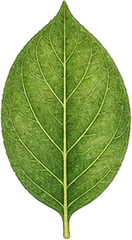
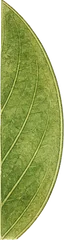
Typical of the family
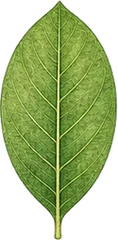
Characters marked “recorded” are for Green Buttonwood itself; the rest are typical of the Combretaceae family.
Flower & fruit characters
- Flower arrangement
- PaniclerecordedA branching cluster of clusters.“they are produced in stalked panicles of 35-56 flowers.” — Wikipedia, CC BY-SA 4.0
- Fruit type
- Cone-like clusterrecorded
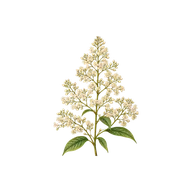
Typical of the family
- Inflorescence
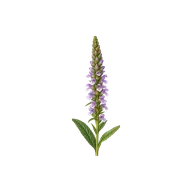
- Spike
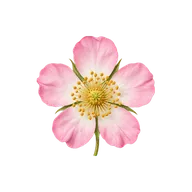
Characters marked “recorded” are for Green Buttonwood itself; the rest are typical of the Combretaceae family — flowering plants only.
About Green Buttonwood
Green Buttonwood (Conocarpus erectus) is a species in the Combretaceae family. In India it has been recorded in Gujarat, Andhra Pradesh, Tamil Nadu and 4 other states.
Uses
Locally it is cut for timber and furniture, planted as an ornamental and a source of dye or tannin.
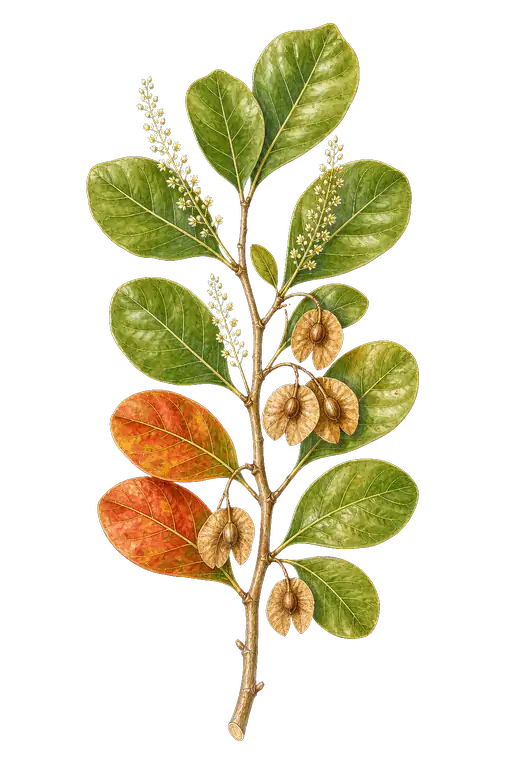
Combretaceae
Indian almond family
Green Buttonwood belongs to the Combretaceae family.
The illustration represents the family — not necessarily this exact species.
Explore the Combretaceae familySnap it. Know it.
Point your camera at Green Buttonwood or any plant and SASYA identifies it instantly — on-device, offline, and private.
Common plant problems
If you are starting from symptoms instead of a diagnosis, use the plant disease symptom checker to narrow the cause before treating.
All plant problem & care guides