

Rangoon Creeper
Combretum indicum
- Found in India
- Kerala, Maharashtra, Karnataka & more
How to identify Rangoon Creeper
Identify Rangoon Creeper by combining habit, leaf characters, flower or fruit details, location, and its family pattern. Do not rely on one feature alone.
- Check the distinctive field mark: Flowers open white and darken to red over days.
- Confirm leaf type: Simple.
- Confirm leaf shape: Elliptic.
- Confirm flower colour: Changes white to pink to red.
- Use the leaf pattern: opposite leaf arrangement, simple leaves, entire leaf margins, pinnate venation.
- In India, compare location records such as Kerala, Maharashtra, Karnataka, Tamil Nadu and nearby regions.
- Confirm it sits within the Combretaceae family pattern, then compare close relatives before deciding it is Rangoon Creeper.
Plant Details
- Scientific name
- Combretum indicum
- Genus
- Combretum
- Family
- Combretaceae
- Found in India
- Kerala, Maharashtra, Karnataka, Tamil Nadu, Rajasthan, West Bengal, Telangana, Goa, Uttarakhand, Uttar Pradesh, Delhi, Andhra Pradesh, Madhya Pradesh, Odisha, Gujarat, Assam, Chhattisgarh, Haryana, Bihar, Punjab, Chandigarh, Arunachal Pradesh, Himachal Pradesh, Tripura, Jharkhand, Mizoram, Puducherry, Daman & Diu, Manipur
- Conservation status
- Not Evaluated (NE)
Leaf characters
- Leaf type
- SimplerecordedA single, undivided leaf blade.“The leaves are simple, elliptical in outline, with an acuminate tip and a rounded base;” — Wikipedia, CC BY-SA 4.0
- Leaf shape
- EllipticrecordedWidest at the middle, tapering evenly at both ends.“The leaves are simple, elliptical in outline, with an acuminate tip and a rounded base;” — Wikipedia, CC BY-SA 4.0
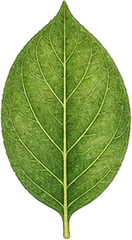
Typical of the family
- Arrangement
- Opposite
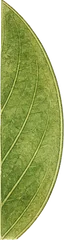
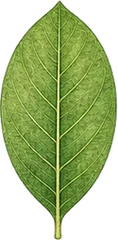
Characters marked “recorded” are for Rangoon Creeper itself; the rest are typical of the Combretaceae family.
Flower & fruit characters
- Flower colour
- Changes white to pink to redrecorded
Typical of the family
- Flower symmetry
- Actinomorphic (radially symmetrical)
- Inflorescence
- Spike
- Fruit
- Drupe
Characters marked “recorded” are for Rangoon Creeper itself; the rest are typical of the Combretaceae family — flowering plants only.
Local Names
- Gujarati
- મધુમાલતી
Rangoon Creeper in India
Madhumalti is a vigorous fragrant climber whose flowers change colour as they age — મધુમાલતી (Gujarati). Combretum indicum is grown across Kerala, Maharashtra, Tamil Nadu, Karnataka, Rajasthan, West Bengal over walls, arches and gates.
Uses
It is grown as a fast-growing ornamental screen for its sweetly scented flower clusters that open white, then turn pink and deep red, so all three colours appear together. The seeds have attributed traditional uses but are best treated as ornamental only.
How to Identify Rangoon Creeper
A woody climber with oval opposite leaves that bears hanging clusters of long, slender-tubed five-petalled flowers. The colour shift — white to pink to crimson within a cluster — combined with the strong evening fragrance makes it easy to identify.
Frequently Asked Questions
- What is Rangoon Creeper called in different Indian languages?
- મધુમાલતી (Gujarati).
- Why do madhumalti flowers change colour?
- Each flower opens white and deepens to pink and then red as it ages, so a single cluster shows all three colours at once.
- Is rangoon creeper fragrant?
- Yes — its flowers are sweetly scented, especially in the evening, which is part of why it is such a popular ornamental climber.
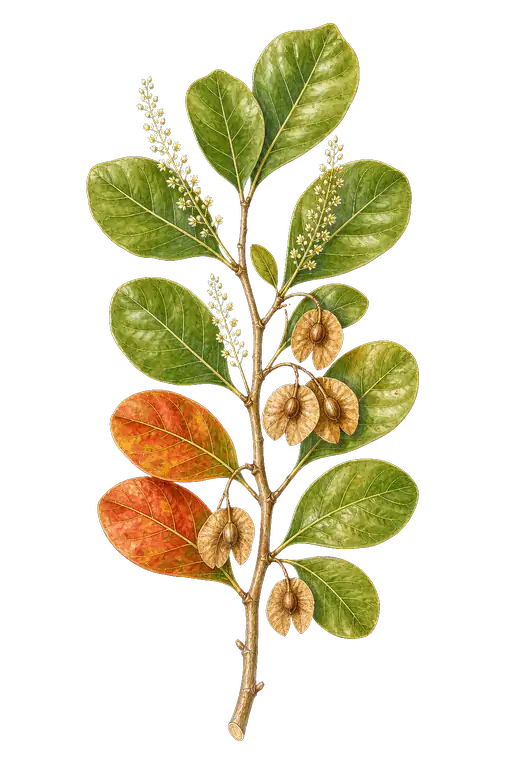
Combretaceae
Indian almond family
Rangoon Creeper belongs to the Combretaceae family.
The illustration represents the family — not necessarily this exact species.
Explore the Combretaceae familySnap it. Know it.
Point your camera at Rangoon Creeper or any plant and SASYA identifies it instantly — on-device, offline, and private.
Common plant problems
If you are starting from symptoms instead of a diagnosis, use the plant disease symptom checker to narrow the cause before treating.
All plant problem & care guidesMore in Combretaceae
View all CombretaceaeSources: GBIF — Combretum indicum (India distribution & vernacular names) (CC BY 4.0) · iNaturalist — Combretum indicum (regional names, India observations) (CC BY 4.0) · Wikipedia — Combretum indicum (background/comprehension only) (CC BY-SA 4.0)