Dhava / Crane Tree
Anogeissus latifolia
Also known as Axle-Wood Tree, Button Tree, Indian Gum Tree, Indian Sumac
- Habit
- Tree
- Found in India
- Karnataka, Tamil Nadu, Maharashtra & more
- Flowering
- March-December
How to identify Dhava
Identify Dhava by combining habit, leaf characters, flower or fruit details, location, and its family pattern. Do not rely on one feature alone.
- Look for a tree habit.
- Check the distinctive field mark: Small leaves; gum-yielding bark.
- Confirm fruit type: Cone-like cluster.
- In season, compare flowering and fruiting time: March-December.
- In India, compare location records such as Karnataka, Tamil Nadu, Maharashtra, West Bengal and nearby regions.
- Confirm it sits within the Combretaceae family pattern, then compare close relatives before deciding it is Dhava.
Plant Details
- Scientific name
- Anogeissus latifolia
- Genus
- Anogeissus
- Family
- Combretaceae
- Habit
- Tree
- Habitat
- Moist and dry deciduous forests
- Habitat type
- Forest
- Distribution
- India, Sri Lanka, Pakistan
- Found in India
- Karnataka, Tamil Nadu, Maharashtra, West Bengal, Uttar Pradesh, Uttarakhand, Bihar, Chhattisgarh, Gujarat, Himachal Pradesh, Odisha, Puducherry, Rajasthan, Telangana
- Flowering & fruiting
- March-December
- Conservation status
- Not Evaluated (NE)
Leaf characters
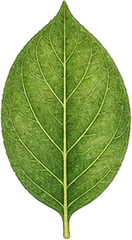
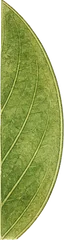
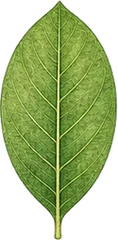
Typical of the Combretaceae family — a field-mark hint, not measured for this exact species.
Flower & fruit characters
- Fruit type
- Cone-like clusterrecorded
Typical of the family
- Flower symmetry
- Actinomorphic (radially symmetrical)
- Inflorescence
- Spike
- Fruit
- Drupe
Characters marked “recorded” are for Dhava itself; the rest are typical of the Combretaceae family — flowering plants only.
Local Names
- Hindi
- धावा dhava
- Nepali
- धावा
- Telugu
- సిరిమాను చెట్టు, సిరిమానుచెట్టు
- Kannada
- ದಿಂಡಿಗ
- Malayalam
- മഴുക്കാഞ്ഞിരം, Anogeissus latifolia
- Marathi
- धावडा
Dhava in India
This deciduous tree, known as धावा (Hindi), సిరిమాను చెట్టు (Telugu), ದಿಂಡಿಗ (Kannada), മഴുക്കാഞ്ഞിരം (Malayalam), धावडा (Marathi), is valued for both its wood and its natural gum. Anogeissus latifolia is found across Karnataka, Tamil Nadu, Maharashtra, West Bengal, Uttar Pradesh, Madras, typically in dry deciduous forest.
Uses
Its gum (Indian gum, ghatti gum) is used industrially as a thickener and adhesive, and its tough, durable wood has historically been used for tool handles and cart axles, giving it the English name 'axlewood'.
How to Identify Dhava
A deciduous tree with pale, flaking bark and opposite, oval leaves. Small greenish-yellow flowers cluster into dense round heads, followed by small winged fruit. Cuts in the bark exude a pale gum that hardens into translucent lumps.
Frequently Asked Questions
- What is Crane Tree called in different Indian languages?
- धावा (Hindi); సిరిమాను చెట్టు (Telugu); ದಿಂಡಿಗ (Kannada); മഴുക്കാഞ്ഞിരം (Malayalam); धावडा (Marathi).
- Why is it called 'axlewood'?
- Its tough, durable timber was traditionally used for cart axles and tool handles, which is the origin of its common English name.
- What is the gum used for?
- Its natural gum is processed industrially as a thickener and adhesive, used in textiles, printing and some food applications.
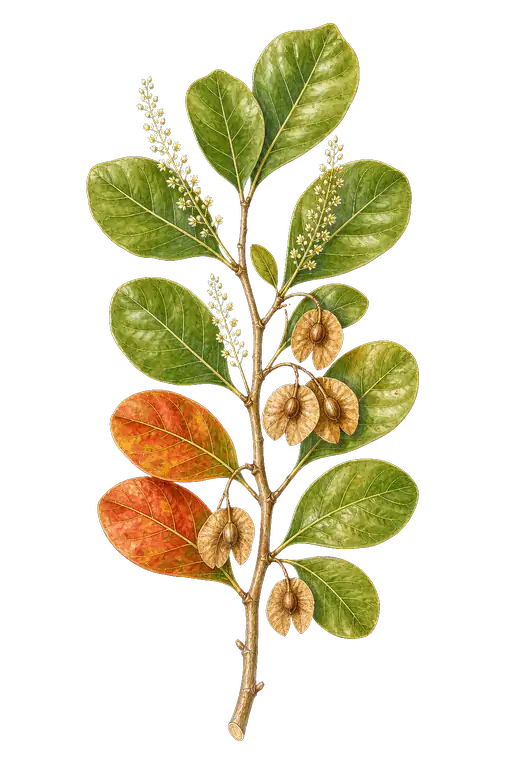
Combretaceae
Indian almond family
Dhava belongs to the Combretaceae family.
The illustration represents the family — not necessarily this exact species.
Explore the Combretaceae familySnap it. Know it.
Point your camera at Dhava or any plant and SASYA identifies it instantly — on-device, offline, and private.
Common plant problems
If you are starting from symptoms instead of a diagnosis, use the plant disease symptom checker to narrow the cause before treating.
All plant problem & care guidesMore in Combretaceae
View all CombretaceaeSources: GBIF — Anogeissus latifolia (India distribution & vernacular names) (CC BY 4.0) · Wikipedia — Anogeissus latifolia (background/comprehension only) (CC BY-SA 4.0)