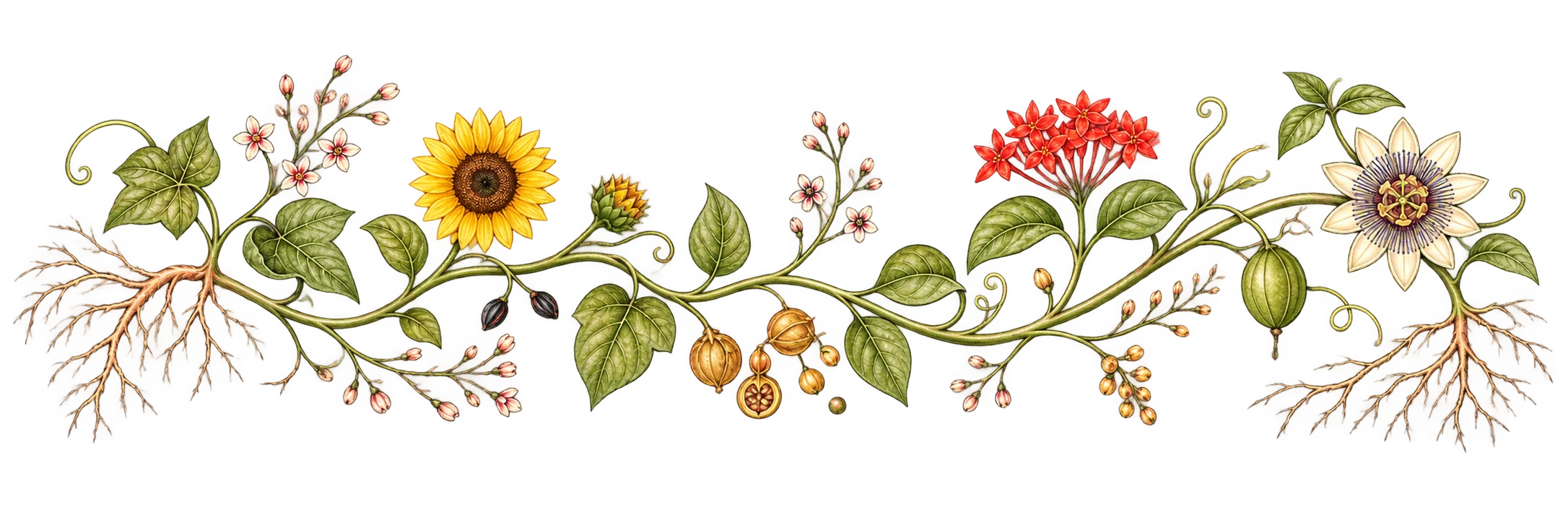
Celastraceae family
Staff-Tree Family
22 catalogue species · Order Celastrales
The Celastraceae family (Staff-Tree Family) is a botanical family placed in the order Celastrales. In the SASYA catalogue it spans 22 species across 11 genera. Members range from trees to shrubs. Well-represented genera include Maytenus, Euonymus and Microtropis. Several members are valued in traditional medicine. Familiar examples include Ceylon Teak, Panicled Cassine and Arabian Tea.
Explore the species roster ↓Field identification keys
Compare several features together. These are typical family patterns; individual species can vary. Observe without tasting or handling unfamiliar plants.
- Stem cross-section
- Round
- Leaf type
- Simple
- Flower symmetry
- Actinomorphic
- Fruit
- Capsule
- Distinctive marker
- Flowers sit on a conspicuous fleshy disc; seeds wrapped in a bright, fleshy, bird-attracting aril.
Familiar members: Thorny Staff Tree · Malkangani · Ceylon Teak · Banati · Bhesa indica
Species in Celastraceae
22 of 22 species
Native status is regional. Range tags distinguish Kew WCVP dataset matches from individual reviews. Pet-filter records report no known toxicity to cats and dogs; some sources cover a genus or cultivar. Review the source context. Missing values are excluded, and no rating establishes suitability to eat or freedom from other hazards.
| Botanical name | Common & regional names | Origin & reviewed pet status |
|---|---|---|
| Maytenus emarginata | Thorny Staff Tree
| Native: India ↗︎ Kew datasetKew WCVP dataset; listed synonym of Gymnosporia emarginata. Dataset matching is separate from an individual regional review. Recorded worldwide native range: India, Sri Lanka, Pen. Malaysia. |
| Celastrus paniculatus | Malkangani Black oil plant / Climbing staff plant / Intellect plant
+5 languages
| Native: Andaman Is., Assam, India, West Himalaya ↗︎ Kew datasetKew WCVP dataset; accepted-name match. Dataset matching is separate from an individual regional review. Recorded worldwide native range: Indian Subcontinent to S. China and Indo-China. |
| Cassine glauca | Ceylon Teak
| Not listed native: India ↗︎ Kew datasetKew WCVP dataset; listed synonym of Elaeodendron glaucum. Dataset matching is separate from an individual regional review. Recorded worldwide native range: Sri Lanka. Not listed native does not establish introduction or absence from India. |
| Lophopetalum wightianum | Banati Spindle Tree
+3 languages
| Native: Assam, India ↗︎ Kew datasetKew WCVP dataset; accepted-name match. Dataset matching is separate from an individual regional review. Recorded worldwide native range: Indian Subcontinent to W. Malesia. |
| Bhesa indica | Bhesa indica
| Native: India ↗︎ Kew datasetKew WCVP dataset; accepted-name match. Dataset matching is separate from an individual regional review. Recorded worldwide native range: SW. India, Indo-China to Pen. Malaysia. |
| Euonymus indicus | Indian Spindle Tree | Native: Andaman Is., India, Nicobar Is. ↗︎ Kew datasetKew WCVP dataset; accepted-name match. Dataset matching is separate from an individual regional review. Recorded worldwide native range: Trop. Asia. |
| Maytenus rothiana | Tandasa Deccan Spike Thorn
| Native: India ↗︎ Kew datasetKew WCVP dataset; listed synonym of Gymnosporia rothiana. Dataset matching is separate from an individual regional review. Recorded worldwide native range: SW. India. |
| Glyptopetalum lawsonii | Kodikurunthu
| Native: India ↗︎ Kew datasetKew WCVP dataset; listed synonym of Glyptopetalum glaucum. Dataset matching is separate from an individual regional review. Recorded worldwide native range: S. India. |
| Microtropis latifolia | Broadleaf Redberry Tree | Native: India ↗︎ Kew datasetKew WCVP dataset; accepted-name match. Dataset matching is separate from an individual regional review. Recorded worldwide native range: SW. India. |
| Pleurostylia opposita | Chiru Piyari Panakka Tree
| Native: Andaman Is., India, Laccadive Is. ↗︎ Kew datasetKew WCVP dataset; accepted-name match. Dataset matching is separate from an individual regional review. Recorded worldwide native range: E. Mozambique, W. Indian Ocean, Hainan, Trop. Asia to New Caledonia, N. & SE. Queensland. |
| Microtropis wallichiana | Deccan Redberry Tree | Native: India ↗︎ Kew datasetKew WCVP dataset; accepted-name match. Dataset matching is separate from an individual regional review. Recorded worldwide native range: SW. India, Sri Lanka, N. Sumatera, N. Borneo. |
| Cassine paniculata | Motha Bhutya Panicled Cassine
| Native: India ↗︎ Kew datasetKew WCVP dataset; listed synonym of Elaeodendron paniculatum. Dataset matching is separate from an individual regional review. Recorded worldwide native range: SW. India, Sri Lanka. |
| Gymnosporia montana | Kattangi Confetti Spikethorn
| Native: India ↗︎ Kew datasetKew WCVP dataset; accepted-name match. Dataset matching is separate from an individual regional review. Recorded worldwide native range: W. India, Bangladesh. |
| Celastrus paniculatus subsp. aggregatus | Malkangani Black oil plant / Climbing staff plant / Intellect plant
+5 languages
| Native: India ↗︎ Kew datasetKew WCVP dataset; accepted-name match. Dataset matching is separate from an individual regional review. Recorded worldwide native range: SW. India. |
| Catha edulis | Qat Arabian Tea
| Not listed native: India ↗︎ Kew datasetKew WCVP dataset; accepted-name match. Dataset matching is separate from an individual regional review. Recorded worldwide native range: Eritrea to S. Africa. Not listed native does not establish introduction or absence from India. |
| Euonymus japonicus | Japanese Spindle Tree | Introduced: India ↗︎ Kew datasetKew WCVP dataset; accepted-name match. Dataset matching is separate from an individual regional review. Recorded worldwide native range: Korea, Japan to Nansei-shotō. |
| Maytenus puberula | Konkan Spike Thorn | Native: India ↗︎ Kew datasetKew WCVP dataset; listed synonym of Gymnosporia puberula. Dataset matching is separate from an individual regional review. Recorded worldwide native range: W. India. |
| Microtropis stocksii | Microtropis stocksii | Native: India ↗︎ Kew datasetKew WCVP dataset; accepted-name match. Dataset matching is separate from an individual regional review. Recorded worldwide native range: S. India. |
| Glyptopetalum grandiflorum | Glyptopetalum grandiflorum | Native: India ↗︎ Kew datasetKew WCVP dataset; accepted-name match. Dataset matching is separate from an individual regional review. Recorded worldwide native range: SW. India, Sri Lanka. |
| Maytenus heyneana | Maytenus heyneana | Native: India ↗︎ Kew datasetKew WCVP dataset; listed synonym of Gymnosporia heyneana. Dataset matching is separate from an individual regional review. Recorded worldwide native range: S. India. |
| Euonymus crenulatus | Euonymus crenulatus | Native: India ↗︎ Kew datasetKew WCVP dataset; accepted-name match. Dataset matching is separate from an individual regional review. Recorded worldwide native range: SW. India. |
| Maytenus ovata | Maytenus ovata | Native: India ↗︎ Kew datasetKew WCVP dataset; listed synonym of Gymnosporia ovalifolia. Dataset matching is separate from an individual regional review. Recorded worldwide native range: SW. India. |
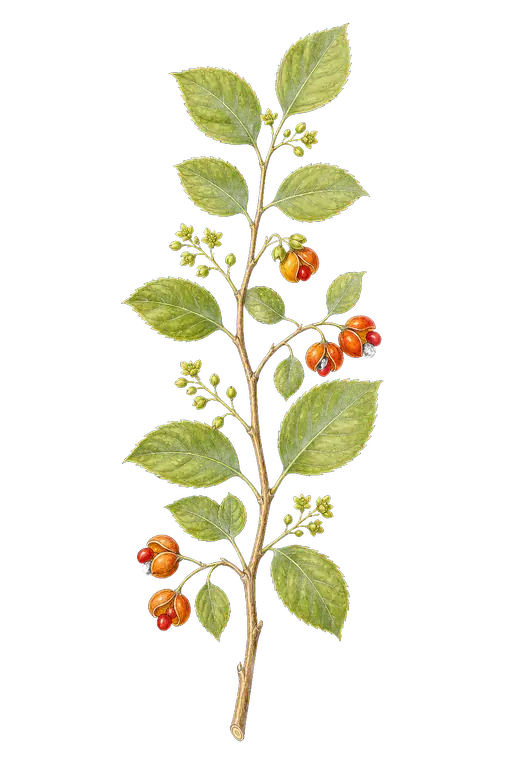
Simple, usually toothed leaves on woody climbers, shrubs, or trees; small inconspicuous flowers sit on a fleshy nectar disc and ripen into a capsule that splits open to reveal seeds wrapped in a bright, fleshy aril.
The brightly coloured aril around each seed — often orange or red against a split pink or orange capsule — is the family's most eye-catching field mark, evolved to attract seed-dispersing birds.
Which Celastraceae species is this?
Answer what you can see and narrow it down to a single Celastraceae species.
To check whether a plant belongs to Celastraceae, compare the leaf arrangement, leaf type, flower symmetry, fruit type, and one distinctive marker together. A single feature can mislead; the family pattern is the combination.
Learn the full family-identification methodTypical leaf characters
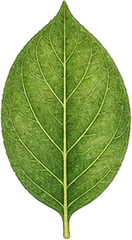
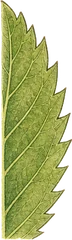
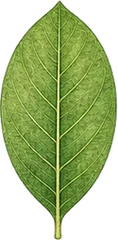
Characters typical of the family — individual species can vary.
Typical flower & fruit
- Flower symmetryActinomorphic (radially symmetrical)
- InflorescenceCyme
- FruitCapsule
Typical of the family — flowering plants only; species can vary.
Families that can look similar
Euphorbiaceae
Compare against Euphorbiaceae when the plant shares similar leaves, flowers, or fruit. Confirm by checking the full family pattern.
Compare EuphorbiaceaeCapparaceae
Compare against Capparaceae when the plant shares similar leaves, flowers, or fruit. Confirm by checking the full family pattern.
Compare CapparaceaeAizoaceae
Compare against Aizoaceae when the plant shares similar leaves, flowers, or fruit. Confirm by checking the full family pattern.
Compare AizoaceaeBrassicaceae
Compare against Brassicaceae when the plant shares similar leaves, flowers, or fruit. Confirm by checking the full family pattern.
Compare BrassicaceaeMeet Celastraceae in the field
Point your camera, explore possible matches and compare the field marks. Identification runs on your phone, offline and private.
Download SASYA — Free