
Glyptopetalum grandiflorum
- Habit
- Tree
- Found in India
- Kerala, Karnataka
- Flowering
- February-June
Plant Details
- Scientific name
- Glyptopetalum grandiflorum
- Genus
- Glyptopetalum
- Family
- Celastraceae
- Habit
- Tree
- Habitat
- Evergreen and shola forests
- Habitat type
- Forest
- Found in India
- Kerala, Karnataka
- Flowering & fruiting
- February-June
- Conservation status
- Data Deficient (DD)
Leaf characters
- Arrangement
- Variable



Typical of the Celastraceae family — a field-mark hint, not measured for this exact species.
Flower & fruit characters
Typical of the Celastraceae family — flowering plants only; individual species can differ.
About Glyptopetalum grandiflorum
Glyptopetalum grandiflorum is a tree belonging to the Celastraceae family (Staff-Tree Family). It is typically found in evergreen and shola forests. Flowering and fruiting are typically seen during February-June. The species is valued in traditional medicine. Its conservation status has been assessed as Data Deficient (DD).
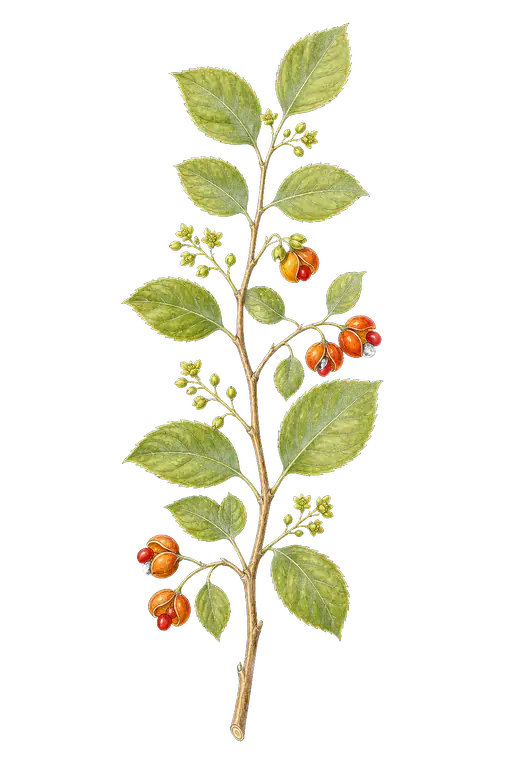
Celastraceae
Staff-Tree Family
Glyptopetalum grandiflorum belongs to the Celastraceae family.
The illustration represents the family — not necessarily this exact species.
Explore the Celastraceae family →Snap it. Know it.
Point your camera at Glyptopetalum grandiflorum or any plant and SASYA identifies it instantly — on-device, offline, and private.