
Jhingan / Wodier
Lannea coromandelica
Also known as Jhingam
- Habit
- Tree
- Found in India
- Rajasthan, Maharashtra, Telangana & more
- Flowering
- January-July
Plant Details
- Scientific name
- Lannea coromandelica
- Genus
- Lannea
- Family
- Anacardiaceae
- Habit
- Tree
- Habitat
- Deciduous forests
- Habitat type
- Forest
- Distribution
- India, Sri Lanka, Thailand, Burma, China, Malaysia
- Found in India
- Rajasthan, Maharashtra, Telangana, Tamil Nadu, Kerala, Andaman & Nicobar Islands
- Flowering & fruiting
- January-July
- Conservation status
- Not Evaluated (NE)
Leaf characters
- Arrangement
- Alternate
- Type
- Variable


Typical of the Anacardiaceae family — a field-mark hint, not measured for this exact species.
Flower & fruit characters
Typical of the Anacardiaceae family — flowering plants only; individual species can differ.
Local Names
- Hindi
- झिंगन Jhingan, कइमुल Kaimul, काशमला Kashmala, Goonja
- Nepali
- हल्लुन्ड़े Hallunde, होलोङ्ग्ग्रे Holonggre, ठुलो दब्दबे Thulo Dabdabe
- Bengali
- জিযা Jia, জিওল Jiola, জিওল
- Tamil
- அப்பிரியதரு Appiriya-Taru, நெய்த்தோர் Neyttor, ஒடியர் Odiyar, Anaikkarai
- Telugu
- ఆతోపు చెట్టు Aathopu Chettu, అజశృంగి Ajasrungi, అప్పిరియద Appiriyada, Appriyada
- Kannada
- ಗೊದ್ದ Godda, ಗೊಗಲ್ Gogal, ಕುರಟಿಕೆ Kuratike, Ajjashringi
- Malayalam
- കാരിലവ് Kaarilavu, കരശ് Karash, കരയം Karayam, Anakkaram
- Marathi
- मोई Moi, शेमट Shemat, शिमटी Shimati, Moin
- Sanskrit
- Jingani
- Gujarati
- Madhol, Modhad, Moyno
- Odia
- Jia, Moi, Raji-mohi
Jhingan in India
This deciduous tree, known as झिंगन Jhingan (Hindi), அப்பிரியதரு Appiriya-Taru (Tamil), ఆతోపు చెట్టు Aathopu Chettu (Telugu), ಗೊದ್ದ Godda (Kannada), കാരിലവ് Kaarilavu (Malayalam), मोई Moi (Marathi), is a common sight across dry forest and farmland. Lannea coromandelica is found across Rajasthan, Maharashtra, Telangana, Tamil Nadu, Kerala, Andaman and Nicobar Islands, tolerant of poor soil and drought.
Uses
It's commonly planted as a living fence post, since cut branches readily root and sprout when planted directly in the ground, and its bark and gum have a history of traditional folk use in some regions.
How to Identify Jhingan
A deciduous tree with pinnate leaves clustered near the branch tips, shed for much of the dry season. Small greenish-yellow flowers appear on the bare branches before the new leaves, followed by small red-purple drupes.
Frequently Asked Questions
- What is Wodier called in different Indian languages?
- झिंगन Jhingan (Hindi); அப்பிரியதரு Appiriya-Taru (Tamil); ఆతోపు చెట్టు Aathopu Chettu (Telugu); ಗೊದ್ದ Godda (Kannada); കാരിലവ് Kaarilavu (Malayalam); मोई Moi (Marathi); জিযা Jia (Bengali); Madhol (Gujarati); Jia (Odia); Jingani (Sanskrit).
- Why is it used as a living fence?
- Cut branches root easily when planted directly in the ground, letting farmers create a living, growing fence line rather than using dead posts.
- When does it flower?
- It typically flowers on bare branches during the dry season, before the new leaves emerge.
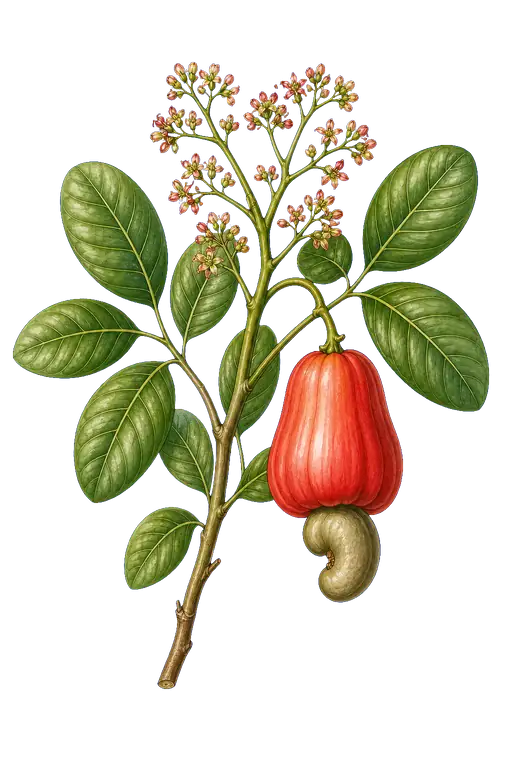
Anacardiaceae
Cashew family
Jhingan belongs to the Anacardiaceae family.
The illustration represents the family — not necessarily this exact species.
Explore the Anacardiaceae family →Snap it. Know it.
Point your camera at Jhingan or any plant and SASYA identifies it instantly — on-device, offline, and private.
Common plant problems
All plant problem & care guides →More in Anacardiaceae
View all Anacardiaceae →Sources: GBIF — Lannea coromandelica (India distribution & vernacular names) (CC BY 4.0) · Wikipedia — Lannea coromandelica (background/comprehension only) (CC BY-SA 4.0)