
Ambara / Indian Hog-Plum
Spondias pinnata
Also known as Wild Mango, Hog Plum
- Habit
- Tree
- Found in India
- Karnataka, Tamil Nadu, Maharashtra & more
- Flowering
- January-June
Plant Details
- Scientific name
- Spondias pinnata
- Genus
- Spondias
- Family
- Anacardiaceae
- Habit
- Tree
- Habitat
- Deciduous- and semi-evergreen forests, also in plains
- Habitat type
- Forest
- Distribution
- India, Indo-Malaysia, Java, Philippines
- Found in India
- Karnataka, Tamil Nadu, Maharashtra, West Bengal, Andaman & Nicobar Islands, Kerala
- Flowering & fruiting
- January-June
- Conservation status
- Not Evaluated (NE)
Leaf characters
- Arrangement
- Alternate
- Type
- Variable


Typical of the Anacardiaceae family — a field-mark hint, not measured for this exact species.
Flower & fruit characters
Typical of the Anacardiaceae family — flowering plants only; individual species can differ.
Local Names
- Hindi
- अम्बाड़ा Ambara, अम्बाड़ी Ambari, अमरा Amra, आमड़ा
- Nepali
- अमारो Amaaro
- Bengali
- আমড়া Aamada, আম্রাত Aamraata, আম্রাতক Aamraataka
- Tamil
- அம்பாழம் Ambazham, ஆம்பிரம் Ampiram, அப்பீரகம் Appirakam, Mambulichi
- Telugu
- అడవిమామిడి Adavimamidi, అధ్వము Adhvamu, అంబాళము Ambalamu
- Kannada
- ಅಬಟ್ಟಿ ಮರ Abatti Mara, ಅಮಟೆ ಕಾಯಿಮರ Amate Kaayimara, ಅಂಬಾಡೆ Ambaade
- Malayalam
- അമ്പഴം Ampazham, കാട്ട്മാങ്ങ Kaattumaanga, Kattambazham
- Marathi
- अमडा Amada, आंबाडा Ambada, ढोलआंबा Dholamba, अंबाडा
- Sanskrit
- Aamrataka
Ambara in India
This deciduous tree, known as अम्बाड़ा Ambara (Hindi), அம்பாழம் Ambazham (Tamil), అడవిమామిడి Adavimamidi (Telugu), ಅಬಟ್ಟಿ ಮರ Abatti Mara (Kannada), അമ്പഴം Ampazham (Malayalam), अमडा Amada (Marathi), is valued for its tart, mango-scented fruit. Spondias pinnata is found across Karnataka, Tamil Nadu, Maharashtra, West Bengal, Andaman and Nicobar Islands, Kerala, typically in deciduous forest.
Uses
Its sour fruit is used in chutneys, pickles and traditional cooking, and young shoots and leaves are sometimes eaten as a tangy addition to regional dishes.
How to Identify Ambara
A deciduous tree with pinnate compound leaves clustered near the branch tips. Small greenish-white flowers appear in loose sprays as new leaves emerge, followed by oval, mango-scented fruit that ripens from green to yellow.
Frequently Asked Questions
- What is Indian Hog-Plum called in different Indian languages?
- अम्बाड़ा Ambara (Hindi); அம்பாழம் Ambazham (Tamil); అడవిమామిడి Adavimamidi (Telugu); ಅಬಟ್ಟಿ ಮರ Abatti Mara (Kannada); അമ്പഴം Ampazham (Malayalam); अमडा Amada (Marathi); আমড়া Aamada (Bengali); Aamrataka (Sanskrit).
- Is this related to mango?
- Not closely — it's in the same family (Anacardiaceae) as mango but a different genus (Spondias); its fruit has a similar tangy scent but a more fibrous, sour flesh.
- How is the fruit used?
- Its tart pulp is used in chutneys and pickles rather than eaten fresh like a dessert fruit, valued for its sharp, sour flavour.
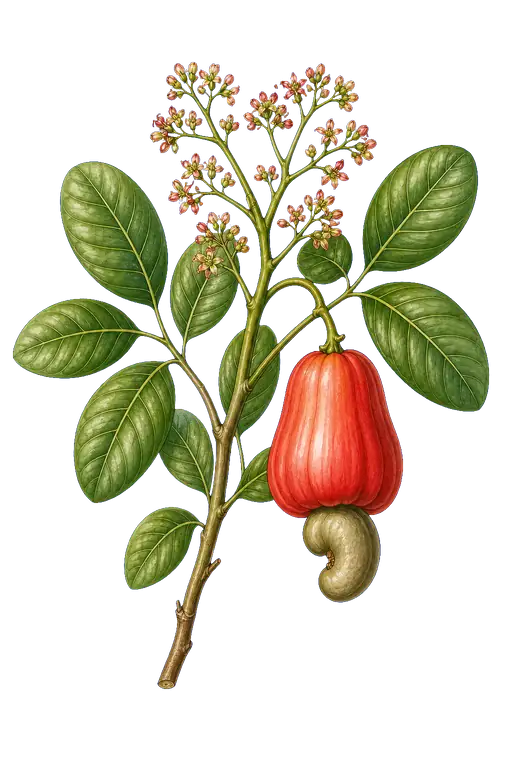
Anacardiaceae
Cashew family
Ambara belongs to the Anacardiaceae family.
The illustration represents the family — not necessarily this exact species.
Explore the Anacardiaceae family →Snap it. Know it.
Point your camera at Ambara or any plant and SASYA identifies it instantly — on-device, offline, and private.
Common plant problems
All plant problem & care guides →More in Anacardiaceae
View all Anacardiaceae →Sources: GBIF — Spondias pinnata (India distribution & vernacular names) (CC BY 4.0) · Wikipedia — Spondias pinnata (background/comprehension only) (CC BY-SA 4.0)