
Dasni / Indian Sumac
Rhus mysorensis
- Habit
- Shrub
- Found in India
- Rajasthan, Delhi, Karnataka & more
- Flowering
- March-February
Plant Details
- Scientific name
- Rhus mysorensis
- Genus
- Rhus
- Family
- Anacardiaceae
- Habit
- Shrub
- Habitat
- Scrub jungles and foothills of dry deciduous forests
- Native to
- India
- Distribution
- India, Sri Lanka, Pakistan
- Found in India
- Rajasthan, Delhi, Karnataka, Tamil Nadu
- Flowering & fruiting
- March-February
- Conservation status
- Not Evaluated (NE)
Leaf characters
- Arrangement
- Alternate
- Type
- Variable


Typical of the Anacardiaceae family — a field-mark hint, not measured for this exact species.
Flower & fruit characters
Typical of the Anacardiaceae family — flowering plants only; individual species can differ.
Local Names
- Hindi
- दसनी Dasni, Dansara, Darsan
- Telugu
- Sitha, Sundari
- Malayalam
- Chippamaram
- Marathi
- अम्बॊनी Amboni
About Dasni
Indian Sumac (Rhus mysorensis) is a shrub belonging to the Anacardiaceae family (Cashew family). Members of this family are generally characterised by alternate pinnate compound leaves, panicle flower clusters, drupe fruit. It is typically found in scrub jungles and foothills of dry deciduous forests. It is native to India. Flowering and fruiting are typically seen during March-February.
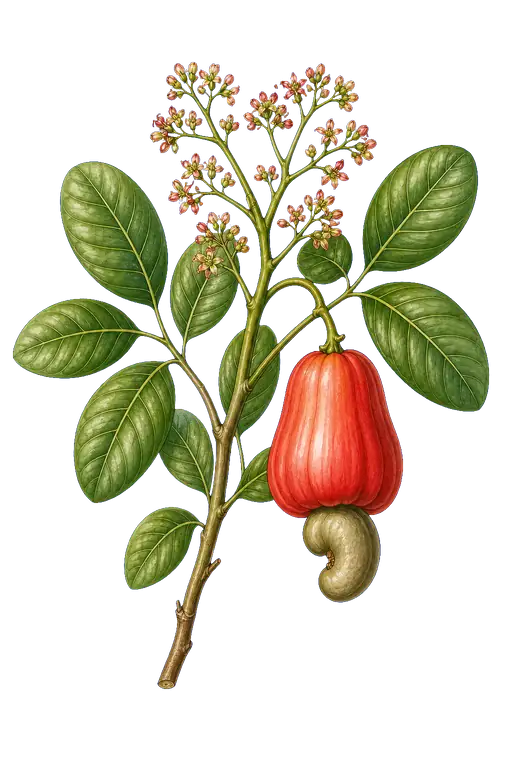
Anacardiaceae
Cashew family
Dasni belongs to the Anacardiaceae family.
The illustration represents the family — not necessarily this exact species.
Explore the Anacardiaceae family →Snap it. Know it.
Point your camera at Dasni or any plant and SASYA identifies it instantly — on-device, offline, and private.