
How to identify Garden Parsley
Identify Garden Parsley by combining habit, leaf characters, flower or fruit details, location, and its family pattern. Do not rely on one feature alone.
- Confirm leaf arrangement: Basal.
- Confirm leaf type: Tripinnately compound.
- Confirm flower colour: Greenish-white.
- Confirm it sits within the Apiaceae family pattern, then compare close relatives before deciding it is Garden Parsley.
Plant Details
- Scientific name
- Petroselinum crispum
- Genus
- Petroselinum
- Family
- Apiaceae
- Conservation status
- Not Evaluated (NE)
Leaf characters
- Leaf arrangement
- BasalrecordedLeaves cluster at the base of the plant rather than along a stem.“Where it grows as a biennial, in the first year, it forms a rosette of tripinnate leaves 10–25 cm long with numerous 1–3 cm leaflets, and a taproot used as a food store over the wi” — Wikipedia, CC BY-SA 4.0
- Leaf type
- Tripinnately compoundrecordedThree times pinnately divided; the leaflets of a bipinnate leaf are themselves pinnate.“Where it grows as a biennial, in the first year, it forms a rosette of tripinnate leaves 10–25 cm (3.9–9.8 in) long with numerous 1–3 cm leaflets, and a taproot used as a food stor” — Wikipedia, CC BY-SA 4.0
- Leaf shape
- Deeply lobed/toothedrecorded
Typical of the family
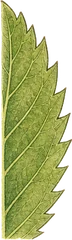

Characters marked “recorded” are for Garden Parsley itself; the rest are typical of the Apiaceae family.
Flower & fruit characters
- Flower colour
- Greenish-whiterecorded
Typical of the family
- Flower symmetry
- Actinomorphic (radially symmetrical)
- Inflorescence
- Umbel
- Fruit
- Schizocarp
Characters marked “recorded” are for Garden Parsley itself; the rest are typical of the Apiaceae family — flowering plants only.
About Garden Parsley
Garden parsley (Petroselinum crispum) is a species in the Apiaceae family.
Uses
Locally it is grown for parts that are eaten. Parts of this plant are reported as poisonous — treat it as unsafe to eat and wash your hands after handling.
In culture
It carries a body of folklore around it.
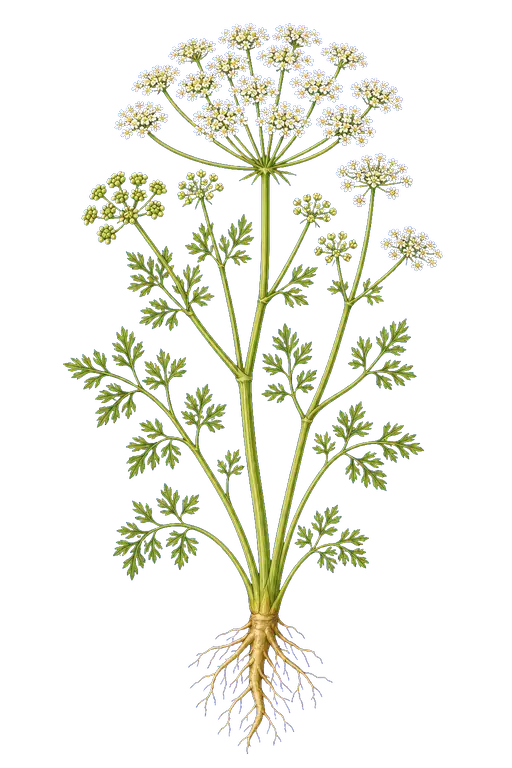
Apiaceae
Carrot family
Garden Parsley belongs to the Apiaceae family.
The illustration represents the family — not necessarily this exact species.
Explore the Apiaceae familySnap it. Know it.
Point your camera at Garden Parsley or any plant and SASYA identifies it instantly — on-device, offline, and private.
Common plant problems
If you are starting from symptoms instead of a diagnosis, use the plant disease symptom checker to narrow the cause before treating.
All plant problem & care guides