
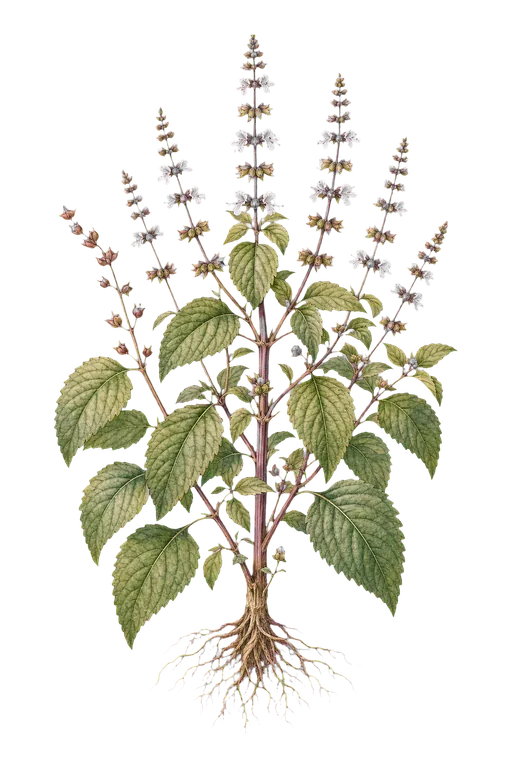
Ocimum gratissimum
Ram Tulsi / Wild Basil
Also known as Shrubby Basil, Lemon Basil, Tea Bush
- Habit
- Undershrub
- Found in India
- Gujarat, Maharashtra, Tamil Nadu & more
- Flowering
- Throughout the year
Ram Tulsi in regional languages
Find the name you know, then compare it with the botanical profile. Columns list recorded aliases; they are not paired translations. A Latin spelling appears only when it is present in the source record.
| Language | Regional script | Recorded Latin spelling |
|---|---|---|
| Hindi | राम तुलसी · बन तुलसी | Ram tulsi, Ban tulsi, Arjaka, ram tulsi |
| Bengali | ৰাম তুলসী | Ram tulsi |
| Tamil | Not recorded | elumichantulasi, peruntulasi, elumiccam tulaci |
| Telugu | Not recorded | nimma-tulasi, nimmatulasi, rama-tulasi |
| Malayalam | കാട്ടുതുളസി · കാ ട്ടുതുളസി · സുമുഖം | Not recorded |
| Marathi | राम तुलसी | ajavala, ramatulasi, tanatulasu |
| Sinhala | මහ මදුරුතලා | Not recorded |
See the original recorded names
- Hindi
- राम तुलसी Ram tulsi, बन तुलसी Ban tulsi, Arjaka, ram tulsi
- Bengali
- ৰাম তুলসী Ram tulsi
- Tamil
- elumichantulasi, peruntulasi, elumiccam tulaci
- Telugu
- nimma-tulasi, nimmatulasi, rama-tulasi
- Malayalam
- കാട്ടുതുളസി, കാ ട്ടുതുളസി, സുമുഖം
- Marathi
- ajavala, राम तुलसी ramatulasi, tanatulasu
- Sinhala
- මහ මදුරුතලා
Ecology & growing context
- Native status · Kew WCVP
- WCVP native range includes Assam, India, Laccadive Is. Kew dataset ↗
Kew WCVP dataset; accepted-name match. Dataset matching is separate from an individual regional review. Recorded worldwide native range: Trop. & Subtrop. Old World.
- Recorded habitat
- Wastelands and in dry deciduous forests
- Explore nearby plants
- Gujarat →Maharashtra →Tamil Nadu →
Occurrence records show where a plant has been recorded; they do not establish that it is native there. Compare local habitat and growing conditions when choosing plants for a garden.
How to identify Ram Tulsi
Identify Ram Tulsi by combining habit, leaf characters, flower or fruit details, location, and its family pattern. Do not rely on one feature alone.
- Look for a undershrub habit.
- Check the distinctive field mark: Tall shrubby basil relative.
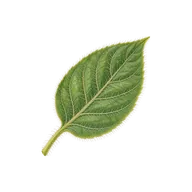
- Confirm leaf surface: Pubescent (softly hairy).
- Confirm flower colour: White.
- Use the leaf pattern: opposite leaf arrangement, simple leaves, toothed leaf margins, pinnate venation.
- In season, compare flowering and fruiting time: Throughout the year.
- In India, compare location records such as Gujarat, Maharashtra, Tamil Nadu, Assam and nearby regions.
Plant Details
- Scientific name
- Ocimum gratissimum
- Genus
- Ocimum
- Family
- Lamiaceae
- Habit
- Undershrub
- Habitat
- Wastelands and in dry deciduous forests
- Distribution
- Pantropical
- Found in India
- Gujarat, Maharashtra, Tamil Nadu, Assam, Himachal Pradesh, Karnataka, Rajasthan, Uttarakhand
- Flowering & fruiting
- Throughout the year
- Conservation status
- Not Evaluated (NE)
Leaf characters
- Leaf surface
- Pubescent (softly hairy)recorded
Typical of the family




Characters marked “recorded” are for Ram Tulsi itself; the rest are typical of the Lamiaceae family.
Flower & fruit characters
- Flower colour
- Whiterecorded
Typical of the family
- Inflorescence
- Cyme
- Fruit
- Nutlets

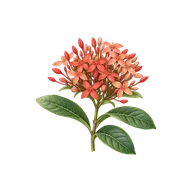
Characters marked “recorded” are for Ram Tulsi itself; the rest are typical of the Lamiaceae family — flowering plants only.
Ram Tulsi in India
Ram tulsi is the tall, large-leaved cousin of holy basil with a clove-like scent — राम तुलसी Ram tulsi (Hindi), elumichantulasi (Tamil), nimma-tulasi (Telugu), കാട്ടുതുളസി (Malayalam), ajavala (Marathi), ৰাম তুলসী Ram tulsi (Bengali). Ocimum gratissimum is grown and naturalised across Gujarat, Maharashtra, Tamil Nadu, Assam, Himachal Pradesh, Rajasthan, in gardens, courtyards and on roadsides.
Uses
Like other tulsis it is grown for worship and as a fragrant herbal plant, brewed into teas and used in attributed traditional remedies for coughs and colds (not medical advice). Its clove-scented essential oil is rich in eugenol and used in perfumery.
How to Identify Ram Tulsi
A robust, shrubby aromatic herb, taller and coarser than common tulsi, with large oval toothed leaves on square stems. Crushed leaves smell strongly of cloves. Slender whorled flower spikes carry small greenish-yellow to white flowers.
Frequently Asked Questions
- What is Wild Basil called in different Indian languages?
- राम तुलसी Ram tulsi (Hindi); elumichantulasi (Tamil); nimma-tulasi (Telugu); കാട്ടുതുളസി (Malayalam); ajavala (Marathi); ৰাম তুলসী Ram tulsi (Bengali).
- How is ram tulsi different from regular tulsi?
- Ram tulsi (Ocimum gratissimum) is taller and coarser with larger leaves and a clove-like scent, while common holy basil (Ocimum tenuiflorum) is smaller; both are sacred and aromatic.
- What is ram tulsi used for?
- It is grown for worship and as a fragrant herb, brewed in teas and used in attributed traditional remedies — described for information, not medical advice.
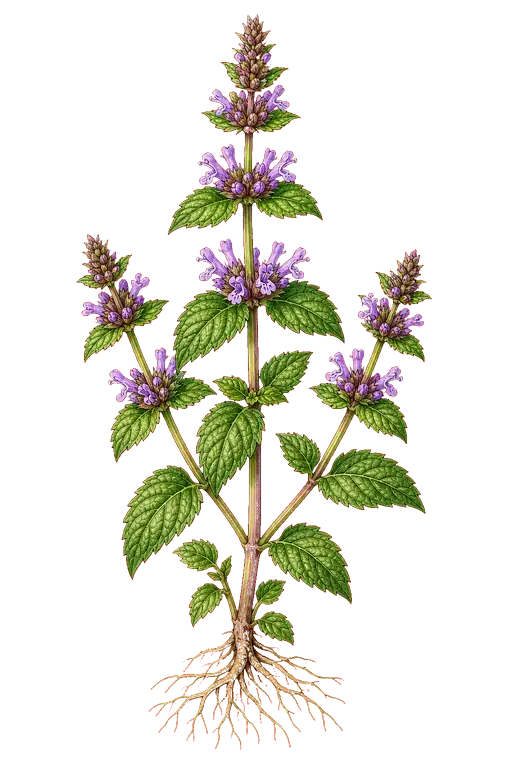
Lamiaceae
Mint/Sage family
Ram Tulsi belongs to the Lamiaceae family.
The illustration represents the family — not necessarily this exact species.
Explore the Lamiaceae familySnap it. Know it.
Point your camera at Ram Tulsi or any plant and SASYA identifies it instantly — on-device, offline, and private.
Common plant problems
If you are starting from symptoms instead of a diagnosis, use the plant disease symptom checker to narrow the cause before treating.
All plant problem & care guidesMore in Lamiaceae
View all LamiaceaeSources: GBIF — Ocimum gratissimum (India distribution & vernacular names) (CC BY 4.0) · iNaturalist — Ocimum gratissimum (regional names, India observations) (CC BY 4.0) · Wikipedia — Ocimum gratissimum (background/comprehension only) (CC BY-SA 4.0)