
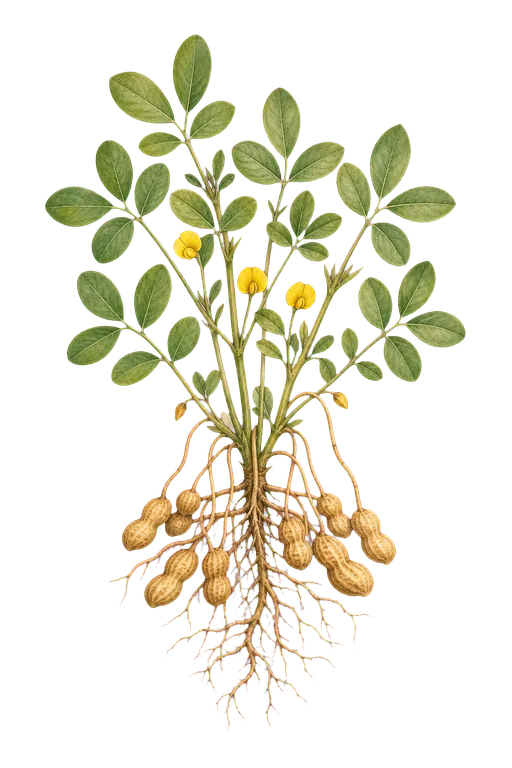
Chinabadam / Ground-Nut
Arachis hypogaea
Also known as Pea-Nut, Monkey-Nut
- Habit
- Herb
- Found in India
- Andhra Pradesh, Maharashtra, Tamil Nadu & more
- Flowering
- Throughout the year
How to identify Chinabadam
Identify Chinabadam by combining habit, leaf characters, flower or fruit details, location, and its family pattern. Do not rely on one feature alone.
- Look for a herb habit.
- Check the distinctive field mark: Pods develop and ripen underground (peanut/groundnut).
- Confirm leaf arrangement: Opposite.
- Confirm leaf type: Pinnately compound.
- Confirm flower colour: Yellow.
- Confirm fruit type: Legume.
- In season, compare flowering and fruiting time: Throughout the year.
Plant Details
- Scientific name
- Arachis hypogaea
- Genus
- Arachis
- Family
- Fabaceae
- Habit
- Herb
- Habitat
- Cultivated
- Habitat type
- Cultivated
- Native to
- South America
- Found in India
- Andhra Pradesh, Maharashtra, Tamil Nadu, Uttar Pradesh, Punjab, Karnataka, Madhya Pradesh, Assam, Bihar, Chhattisgarh, Delhi, Uttarakhand, West Bengal, Gujarat, Himachal Pradesh, Puducherry, Rajasthan, Telangana
- Flowering & fruiting
- Throughout the year
- Conservation status
- Not Evaluated (NE)
Leaf characters
- Leaf arrangement
- OppositerecordedTwo leaves arise from the stem at the same point, facing each other.“The leaves are opposite and pinnate with four leaflets (two opposite pairs;” — Wikipedia, CC BY-SA 4.0
- Leaf type
- Pinnately compoundrecordedLeaflets are arranged in rows along a central stalk, like a feather.“The leaves are opposite and pinnate with four leaflets (two opposite pairs;” — Wikipedia, CC BY-SA 4.0
- Leaf surface
- Pubescent (softly hairy)recorded
Typical of the family


Characters marked “recorded” are for Chinabadam itself; the rest are typical of the Fabaceae family.
Flower & fruit characters
- Flower colour
- Yellowrecorded
- Fruit type
- LegumerecordedA dry pod that splits open along two seams (typical of the pea/bean family).“It belongs to the botanical family Fabaceae, also known as Leguminosae, and commonly known as the legume, bean, or pea family.” — Wikipedia, CC BY-SA 4.0
Typical of the family
- Flower symmetry
- Zygomorphic (bilaterally symmetrical)
- Inflorescence
- Raceme
- Fruit
- Legume
Characters marked “recorded” are for Chinabadam itself; the rest are typical of the Fabaceae family — flowering plants only.
Local Names
- Hindi
- चीनाबदाम chinabadam, मूंगफली mungphali, विलायती मूंग vilayati-mung
- Nepali
- बदाम
- Bengali
- চীনাবাদাম chinabadam, মাটকলাই matakalai, চীনাবাদাম
- Tamil
- மணிலாக்கொட்டை manila-k-kottai, மனிலாப்பயறு manila-p-payaru, நிலக்கடலை nila-k-katalai
- Telugu
- Verusanaga, వేరుశనగ
- Kannada
- ಕಡಲೆಕಾಯಿ kadalekaayi, ನೆಲಗಡಲೆ nelagadale, ಕಡಲೇಕಾಯಿ
- Malayalam
- കപ്പലണ്ടി kappalanti, നിലകടല nilakatala, നിലക്കടല
- Marathi
- बादामचिनी badamchini, भुईमूग bhuimuga, भुईशेंग bhuishenga
- Sinhala
- රට කජු
Chinabadam in India
Groundnut, called चीनाबदाम chinabadam (Hindi), மணிலாக்கொட்டை manila-k-kottai (Tamil), Verusanaga (Telugu), ಕಡಲೆಕಾಯಿ kadalekaayi (Kannada), കപ്പലണ്ടി kappalanti (Malayalam), बादामचिनी badamchini (Marathi), is a major Indian oilseed and snack crop. Arachis hypogaea is grown across Hyderabad, Andhra Pradesh, Maharashtra, Tamil Nadu, Himayatsager Station, near Hyderabad, Hyderabad. Lat/Lon accurate to city level., mostly on lighter, well-drained soils.
Uses
Seeds are pressed for groundnut cooking oil, roasted and salted as a snack, ground into chikki with jaggery, and used in chutneys — most famously the South Indian groundnut chutney.
How to Identify Chinabadam
A low, spreading or bushy annual herb with trifoliate (occasionally four-leaflet) leaves that fold shut at night. Small yellow pea-like flowers appear at ground level; after fertilisation the flower stalk (a 'peg') pushes down and buries the developing pod underground — the reason the crop must be dug up, not picked.
Frequently Asked Questions
- What is Ground-nut called in different Indian languages?
- चीनाबदाम chinabadam (Hindi); மணிலாக்கொட்டை manila-k-kottai (Tamil); Verusanaga (Telugu); ಕಡಲೆಕಾಯಿ kadalekaayi (Kannada); കപ്പലണ്ടി kappalanti (Malayalam); बादामचिनी badamchini (Marathi); চীনাবাদাম chinabadam (Bengali).
- Why do groundnut pods grow underground?
- After the flower is fertilised, a stalk called a peg grows downward and pushes the young pod into the soil, where it matures out of sight — a habit called geocarpy.
- Is groundnut a nut?
- Botanically no — it's a legume (pulse) related to peas and beans, not a true nut, despite the common name.
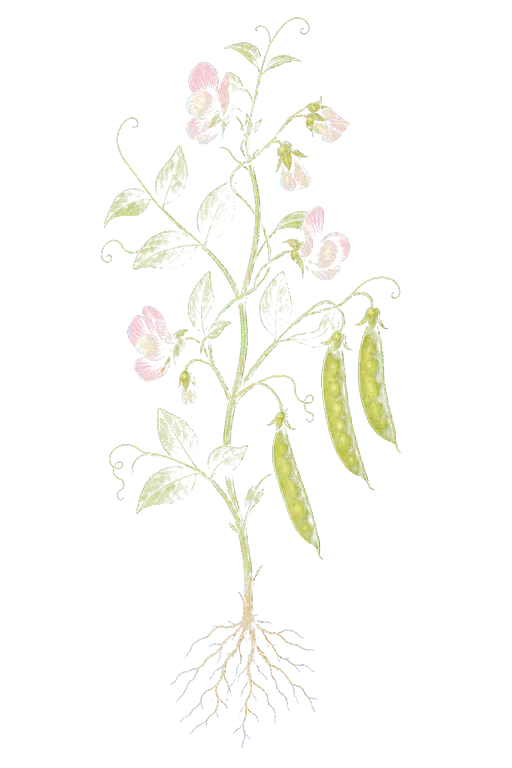
Fabaceae
Legume/Bean family
Chinabadam belongs to the Fabaceae family.
The illustration represents the family — not necessarily this exact species.
Explore the Fabaceae familySnap it. Know it.
Point your camera at Chinabadam or any plant and SASYA identifies it instantly — on-device, offline, and private.
Common plant problems
If you are starting from symptoms instead of a diagnosis, use the plant disease symptom checker to narrow the cause before treating.
All plant problem & care guidesMore in Fabaceae
View all FabaceaeSources: GBIF — Arachis hypogaea (India distribution & vernacular names) (CC BY 4.0) · Wikipedia — Arachis hypogaea (background/comprehension only) (CC BY-SA 4.0)