
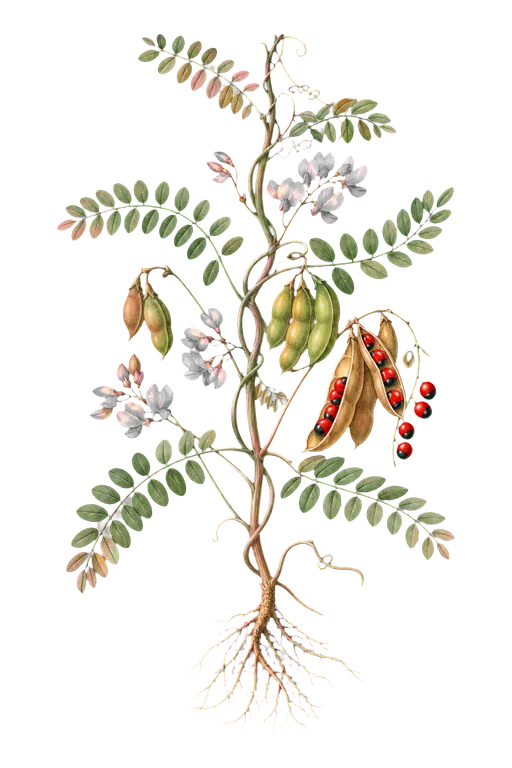
Chirmithi / Indian Liquorice
Abrus precatorius
Also known as Jeguirity, Bead Vine, Black-Eyed Susan, Buddhist Rosary Bead, Crab's Eye, Rosary Pea, Wild Liquorice
- Habit
- Climbing shrub
- Found in India
- Tamil Nadu, Maharashtra, Kerala & more
- Flowering
- Throughout the year
How to identify Chirmithi
Identify Chirmithi by combining habit, leaf characters, flower or fruit details, location, and its family pattern. Do not rely on one feature alone.
- Look for a climbing shrub habit.
- Check the distinctive field mark: Small hard red-and-black poisonous seeds (rosary pea).
- Confirm leaf type: Pinnately compound.
- Confirm leaf surface: Glabrous (smooth, hairless).
- Confirm flower colour: Purple.
- Use the leaf pattern: alternate leaf arrangement, compound leaves, entire leaf margins, pinnate venation.
- In season, compare flowering and fruiting time: Throughout the year.
Plant Details
- Scientific name
- Abrus precatorius
- Genus
- Abrus
- Family
- Fabaceae
- Habit
- Climbing shrub
- Habitat
- Deciduous forests, also in the plains
- Habitat type
- Forest
- Native to
- India
- Distribution
- India, Sri Lanka, Pakistan, Tropical Africa
- Found in India
- Tamil Nadu, Maharashtra, Kerala, Rajasthan, Karnataka, Telangana, Gujarat, Andhra Pradesh, Uttarakhand, Odisha, West Bengal, Delhi, Chhattisgarh, Haryana, Goa, Madhya Pradesh, Himachal Pradesh, Assam, Punjab, Andaman & Nicobar Islands, Arunachal Pradesh, Jammu & Kashmir, Uttar Pradesh
- Flowering & fruiting
- Throughout the year
- Conservation status
- Not Evaluated (NE)
Leaf characters
- Leaf type
- Pinnately compoundrecordedLeaflets are arranged in rows along a central stalk, like a feather.“It is a slender, perennial climber with long, pinnate-leafleted leaves that twines around trees, shrubs, and hedges.” — Wikipedia, CC BY-SA 4.0
- Leaf surface
- Glabrous (smooth, hairless)recorded
Typical of the family
- Arrangement
- Alternate


Characters marked “recorded” are for Chirmithi itself; the rest are typical of the Fabaceae family.
Flower & fruit characters
- Flower colour
- PurplerecordedPurple or violet
Typical of the family
- Flower symmetry
- Zygomorphic (bilaterally symmetrical)
- Inflorescence
- Raceme
- Fruit
- Legume
Characters marked “recorded” are for Chirmithi itself; the rest are typical of the Fabaceae family — flowering plants only.
Local Names
- Hindi
- चिर्मिठी Chirmithi, घुंघची Ghunghchi, गुंज Gunj,रत्ती ratti
- Nepali
- आँखीगेडी Ankheegedee, रतिगेडी Ratigedee, लालगेडी
- Bengali
- চিরমিতি Chiramiti, চুনহাতি Chunahati, গুঞ্জা Gunja, কুঁচ
- Tamil
- சிகண்டிகை Cikantikai, குன்றி Kunri, குன்றுமணி Kunrumani, குன்றிச் செடி
- Telugu
- అతిమధురము Atimadhuramu, గుంజ Gunja, గురిగింజ Guriginja
- Kannada
- ಗುಲಗಂಜಿ Gulaganji, ಗುರುಗಂಜಿ Gurugunji, ಹಾಗ Haaga, ಗುಲಗುಂಜಿ
- Malayalam
- ഗുഞ്ജ Gunja, കുന്നി Kunni, കുന്നി
- Marathi
- गुंज Gunja, मधुयष्टि Madhuyashti, रती Rati, गुंज
- Gujarati
- ચણોઠી
- Punjabi
- ਰੱਤੀ
Chirmithi in India
Gunja is the slender climber behind India's famous red-and-black seeds — चिर्मिठी Chirmithi (Hindi), சிகண்டிகை Cikantikai (Tamil), అతిమధురము Atimadhuramu (Telugu), ಗುಲಗಂಜಿ Gulaganji (Kannada), ഗുഞ്ജ Gunja (Malayalam), गुंज Gunja (Marathi). Abrus precatorius is recorded across Tamil Nadu, Maharashtra, Kerala, Rajasthan, Karnataka, Telangana, scrambling through hedges and scrub.
Uses
Its glossy seeds were the traditional 'ratti' weight used by jewellers and are strung into beads and rosaries. Critically, the seeds contain abrin and are deadly poisonous if chewed or swallowed — so they are used only as beads/ornament, never internally, and processed use is strictly traditional.
How to Identify Chirmithi
A wiry twining climber with feathery pinnate leaves of many small leaflets that fold together. It bears small pinkish pea-flowers and short pods that curl open to reveal the unmistakable seeds: shiny, hard, scarlet with a single black eye.
Frequently Asked Questions
- What is Indian Liquorice called in different Indian languages?
- चिर्मिठी Chirmithi (Hindi); சிகண்டிகை Cikantikai (Tamil); అతిమధురము Atimadhuramu (Telugu); ಗುಲಗಂಜಿ Gulaganji (Kannada); ഗുഞ്ജ Gunja (Malayalam); गुंज Gunja (Marathi); চিরমিতি Chiramiti (Bengali); ચણોઠી (Gujarati); ਰੱਤੀ (Punjabi).
- Are gunja (rosary pea) seeds poisonous?
- Yes — the seeds contain abrin and are extremely toxic if chewed or swallowed; they are used only as beads and ornaments, never eaten.
- What was gunja used for traditionally?
- The uniform seeds were the classic 'ratti' weight used by goldsmiths, and they are still strung into beads, rosaries and jewellery.
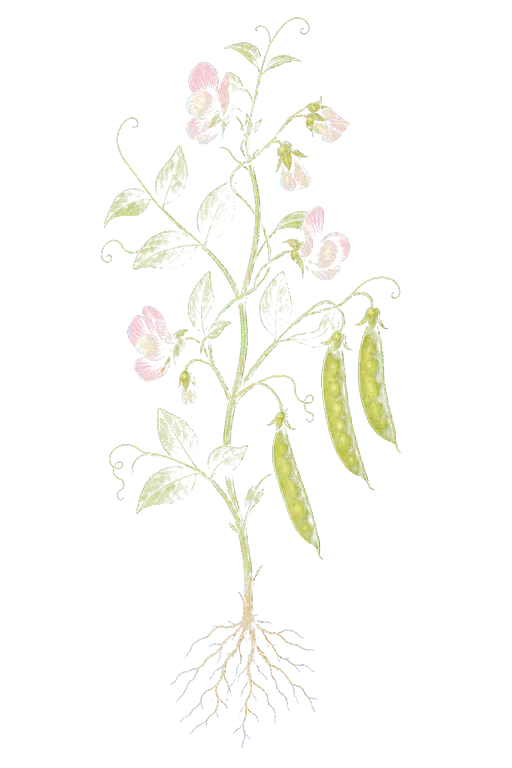
Fabaceae
Legume/Bean family
Chirmithi belongs to the Fabaceae family.
The illustration represents the family — not necessarily this exact species.
Explore the Fabaceae familySnap it. Know it.
Point your camera at Chirmithi or any plant and SASYA identifies it instantly — on-device, offline, and private.
Common plant problems
If you are starting from symptoms instead of a diagnosis, use the plant disease symptom checker to narrow the cause before treating.
All plant problem & care guidesMore in Fabaceae
View all FabaceaeSources: GBIF — Abrus precatorius (India distribution & vernacular names) (CC BY 4.0) · iNaturalist — Abrus precatorius (regional names, India observations) (CC BY 4.0) · Wikipedia — Abrus precatorius (background/comprehension only) (CC BY-SA 4.0)