

Jangli Badam / Indian Almond Tree
Terminalia catappa
Also known as Badamier, Java Almond, Malabar Almond, Singapore Almond, Ketapang, Pacific Almond
- Habit
- Tree
- Found in India
- Kerala, Maharashtra, Tamil Nadu & more
- Flowering
- Throughout the year
How to identify Jangli Badam
Identify Jangli Badam by combining habit, leaf characters, flower or fruit details, location, and its family pattern. Do not rely on one feature alone.
- Look for a tree habit.
- Check the distinctive field mark: Horizontal tiered branching; leaves turn red before falling.
- Confirm fruit type: Drupe.
- Use the leaf pattern: alternate leaf arrangement, simple leaves, entire leaf margins, pinnate venation.
- In season, compare flowering and fruiting time: Throughout the year.
- In India, compare location records such as Kerala, Maharashtra, Tamil Nadu, Telangana and nearby regions.
- Confirm it sits within the Combretaceae family pattern, then compare close relatives before deciding it is Jangli Badam.
Plant Details
- Scientific name
- Terminalia catappa
- Genus
- Terminalia
- Family
- Combretaceae
- Habit
- Tree
- Habitat
- Grown as ornamental tree
- Habitat type
- Cultivated
- Distribution
- Tropical Asia, Northern Australia, Malaysia, Polynesia
- Found in India
- Kerala, Maharashtra, Tamil Nadu, Telangana, Karnataka, Andhra Pradesh, Gujarat, West Bengal, Odisha, Rajasthan, Goa, Puducherry, Chhattisgarh, Uttar Pradesh, Madhya Pradesh, Andaman & Nicobar Islands, Bihar, Arunachal Pradesh, Assam
- Flowering & fruiting
- Throughout the year
- Conservation status
- Not Evaluated (NE)
Leaf characters
- Arrangement
- Alternate
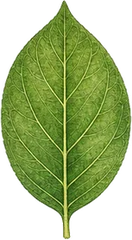


Characters marked “recorded” are for Jangli Badam itself; the rest are typical of the Combretaceae family.
Flower & fruit characters
- Fruit type
- DruperecordedA fleshy fruit with a single hard stone/pit enclosing the seed.“The fruit is a drupe 5–7 cm (2–2+3⁄4 in) long and 3–5.5 cm (1+1⁄8–2+1⁄8 in) broad containing a single seed;” — Wikipedia, CC BY-SA 4.0
Typical of the family
- Flower symmetry
- Actinomorphic (radially symmetrical)
- Inflorescence
- Spike
- Fruit
- Drupe
Characters marked “recorded” are for Jangli Badam itself; the rest are typical of the Combretaceae family — flowering plants only.
Local Names
- Hindi
- जंगली बादाम Jangli badam, badam,जंगली बादाम jangali badam
- Nepali
- काठिया बदाम Kaathiyaa Badaam, जंगली रूखबदाम
- Bengali
- কাঠ বাদাম
- Tamil
- Nattuvadumai, Vadumai, வாதாம் கொட்டை மரம்
- Kannada
- ಕಾಡುಬಾದಾಮಿ Kaadubaadaami, ನಾಟಿಬಾದಾಮಿ, Naatibaadaami ನಾಡುಬಾದಾಮಿ Naadubaadaami
- Malayalam
- Ketapag, തല്ലിമരം, കടപ്പ
- Marathi
- जंगली बादाम Jangli badam, खोटा बदाम, मलबार आलमंड
Jangli Badam in India
The Indian or tropical almond is a big seaside and avenue tree with a distinctive tiered shape — जंगली बादाम Jangli badam (Hindi), Nattuvadumai (Tamil), ಕಾಡುಬಾದಾಮಿ Kaadubaadaami (Kannada), Ketapag (Malayalam), जंगली बादाम Jangli badam (Marathi), কাঠ বাদাম (Bengali). Terminalia catappa is planted across Kerala, Maharashtra, Tamil Nadu, Telangana, Karnataka, Andhra Pradesh, especially along coasts and city streets for its dense shade.
Uses
The flattened almond-like kernel inside the fruit is edible and tastes much like a true almond, though fiddly to extract. The leaves turn red before falling and are used by aquarium keepers ('catappa leaves'), and bark and leaves have attributed uses in folk medicine.
How to Identify Jangli Badam
Unmistakable in form: the branches grow in horizontal tiers, like a stack of plates, giving a pagoda outline. The large, leathery leaves are clustered at the branch tips and turn red and yellow before dropping. The fruit is a flattened, two-edged almond-shaped drupe.
Frequently Asked Questions
- What is Indian Almond Tree called in different Indian languages?
- जंगली बादाम Jangli badam (Hindi); Nattuvadumai (Tamil); ಕಾಡುಬಾದಾಮಿ Kaadubaadaami (Kannada); Ketapag (Malayalam); जंगली बादाम Jangli badam (Marathi); কাঠ বাদাম (Bengali).
- Can you eat Indian almond fruit?
- Yes — the kernel inside the hard flattened fruit is edible and tastes similar to a true almond, although it is small and awkward to crack open.
- Why does the Indian almond tree look layered?
- Its branches grow in distinct horizontal tiers around the trunk, giving the tree a characteristic stepped, pagoda-like silhouette.
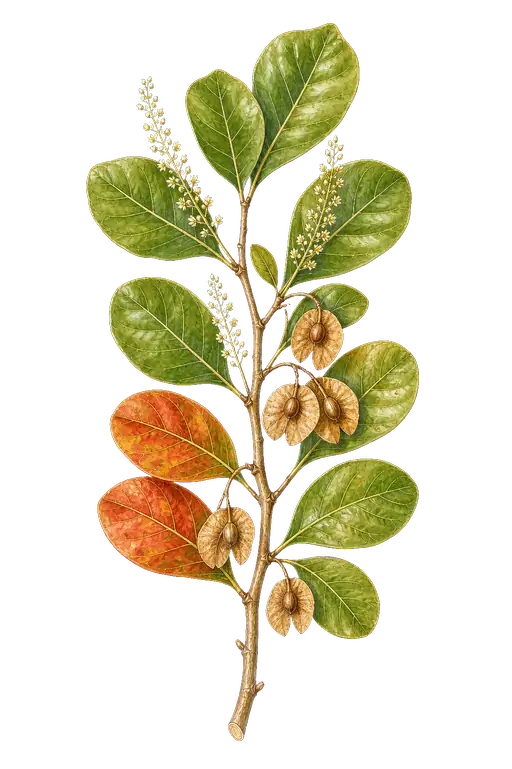
Combretaceae
Indian almond family
Jangli Badam belongs to the Combretaceae family.
The illustration represents the family — not necessarily this exact species.
Explore the Combretaceae familySnap it. Know it.
Point your camera at Jangli Badam or any plant and SASYA identifies it instantly — on-device, offline, and private.
Common plant problems
If you are starting from symptoms instead of a diagnosis, use the plant disease symptom checker to narrow the cause before treating.
All plant problem & care guidesMore in Combretaceae
View all CombretaceaeSources: GBIF — Terminalia catappa (India distribution & vernacular names) (CC BY 4.0) · iNaturalist — Terminalia catappa (regional names, India observations) (CC BY 4.0) · Wikipedia — Terminalia catappa (background/comprehension only) (CC BY-SA 4.0)