
Bahera / Belliric Myrobalan
Terminalia bellirica
Also known as Bedda Nut Tree
- Habit
- Tree
- Found in India
- Maharashtra, Karnataka, Tamil Nadu & more
- Flowering
- March-December
How to identify Bahera
Identify Bahera by combining habit, leaf characters, flower or fruit details, location, and its family pattern. Do not rely on one feature alone.
- Look for a tree habit.
- Check the distinctive field mark: Velvety, faintly 5-ridged round fruit.
- Confirm fruit type: Small round drupe.
- In season, compare flowering and fruiting time: March-December.
- In India, compare location records such as Maharashtra, Karnataka, Tamil Nadu, Rajasthan and nearby regions.
- Confirm it sits within the Combretaceae family pattern, then compare close relatives before deciding it is Bahera.
Plant Details
- Scientific name
- Terminalia bellirica
- Genus
- Terminalia
- Family
- Combretaceae
- Habit
- Tree
- Habitat
- Semi-evergreen and moist deciduous forests, also in the plains
- Habitat type
- Forest
- Native to
- Indian subcontinent
- Distribution
- India, Sri Lanka, Nepal, Myanmar, Thailand, Indo-China, Malesia
- Found in India
- Maharashtra, Karnataka, Tamil Nadu, Rajasthan, Telangana, Uttarakhand, Madhya Pradesh, Kerala, Gujarat, West Bengal, Chhattisgarh, Himachal Pradesh, Assam, Meghalaya, Odisha, Uttar Pradesh, Arunachal Pradesh, Chandigarh, Andhra Pradesh, Jammu & Kashmir, Punjab
- Flowering & fruiting
- March-December
- Conservation status
- Not Evaluated (NE)
Leaf characters
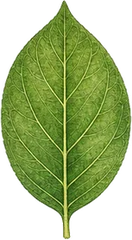


Typical of the Combretaceae family — a field-mark hint, not measured for this exact species.
Flower & fruit characters
- Fruit type
- Small round druperecorded
Typical of the family
- Flower symmetry
- Actinomorphic (radially symmetrical)
- Inflorescence
- Spike
- Fruit
- Drupe
Characters marked “recorded” are for Bahera itself; the rest are typical of the Combretaceae family — flowering plants only.
Local Names
- Hindi
- बहेड़ा bahera, बहुवीर्य bahuvirya, भूतवास bhutvaas, Kalk
- Nepali
- बर्रो barro, बर्रो
- Bengali
- বহেড়া baheda, Baheda, Bahera
- Tamil
- தான்றி tanri, Semmaram, தான்றி
- Telugu
- భూతావాసము bhutavasamu, కర్షఫలము karshaphalamu, తాడి tadi, Tadi
- Kannada
- ತಾಱಿ, ತಾರಿ Taari, ತಾಱೆ, Tare Mara
- Malayalam
- താന്നി thaanni, Thanni, താന്നി
- Marathi
- बेहडा behada, बिभीतक bibhītaka, कलिद्रुम kalidruma, Kalidruma
- Sanskrit
- Bahuvirya, Bibhitakah
- Gujarati
- Baheda
- Odia
- Bahada
- Assamese
- Bhoira
- Urdu
- Bahera
Bahera in India
This large deciduous tree, known as बहेड़ा bahera (Hindi), தான்றி tanri (Tamil), భూతావాసము bhutavasamu (Telugu), ತಾಱಿ (Kannada), താന്നി thaanni (Malayalam), बेहडा behada (Marathi), produces one of the three fruits used in Ayurveda's Triphala. Terminalia bellirica is found across Maharashtra, Karnataka, Tamil Nadu, Rajasthan, Telangana, Uttarakhand, typically in deciduous forest alongside other Terminalia species.
Uses
Its dried fruit (bahera) is the second of the three fruits combined into Triphala, a long-used Ayurvedic preparation — a traditional use, not a medical claim — and its bark and fruit have also been used in tanning and dyeing.
How to Identify Bahera
A large deciduous tree with leaves clustered near the ends of the branches. Small, unpleasant-smelling flowers appear in spikes, followed by a rounded, faintly five-angled, downy fruit that dries hard and grey-brown.
Frequently Asked Questions
- What is Belliric myrobalan called in different Indian languages?
- बहेड़ा bahera (Hindi); தான்றி tanri (Tamil); భూతావాసము bhutavasamu (Telugu); ತಾಱಿ (Kannada); താന്നി thaanni (Malayalam); बेहडा behada (Marathi); বহেড়া baheda (Bengali); Baheda (Gujarati); Bahada (Odia); Bahuvirya (Sanskrit).
- What is bahera's role in Triphala?
- It's one of the three dried fruits — alongside haritaki (Terminalia chebula) and amla (Phyllanthus emblica) — that make up the traditional Ayurvedic formula Triphala.
- How can you tell bahera from harad?
- Bahera's fruit is rounder and covered in fine down, while harad (Terminalia chebula) fruit is more sharply five-ribbed and smooth — both trees are otherwise similar in habit.
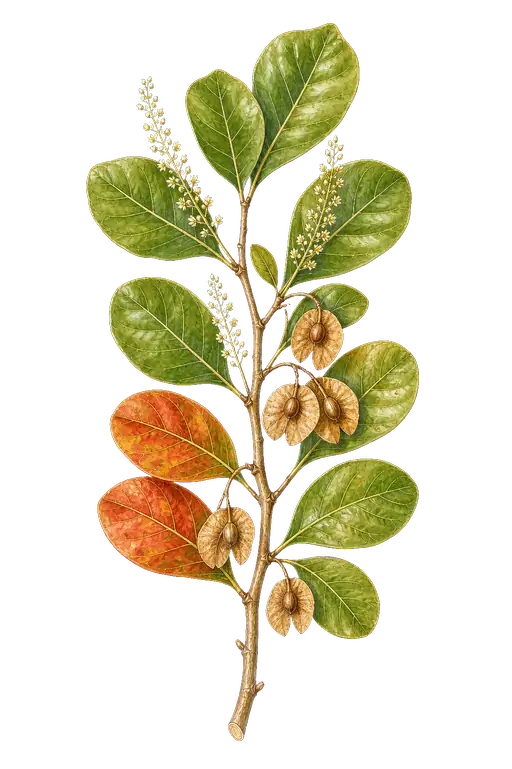
Combretaceae
Indian almond family
Bahera belongs to the Combretaceae family.
The illustration represents the family — not necessarily this exact species.
Explore the Combretaceae familySnap it. Know it.
Point your camera at Bahera or any plant and SASYA identifies it instantly — on-device, offline, and private.
Common plant problems
If you are starting from symptoms instead of a diagnosis, use the plant disease symptom checker to narrow the cause before treating.
All plant problem & care guidesMore in Combretaceae
View all CombretaceaeSources: GBIF — Terminalia bellirica (India distribution & vernacular names) (CC BY 4.0) · Wikipedia — Terminalia bellirica (background/comprehension only) (CC BY-SA 4.0)