
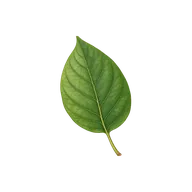
As recorded for Malay Jamun
Syzygium malaccense
Malay Jamun / Malay Apple मलै जामुन
Hindi name · See all regional names ↓
Also known as Macopa, Manzana, Otaheite Apple, Pomarosa
- Habit
- Tree
- Found in India
- Kerala, Maharashtra, Karnataka & more
- Flowering
- February-June
Malay Jamun in regional languages
Find the name you know, then compare it with the botanical profile. Columns list recorded aliases; they are not paired translations. A Latin spelling appears only when it is present in the source record.
| Language | Regional script | Recorded Latin spelling |
|---|---|---|
| Hindi | मलै जामुन | Malay jamun |
| Bengali | মালয়ী জামরুল | Malaka jamrul |
| Tamil | மலாய் நீர்க்குமளி | Not recorded |
| Malayalam | മലയൻ ആപ്പിൾ · മലയ് ആപ്പിൾ | Syzygium malaccense |
| Sinhala | පිනි ජම්බු | Not recorded |
See the original recorded names
- Hindi
- मलै जामुन Malay jamun
- Bengali
- Malaka jamrul, মালয়ী জামরুল
- Tamil
- மலாய் நீர்க்குமளி
- Malayalam
- മലയൻ ആപ്പിൾ, Syzygium malaccense, മലയ് ആപ്പിൾ
- Sinhala
- පිනි ජම්බු
Ecology & growing context
- Native status · Kew WCVP
- WCVP records it as introduced in Assam Kew dataset ↗
Kew WCVP dataset; accepted-name match. Dataset matching is separate from an individual regional review. Recorded worldwide native range: Indo-China to Vanuatu.
- Recorded habitat
- Cultivated
- Explore nearby plants
- Kerala →Maharashtra →Karnataka →
Occurrence records show where a plant has been recorded; they do not establish that it is native there. Compare local habitat and growing conditions when choosing plants for a garden.
How to identify Malay Jamun
Identify Malay Jamun by combining habit, leaf characters, flower or fruit details, location, and its family pattern. Do not rely on one feature alone.
- Look for a tree habit.
- Confirm leaf type: Simple.
- Confirm leaf shape: Elliptic.
- Confirm flower colour: Red.
- In season, compare flowering and fruiting time: February-June.
- In India, compare location records such as Kerala, Maharashtra, Karnataka, Tamil Nadu and nearby regions.
- Confirm it sits within the Myrtaceae family pattern, then compare close relatives before deciding it is Malay Jamun.
Plant Details
- Scientific name
- Syzygium malaccense
- Genus
- Syzygium
- Family
- Myrtaceae
- Habit
- Tree
- Habitat
- Cultivated
- Habitat type
- Cultivated
- Native to
- Malesia
- Distribution
- Cultivated in other parts of Tropical Asia
- Found in India
- Kerala, Maharashtra, Karnataka, Tamil Nadu, Arunachal Pradesh
- Flowering & fruiting
- February-June
- Conservation status
- Not Evaluated (NE)
Leaf characters
- Leaf type
- SimplerecordedA single, undivided leaf blade.“Its leaves are simple, elliptical, or oval-shaped with pointed tips and smooth edges.” — Wikipedia, CC BY-SA 4.0
- Leaf shape
- EllipticrecordedWidest at the middle, tapering evenly at both ends.“Its leaves are simple, elliptical, or oval-shaped with pointed tips and smooth edges.” — Wikipedia, CC BY-SA 4.0
- Leaf surface
- GlabrousrecordedSmooth, hairless.“Its leaves are simple, elliptical, or oval-shaped with pointed tips and smooth edges.” — Wikipedia, CC BY-SA 4.0
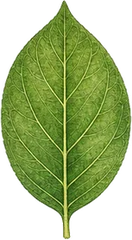
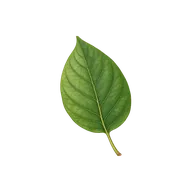
Typical of the family
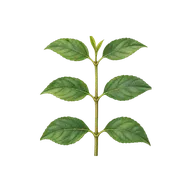


Characters marked “recorded” are for Malay Jamun itself; the rest are typical of the Myrtaceae family.
Flower & fruit characters
- Flower colour
- Redrecorded
Typical of the family
- Inflorescence
- Cyme

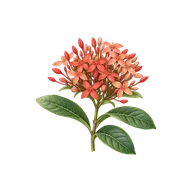

Characters marked “recorded” are for Malay Jamun itself; the rest are typical of the Myrtaceae family — flowering plants only.
Malay Jamun in India
This tropical fruit tree, known as मलै जामुन Malay jamun (Hindi), மலாய் நீர்க்குமளி (Tamil), മലയൻ ആപ്പിൾ (Malayalam), Malaka jamrul (Bengali), is grown for its crisp, mildly sweet fruit. Syzygium malaccense is found across Kerala, Maharashtra, Karnataka, Tamil Nadu, Arunachal Pradesh, typically in warm, humid coastal regions.
Uses
Its pear-shaped, deep pink to red fruit is eaten fresh, valued for its crisp, watery, mildly sweet flesh, and is also made into jams and preserves in some regions.
How to Identify Malay Jamun
An evergreen tree with large, glossy leaves. Flowers are a striking deep pink-crimson, with a prominent cluster of long stamens and almost no visible petals, followed by pear-shaped fruit that ripens from green to deep pink or red.
Frequently Asked Questions
- What is Malay Apple called in different Indian languages?
- मलै जामुन Malay jamun (Hindi); மலாய் நீர்க்குமளி (Tamil); മലയൻ ആപ്പിൾ (Malayalam); Malaka jamrul (Bengali).
- Is Malay apple related to rose apple?
- Yes — both belong to the same genus (Syzygium), though Malay apple (Syzygium malaccense) has a pear-shaped, crimson fruit, while rose apple (Syzygium jambos) has smaller, pale, rose-scented fruit.
- Why are the flowers so vividly coloured?
- Its flowers rely on a dense brush of long, showy crimson stamens rather than large petals to attract pollinators, giving them their striking colour.
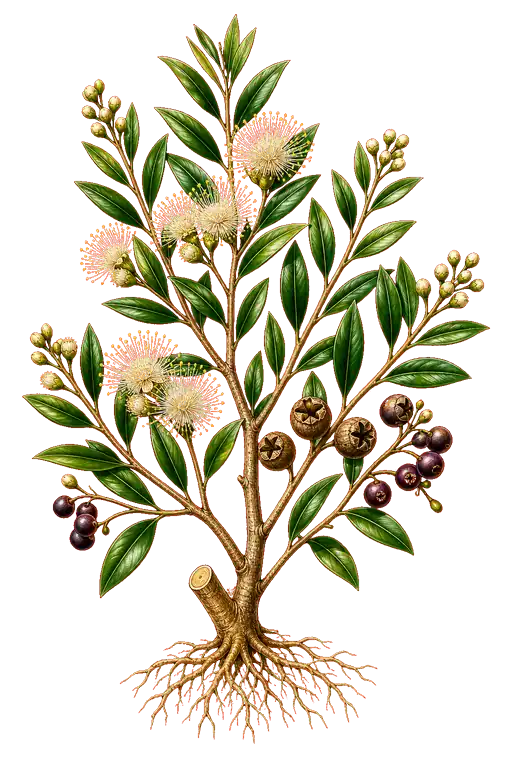
Myrtaceae
Myrtle/Eucalyptus family
Malay Jamun belongs to the Myrtaceae family.
The illustration represents the family — not necessarily this exact species.
Explore the Myrtaceae familySnap it. Know it.
Point your camera at Malay Jamun or any plant and SASYA identifies it instantly — on-device, offline, and private.
Common plant problems
If you are starting from symptoms instead of a diagnosis, use the plant disease symptom checker to narrow the cause before treating.
All plant problem & care guidesMore in Myrtaceae
View all MyrtaceaeSources: GBIF — Syzygium malaccense (India distribution & vernacular names) (CC BY 4.0) · Wikipedia — Syzygium malaccense (background/comprehension only) (CC BY-SA 4.0)