
Majith / Indian Madder
Rubia cordifolia
- Habit
- Climber
- Found in India
- Uttarakhand, Maharashtra, Karnataka & more
- Flowering
- August-February
How to identify Majith
Identify Majith by combining habit, leaf characters, flower or fruit details, location, and its family pattern. Do not rely on one feature alone.
- Look for a climber habit.
- Check the distinctive field mark: Roots used as a traditional red dye (Indian madder).
- Confirm leaf arrangement: Whorled.
- Confirm leaf shape: Lanceolate.
- Confirm flower colour: Green.
- Confirm flower arrangement: Panicle.
- In season, compare flowering and fruiting time: August-February.
Plant Details
- Scientific name
- Rubia cordifolia
- Genus
- Rubia
- Family
- Rubiaceae
- Habit
- Climber
- Habitat
- Semi-evergreen and moist deciduous forests
- Habitat type
- Forest
- Native to
- Paleotropics
- Distribution
- India, Africa, Siberia, Mangolia, China, Japan, Afghanistan, Pakistan, India, Vietnam, Malaysia, Europe
- Found in India
- Uttarakhand, Maharashtra, Karnataka, Himachal Pradesh, Tamil Nadu, Jammu & Kashmir, Meghalaya, Punjab, Arunachal Pradesh, Kerala, Mizoram, Sikkim, West Bengal, Nagaland
- Flowering & fruiting
- August-February
- Conservation status
- Not Evaluated (NE)
Leaf characters
- Leaf arrangement
- WhorledrecordedThree or more leaves arise from the same point around the stem.“The evergreen leaves are usually lanceolate or ovate and are 1.5–4 cm long and 0.5–1.5 cm broad, produced in whorls of 4-8 starlike around the central stem.” — Wikipedia, CC BY-SA 4.0
- Leaf shape
- LanceolaterecordedLong and narrow, tapering to a point, like a lance head.“The evergreen leaves are usually lanceolate or ovate and are 1.5–4 cm long and 0.5–1.5 cm broad, produced in whorls of 4-8 starlike around the central stem.” — Wikipedia, CC BY-SA 4.0
- Leaf surface
- Hirsute (coarsely hairy)recorded
Typical of the family
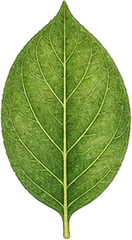
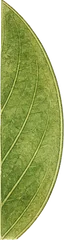
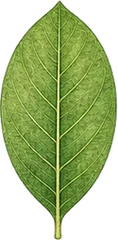
Characters marked “recorded” are for Majith itself; the rest are typical of the Rubiaceae family.
Flower & fruit characters
- Flower colour
- GreenrecordedGreen or greenish
- Flower arrangement
- PaniclerecordedA branching cluster of clusters.“The flowers are small (3–5 mm across), with five pale yellow petals, in dense racemes, arranged in a panicle.” — Wikipedia, CC BY-SA 4.0
Typical of the family
- Flower symmetry
- Actinomorphic (radially symmetrical)
- Inflorescence
- Cyme
- Fruit
- Berry
Characters marked “recorded” are for Majith itself; the rest are typical of the Rubiaceae family — flowering plants only.
Local Names
- Hindi
- मजीठ Majith, मञ्जिष्ठा Manjishtha, munjeet, munjistha
- Nepali
- मजिठो Majitho
- Bengali
- মঞ্জিঠ Manjith, মঞ্জিষ্ঠা Manjistha
- Tamil
- மஞ்சிட்டி Mancitti
- Telugu
- మంజిష్ఠ Manjishta, మంజిష్ఠ
- Kannada
- ಇಷ್ಟಮಧು Ishtamadhu, ಮಂಜಿಷ್ಠ Manjishta, ಸಿರಗತ್ತಿ Siragatthi
- Malayalam
- ചൊവ്വല്ലിക്കൊടി Chovvallikkodi, മഞ്ചട്ടി Manchatti, ശീവള്ളിക്കൊടി Sheevallikkodi
- Marathi
- इट्टा Itta, मंजिष्ठ Manjishta
About Majith
A member of the Rubiaceae family, Indian Madder (Rubia cordifolia) is a climber. In India it has been recorded in Uttarakhand, Maharashtra, Karnataka and 11 other states. It grows in semi-evergreen and moist deciduous forests. Flowering and fruiting run from August to February.
Uses
It is long used in traditional medicine and a source of dye or tannin. Those medicinal uses are traditional attributions, not medical advice.
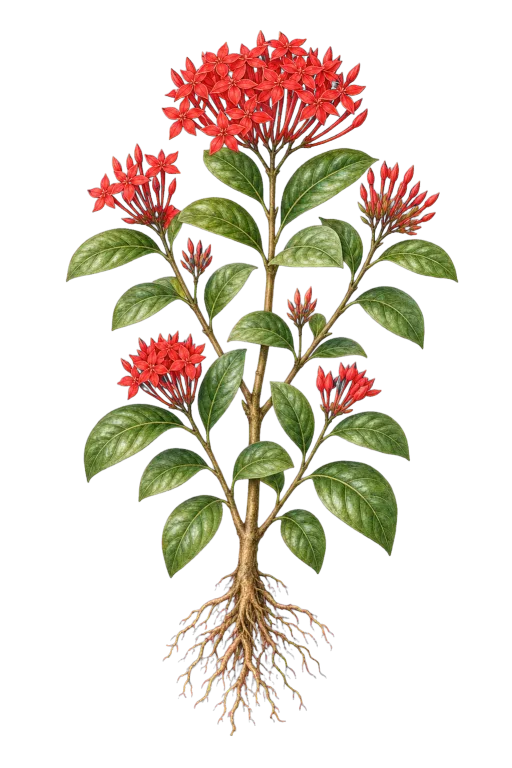
Rubiaceae
Coffee/Madder family
Majith belongs to the Rubiaceae family.
The illustration represents the family — not necessarily this exact species.
Explore the Rubiaceae familySnap it. Know it.
Point your camera at Majith or any plant and SASYA identifies it instantly — on-device, offline, and private.
Common plant problems
If you are starting from symptoms instead of a diagnosis, use the plant disease symptom checker to narrow the cause before treating.
All plant problem & care guides