
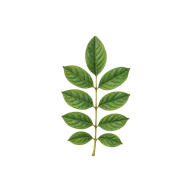
As recorded for Pygmy Date Palm
Phoenix roebelenii
Pygmy Date Palm
- Habit
- Palm
- Found in India
- Karnataka, Rajasthan, Uttar Pradesh & more
Toxicity & contact hazards
What the sources report, with their scope intact. A missing rating stays unknown; a non-toxic listing doesn’t rule out irritation, injury or other hazards.
Reported toxicity
ASPCA lists pygmy date palm as non-toxic to dogs, cats and horses.
Thorns & prickles
Lower leaflets are modified into very sharp spines at the leaf base; handle leaves with care.
Ecology & growing context
- Native status · Kew WCVP
- WCVP records it as introduced in Assam Kew dataset ↗︎
Kew WCVP dataset; accepted-name match. Dataset matching is separate from an individual regional review. Recorded worldwide native range: China (Yunnan) to N. Indo-China.
- Explore nearby plants
- Karnataka →Rajasthan →Uttar Pradesh →
Occurrence records show where a plant has been recorded; they do not establish that it is native there. Compare local habitat and growing conditions when choosing plants for a garden.
How to identify Pygmy Date Palm
Identify Pygmy Date Palm by combining habit, leaf characters, flower or fruit details, location, and its family pattern. Do not rely on one feature alone.
- Look for a palm habit.
- Check the distinctive field mark: Small ornamental dwarf date palm.
- Confirm leaf type: Pinnately compound.
- Confirm flower colour: Yellow.
- Confirm fruit type: Drupe.
- In India, compare location records such as Karnataka, Rajasthan, Uttar Pradesh, Gujarat and nearby regions.
- Confirm it sits within the Arecaceae family pattern, then compare close relatives before deciding it is Pygmy Date Palm.
Plant Details
Leaf characters
- Leaf type
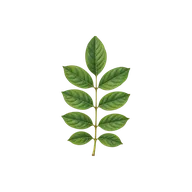
- Pinnately compoundrecordedLeaflets are arranged in rows along a central stalk, like a feather.“The leaves are 60–120 cm (24–47 in) long, pinnate, with around 100 leaflets arranged in a single plane (unlike the related P.” — Wikipedia, CC BY-SA 4.0
Typical of the family
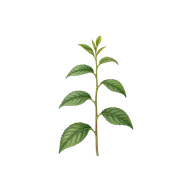

Characters marked “recorded” are for Pygmy Date Palm itself; the rest are typical of the Arecaceae family.
Flower & fruit characters
- Flower colour
- Yellowrecorded“The flowers are small, yellowish, produced on a 45 cm (18 in) inflorescence.” — Wikipedia, CC BY-SA 4.0
- Fruit type
- DruperecordedA fleshy fruit with a single hard stone/pit enclosing the seed.“The fruit is an edible 1 cm drupe resembling a small, thin-fleshed date.” — Wikipedia, CC BY-SA 4.0
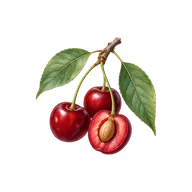
Typical of the family
- Inflorescence
- Panicle
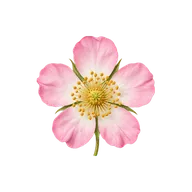
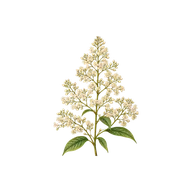
Characters marked “recorded” are for Pygmy Date Palm itself; the rest are typical of the Arecaceae family — flowering plants only.
About Pygmy Date Palm
A member of the Arecaceae family, Pygmy Date Palm (Phoenix roebelenii) is a palm. In India it has been recorded in Karnataka, Rajasthan, Uttar Pradesh and 5 other states.
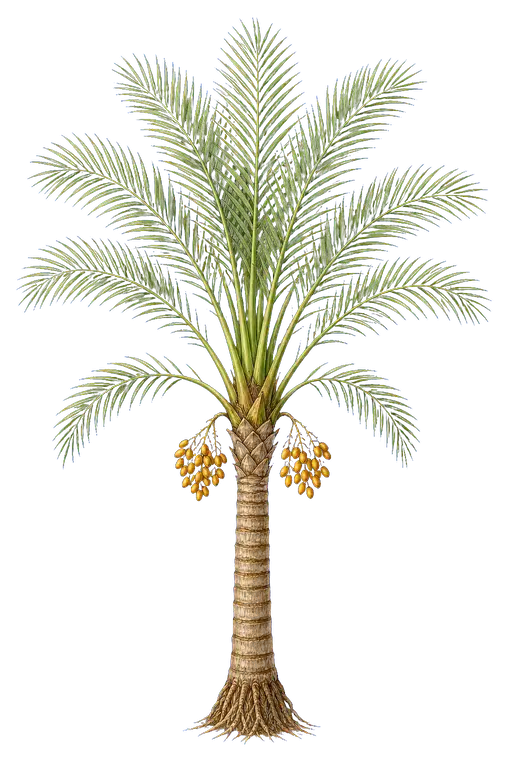
Arecaceae
Palm family
Pygmy Date Palm belongs to the Arecaceae family.
The illustration represents the family — not necessarily this exact species.
Explore the Arecaceae familySnap it. Know it.
Point your camera at Pygmy Date Palm or any plant and SASYA identifies it instantly — on-device, offline, and private.
Common plant problems
If you are starting from symptoms instead of a diagnosis, use the plant disease symptom checker to narrow the cause before treating.
All plant problem & care guides