
Rambutan
Nephelium lappaceum
- Habit
- Tree
- Found in India
- Kerala, Karnataka, Tamil Nadu
- Flowering
- March-November
How to identify Rambutan
Identify Rambutan by combining habit, leaf characters, flower or fruit details, location, and its family pattern. Do not rely on one feature alone.
- Look for a tree habit.
- Check the distinctive field mark: Bright red fruit covered in soft spines (rambutan).
- Confirm leaf arrangement: Alternate.
- Confirm leaf type: Pinnately compound.
- Confirm flower arrangement: Panicle.
- Confirm fruit surface: Hairy.
- In season, compare flowering and fruiting time: March-November.
Plant Details
- Scientific name
- Nephelium lappaceum
- Genus
- Nephelium
- Family
- Sapindaceae
- Habit
- Tree
- Native to
- Thailand, Malaysia, China
- Found in India
- Kerala, Karnataka, Tamil Nadu
- Flowering & fruiting
- March-November
- Conservation status
- Not Evaluated (NE)
Leaf characters
- Leaf arrangement
- AlternaterecordedOne leaf per node, arranged in a spiral or zigzag up the stem.“The leaves are alternate, 14–30 cm (6–12 in) long, pinnate, with three to eleven leaflets, each leaflet 5–15 cm (2–6 in) wide and 3–10 cm (1.2–3.9 in) broad with an entire margin.” — Wikipedia, CC BY-SA 4.0
- Leaf type
- Pinnately compoundrecordedLeaflets are arranged in rows along a central stalk, like a feather.“The leaves are alternate, 14–30 cm (6–12 in) long, pinnate, with three to eleven leaflets, each leaflet 5–15 cm (2–6 in) wide and 3–10 cm (1.2–3.9 in) broad with an entire margin.” — Wikipedia, CC BY-SA 4.0
- Leaf margin
- EntirerecordedA smooth, unbroken edge with no teeth or notches.“The leaves are alternate, 14–30 cm (6–12 in) long, pinnate, with three to eleven leaflets, each leaflet 5–15 cm (2–6 in) wide and 3–10 cm (1.2–3.9 in) broad with an entire margin.” — Wikipedia, CC BY-SA 4.0
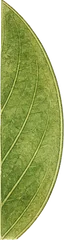
Typical of the family
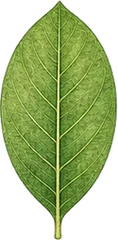
Characters marked “recorded” are for Rambutan itself; the rest are typical of the Sapindaceae family.
Flower & fruit characters
- Flower arrangement
- PaniclerecordedA branching cluster of clusters.“The flowers are small, 2.5–5 mm (0.1–0.2 in), apetalous, discoidal, and borne in erect terminal panicles 15–30 cm (6–12 in) wide.” — Wikipedia, CC BY-SA 4.0
- Fruit surface
- HairyrecordedCovered in visible hairs or fuzz.
Typical of the family
- Flower symmetry
- Actinomorphic (radially symmetrical)
- Inflorescence
- Panicle
- Fruit
- Capsule
Characters marked “recorded” are for Rambutan itself; the rest are typical of the Sapindaceae family — flowering plants only.
Local Names
- Telugu
- రాంబూటన్
- Bengali
- রামবুটান
- Sinhala
- රඹුටන්
About Rambutan
Rambutan (Nephelium lappaceum) belongs to the Sapindaceae family, where it grows as a tree. In India it has been recorded in Kerala, Karnataka and Tamil Nadu. Flowering and fruiting run from March to November.
Uses
Locally it is grown for parts that are eaten, long used in traditional medicine and planted as an ornamental. Those medicinal uses are traditional attributions, not medical advice.
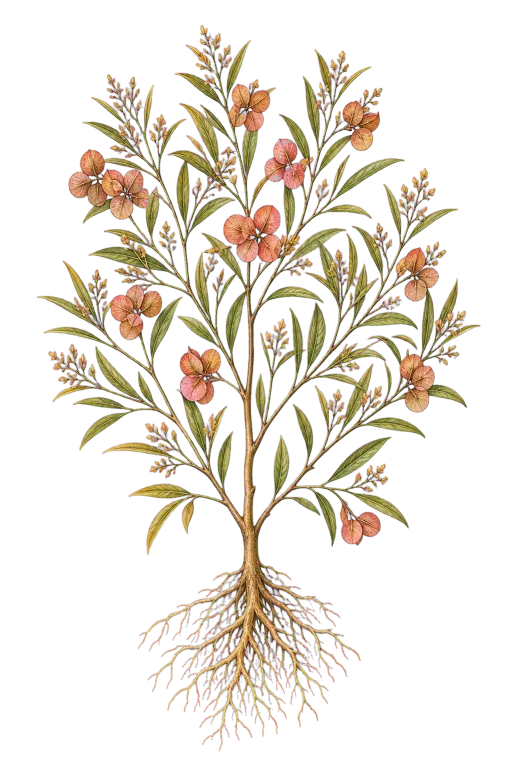
Sapindaceae
Soapberry/Lychee family
Rambutan belongs to the Sapindaceae family.
The illustration represents the family — not necessarily this exact species.
Explore the Sapindaceae familySnap it. Know it.
Point your camera at Rambutan or any plant and SASYA identifies it instantly — on-device, offline, and private.
Common plant problems
If you are starting from symptoms instead of a diagnosis, use the plant disease symptom checker to narrow the cause before treating.
All plant problem & care guides