
Kanphuta / Balloon-Vine Heart-Seed
Cardiospermum halicacabum
Also known as Heart's Pea, Balloon Vine, Blister Creeper, Heart Seed
- Habit
- Climber
- Found in India
- Tamil Nadu, Maharashtra, Karnataka & more
- Flowering
- July-February
How to identify Kanphuta
Identify Kanphuta by combining habit, leaf characters, flower or fruit details, location, and its family pattern. Do not rely on one feature alone.
- Look for a climber habit.
- Check the distinctive field mark: Papery inflated balloon-shaped seed capsules.
- Confirm leaf arrangement: Opposite.
- Confirm leaf type: Pinnately compound.
- Confirm fruit surface: Inflated (balloon-like).
- In season, compare flowering and fruiting time: July-February.
- In India, compare location records such as Tamil Nadu, Maharashtra, Karnataka, Kerala and nearby regions.
Plant Details
- Scientific name
- Cardiospermum halicacabum
- Genus
- Cardiospermum
- Family
- Sapindaceae
- Habit
- Climber
- Habitat
- Moist deciduous forests, also in scrub jungle and plains
- Distribution
- India, Sri Lanka, Pakistan, Tropical and Sub-tropical America, Molucca
- Found in India
- Tamil Nadu, Maharashtra, Karnataka, Kerala, Telangana, Rajasthan, Andhra Pradesh, Gujarat, West Bengal, Assam, Odisha, Chhattisgarh, Andaman & Nicobar Islands, Uttarakhand, Bihar, Jharkhand, Puducherry, Arunachal Pradesh, Delhi, Goa, Himachal Pradesh, Jammu & Kashmir, Madhya Pradesh, Meghalaya, Uttar Pradesh
- Flowering & fruiting
- July-February
- Conservation status
- Not Evaluated (NE)
Leaf characters
- Leaf arrangement
- OppositerecordedTwo leaves arise from the stem at the same point, facing each other.“The opposite leaflets are 1 to 2 cm long and the terminal leaflets are 4 to 6 cm long.” — Wikipedia, CC BY-SA 4.0
- Leaf type
- Pinnately compoundrecordedLeaflets are arranged in rows along a central stalk, like a feather.“The 5 to 6 cm long, triangular foliage leaves distributed on the stem are divided into a petiole and pinnate leaf blade.” — Wikipedia, CC BY-SA 4.0
- Leaf margin
- ToothedrecordedA saw-like or jagged edge (serrate or dentate).“The leaf margins are serrated.” — Wikipedia, CC BY-SA 4.0
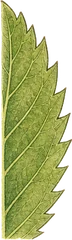
Typical of the family

Characters marked “recorded” are for Kanphuta itself; the rest are typical of the Sapindaceae family.
Flower & fruit characters
- Fruit surface
- Inflated (balloon-like)recorded
Typical of the family
- Flower symmetry
- Actinomorphic (radially symmetrical)
- Inflorescence
- Panicle
- Fruit
- Capsule
Characters marked “recorded” are for Kanphuta itself; the rest are typical of the Sapindaceae family — flowering plants only.
Local Names
- Hindi
- कानफूटा Kanphuta, कपालफोड़ी Kapalphodi
- Nepali
- ज्योतिष्मती Jyotishmati, कपाल फोडी Kapaal Phodi, केश लहरा Kesh Lahara
- Bengali
- শিবঝুল
- Tamil
- கொற்றவன் Korravan, முடக்கொற்றான் Mutakkorran, முடக்கொத்தான்
- Telugu
- బుడ్డకాకర Buddakakara, జ్యోతిష్మతి Jyotishmati
- Kannada
- ಅಗ್ನಿಬಳ್ಳಿ Agniballi, ಬೆಕ್ಕಿನ ಬುಡ್ಡೆ ಗಿಡ Bekkina Budde Gida, ಬೆಕ್ಕಿನ ತೊಡ್ಡಿನ ಬಳ್ಳಿ Bekkina Toddina Balli
- Malayalam
- ജ്യോതിഷ്മതി Jyotishmati, കറുത്തകുന്നി Karuttakunni, പാലുരുവം Paluruvam
- Marathi
- कानफुटी Kanphuti, कपाळ फोडी Kapal Phodi
- Sinhala
- වැල් පෙනෙල
Kanphuta in India
This climbing herb, known as कानफूटा Kanphuta (Hindi), கொற்றவன் Korravan (Tamil), బుడ్డకాకర Buddakakara (Telugu), ಅಗ್ನಿಬಳ್ಳಿ Agniballi (Kannada), ജ്യോതിഷ്മതി Jyotishmati (Malayalam), कानफुटी Kanphuti (Marathi), is a common sight scrambling over hedges and fences. Cardiospermum halicacabum is found across Tamil Nadu, Maharashtra, Karnataka, Kerala, Telangana, Rajasthan, often on disturbed or waste ground.
Uses
It's mostly noticed as a common wild climber rather than cultivated for any purpose, though its papery, inflated fruit are sometimes used decoratively, and the plant has a history of traditional folk use in some regions.
How to Identify Kanphuta
A slender climbing vine with tendrils and finely divided, toothed compound leaves. Small white four-petalled flowers are followed by the plant's most distinctive feature: a papery, inflated, balloon-like capsule that rattles when shaken, containing small black seeds each marked with a pale heart-shaped patch.
Frequently Asked Questions
- What is Balloon-vine heart-seed called in different Indian languages?
- कानफूटा Kanphuta (Hindi); கொற்றவன் Korravan (Tamil); బుడ్డకాకర Buddakakara (Telugu); ಅಗ್ನಿಬಳ್ಳಿ Agniballi (Kannada); ജ്യോതിഷ്മതി Jyotishmati (Malayalam); कानफुटी Kanphuti (Marathi); শিবঝুল (Bengali).
- Why is it called 'balloon vine'?
- Its seed capsule is a thin, papery, inflated pod that looks and feels like a small balloon, rattling with loose seeds inside when shaken.
- What's distinctive about its seeds?
- Each small black seed carries a pale, heart-shaped marking, which is the source of the plant's scientific name Cardiospermum, meaning 'heart seed'.
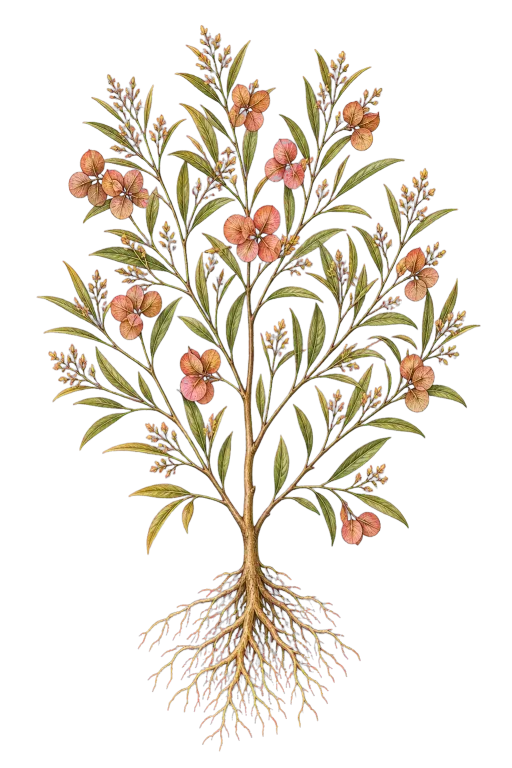
Sapindaceae
Soapberry/Lychee family
Kanphuta belongs to the Sapindaceae family.
The illustration represents the family — not necessarily this exact species.
Explore the Sapindaceae familySnap it. Know it.
Point your camera at Kanphuta or any plant and SASYA identifies it instantly — on-device, offline, and private.
Common plant problems
If you are starting from symptoms instead of a diagnosis, use the plant disease symptom checker to narrow the cause before treating.
All plant problem & care guidesMore in Sapindaceae
View all SapindaceaeSources: GBIF — Cardiospermum halicacabum (India distribution & vernacular names) (CC BY 4.0) · Wikipedia — Cardiospermum halicacabum (background/comprehension only) (CC BY-SA 4.0)