
Theepani / Tipan
Allophylus cobbe
- Habit
- Tree
- Found in India
- Maharashtra, Tamil Nadu, Karnataka & more
- Flowering
- May-January
How to identify Theepani
Identify Theepani by combining habit, leaf characters, flower or fruit details, location, and its family pattern. Do not rely on one feature alone.
- Look for a tree habit.
- Confirm leaf type: Trifoliate (three leaflets).
- Confirm leaf shape: Obovate.
- Confirm fruit type: Drupe.
- In season, compare flowering and fruiting time: May-January.
- In India, compare location records such as Maharashtra, Tamil Nadu, Karnataka, Meghalaya and nearby regions.
- Confirm it sits within the Sapindaceae family pattern, then compare close relatives before deciding it is Theepani.
Plant Details
- Scientific name
- Allophylus cobbe
- Genus
- Allophylus
- Family
- Sapindaceae
- Habit
- Tree
- Habitat
- Moist deciduous forests and semi-Evergreen forests, also in sacred groves
- Habitat type
- Forest
- Distribution
- India, Sri Lanka, Southeast Asia
- Found in India
- Maharashtra, Tamil Nadu, Karnataka, Meghalaya, Andaman & Nicobar Islands, Assam, Kerala, Manipur, Sikkim, West Bengal, Arunachal Pradesh, Goa, Nagaland, Tripura
- Flowering & fruiting
- May-January
- Conservation status
- Not Evaluated (NE)
Leaf characters
- Leaf type
- Trifoliate (three leaflets)recorded
- Leaf shape
- ObovaterecordedEgg-shaped but broader near the tip rather than the base.“The leaflet blades are acuminate, obovate or elliptic, with pointed tips and cuneate bases, and the margins may be crenate towards the distal end.” — Wikipedia, CC BY-SA 4.0
- Leaf margin
- ToothedrecordedA saw-like or jagged edge (serrate or dentate).“The leaflet blades are acuminate, obovate or elliptic, with pointed tips and cuneate bases, and the margins may be crenate towards the distal end.” — Wikipedia, CC BY-SA 4.0
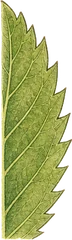
Typical of the family
- Arrangement
- Alternate
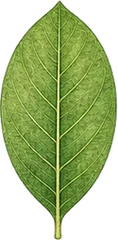
Characters marked “recorded” are for Theepani itself; the rest are typical of the Sapindaceae family.
Flower & fruit characters
- Fruit type
- DruperecordedA fleshy fruit with a single hard stone/pit enclosing the seed.“The resulting fruit are a glabrous red drupe measuring from 4 to 16 mm (0.2 to 0.6 in) in diameter, containing a single large seed.” — Wikipedia, CC BY-SA 4.0
Typical of the family
- Flower symmetry
- Actinomorphic (radially symmetrical)
- Inflorescence
- Panicle
- Fruit
- Capsule
Characters marked “recorded” are for Theepani itself; the rest are typical of the Sapindaceae family — flowering plants only.
Local Names
- Bengali
- Rakhalphul, রাখালচিতা
- Tamil
- sirusalle, perrakudikai
- Telugu
- Erra avalu, Guvva gutti, Salli kunkudu
- Kannada
- ಎರ್ವಾಲ Ervaala, ಕಸಬಳ್ಳಿ Kasaballi, ಸಿಡಿಸಾಲೆ Sidisaale
- Malayalam
- molago-maram, mukkannanpezhu
- Marathi
- Theepani, thivana
About Theepani
Tipan (Allophylus cobbe) belongs to the Sapindaceae family, where it grows as a tree. In India it has been recorded in Maharashtra, Tamil Nadu, Karnataka and 11 other states. It grows in moist deciduous forests and semi-Evergreen forests, also in sacred groves. Flowering and fruiting run from May to January.
Uses
Locally it is long used in traditional medicine. Those medicinal uses are traditional attributions, not medical advice.
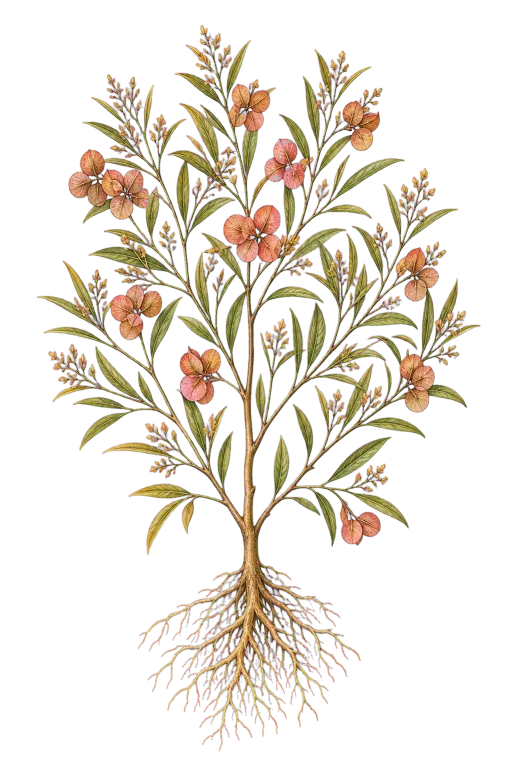
Sapindaceae
Soapberry/Lychee family
Theepani belongs to the Sapindaceae family.
The illustration represents the family — not necessarily this exact species.
Explore the Sapindaceae familySnap it. Know it.
Point your camera at Theepani or any plant and SASYA identifies it instantly — on-device, offline, and private.
Common plant problems
If you are starting from symptoms instead of a diagnosis, use the plant disease symptom checker to narrow the cause before treating.
All plant problem & care guides