
Bartundi / Noni Tree
Morinda citrifolia
Also known as Great Morinda, Indian Mulberry
- Habit
- Tree
- Found in India
- Kerala, Tamil Nadu, Maharashtra & more
- Flowering
- January-October
How to identify Bartundi
Identify Bartundi by combining habit, leaf characters, flower or fruit details, location, and its family pattern. Do not rely on one feature alone.
- Look for a tree habit.
- Check the distinctive field mark: Foul-smelling yellow fruit used medicinally (noni).
- Confirm leaf arrangement: Opposite.
- Confirm leaf surface: Glabrous.
- Confirm flower colour: White.
- Confirm fruit type: Drupe.
- In season, compare flowering and fruiting time: January-October.
Plant Details
- Scientific name
- Morinda citrifolia
- Genus
- Morinda
- Family
- Rubiaceae
- Habit
- Tree
- Habitat
- Waste lands, deciduos and mangrove forests
- Distribution
- India, Sri Lanka, Malay Archipelago, Australia, Pacific Islands
- Found in India
- Kerala, Tamil Nadu, Maharashtra, Karnataka, Goa, Andhra Pradesh, Telangana, West Bengal, Lakshadweep, Andaman & Nicobar Islands, Gujarat, Mizoram, Odisha, Puducherry, Sikkim, Tripura
- Flowering & fruiting
- January-October
- Conservation status
- Not Evaluated (NE)
Leaf characters
- Leaf arrangement
- OppositerecordedTwo leaves arise from the stem at the same point, facing each other.“The large glabrous leaves are arranged in opposite pairs on the twigs, reaching up to 25 cm (10 in) long by 13 cm wide.” — Wikipedia, CC BY-SA 4.0
- Leaf surface
- GlabrousrecordedSmooth, hairless.“The large glabrous leaves are arranged in opposite pairs on the twigs, reaching up to 25 cm (10 in) long by 13 cm wide.” — Wikipedia, CC BY-SA 4.0
Typical of the family
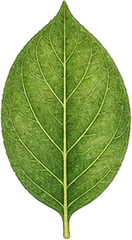


Characters marked “recorded” are for Bartundi itself; the rest are typical of the Rubiaceae family.
Flower & fruit characters
- Flower colour
- Whiterecorded
- Fruit type
- DruperecordedA fleshy fruit with a single hard stone/pit enclosing the seed.“The fruit is a multiple fruit consisting of fused drupes, each containing four seeds.” — Wikipedia, CC BY-SA 4.0
Typical of the family
- Flower symmetry
- Actinomorphic (radially symmetrical)
- Inflorescence
- Cyme
- Fruit
- Berry
Characters marked “recorded” are for Bartundi itself; the rest are typical of the Rubiaceae family — flowering plants only.
Local Names
- Hindi
- Bartundi बारतुन्डी
- Bengali
- Hurdi, আউছ গাছ, Morinda citrifolia
- Tamil
- Nuna, வெண்நுணா
- Telugu
- Mogali, తొగరు చెట్టు
- Kannada
- ತಗಸೆಮಡ್ಡಿ Tagase maddi, ಮಡ್ಡಿ Maddi, ನುಣಾಮರ Nunaa mara
- Malayalam
- Mannapavatta, മഞ്ഞപ്പാവുട്ട, Morinda pubescens
- Marathi
- Nagakunda, नोनी
- Sinhala
- අහු
About Bartundi
Noni Tree (Morinda citrifolia) is a tree in the Rubiaceae family. In India it has been recorded in Kerala, Tamil Nadu, Maharashtra and 13 other states. It grows in waste lands, deciduos and mangrove forests. Flowering and fruiting run from January to October.
Uses
In practice it is grown for parts that are eaten, long used in traditional medicine and stripped for fibre used in rope and matting. Those medicinal uses are traditional attributions, not medical advice.
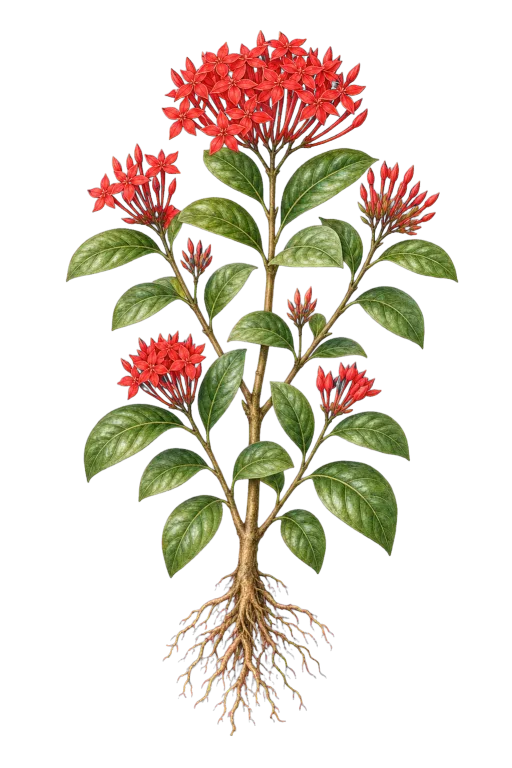
Rubiaceae
Coffee/Madder family
Bartundi belongs to the Rubiaceae family.
The illustration represents the family — not necessarily this exact species.
Explore the Rubiaceae familySnap it. Know it.
Point your camera at Bartundi or any plant and SASYA identifies it instantly — on-device, offline, and private.
Common plant problems
If you are starting from symptoms instead of a diagnosis, use the plant disease symptom checker to narrow the cause before treating.
All plant problem & care guides