
Bakul / Indian Medlar
Mimusops elengi
Also known as Bullet Wood Tree, Asian Bulletwood, Bakul Tree, Spanish Cherry
- Habit
- Tree
- Found in India
- Tamil Nadu, Maharashtra, Karnataka & more
- Flowering
- December-September
How to identify Bakul
Identify Bakul by combining habit, leaf characters, flower or fruit details, location, and its family pattern. Do not rely on one feature alone.
- Look for a tree habit.
- Check the distinctive field mark: Small fragrant star-shaped white flowers (bakul), used in garlands.
- Confirm leaf shape: Obovate (egg-shaped, broad at tip).
- Confirm leaf surface: Glabrous (smooth, hairless).
- Confirm flower colour: White.
- In season, compare flowering and fruiting time: December-September.
- In India, compare location records such as Tamil Nadu, Maharashtra, Karnataka, Telangana and nearby regions.
Plant Details
- Scientific name
- Mimusops elengi
- Genus
- Mimusops
- Family
- Sapotaceae
- Habit
- Tree
- Habitat
- Semi-evergreen and Evergreen forests, also grown in homesteads
- Habitat type
- Forest, Cultivated
- Native to
- India, Sri Lanka
- Distribution
- India, Sri Lanka, Hawaii, Northern Australia, New Caledonia
- Found in India
- Tamil Nadu, Maharashtra, Karnataka, Telangana, Gujarat, Kerala, West Bengal, Rajasthan, Madhya Pradesh, Delhi, Andhra Pradesh, Odisha, Uttar Pradesh, Goa, Uttarakhand, Assam, Arunachal Pradesh, Chandigarh, Himachal Pradesh
- Flowering & fruiting
- December-September
- Conservation status
- Not Evaluated (NE)
Leaf characters
- Leaf shape
- Obovate (egg-shaped, broad at tip)recorded
- Leaf surface
- Glabrous (smooth, hairless)recorded
Typical of the family
- Arrangement
- Alternate
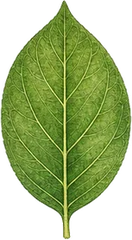


Characters marked “recorded” are for Bakul itself; the rest are typical of the Sapotaceae family.
Flower & fruit characters
- Flower colour
- Whiterecorded“The flowers are cream and hairy.” — Wikipedia, CC BY-SA 4.0
Typical of the family
- Flower symmetry
- Actinomorphic (radially symmetrical)
- Inflorescence
- Cyme
- Fruit
- Berry
Characters marked “recorded” are for Bakul itself; the rest are typical of the Sapotaceae family — flowering plants only.
Local Names
- Hindi
- Maulsari मौलसरी, Maulsari,बकुल bakul
- Nepali
- मौलसरी Maulasari, लंकासानी Lankaasaani, वकुल पुष्प Vakul Pushpa, Lankaasaani
- Bengali
- Bakul, বকুল
- Tamil
- மகிழம்பூ Magizhamboo, Magadam, Magizhamboo, Mahila
- Telugu
- మగిళిమర్రి, స్పానిష్ చెర్రీ
- Kannada
- ರಂಜ Ranja, ರಂಜಿ Ranji, ರಂಜೆ Ranje, Baaglu
- Malayalam
- Elengi, Elangi, Ilanni, Bakulam
- Marathi
- Bakuli, Bacul, Wayoli
- Gujarati
- Barsoli
- Urdu
- Kirakulia
Bakul in India
This tree, known as Maulsari मौलसरी (Hindi), மகிழம்பூ Magizhamboo (Tamil), మగిళిమర్రి (Telugu), ರಂಜ Ranja (Kannada), Elengi (Malayalam), Bakuli (Marathi), is grown across India for its small, intensely fragrant flowers. Mimusops elengi is found across Tamil Nadu, Maharashtra, Karnataka, Gujarat, Telangana, Kerala, both wild and planted in gardens and temple grounds.
Uses
Its small star-shaped flowers keep their fragrance even after falling and drying, and are traditionally gathered each morning for garlands and scented sachets; the ripe orange-red fruit is edible.
How to Identify Bakul
A dense evergreen tree with glossy, wavy-margined leaves. Flowers are small, cream-white and star-shaped with a strong, sweet fragrance, followed by egg-shaped fruit that ripens from green to orange-red.
Frequently Asked Questions
- What is Indian Medlar called in different Indian languages?
- Maulsari मौलसरी (Hindi); மகிழம்பூ Magizhamboo (Tamil); మగిళిమర్రి (Telugu); ರಂಜ Ranja (Kannada); Elengi (Malayalam); Bakuli (Marathi); Bakul (Bengali); Barsoli (Gujarati).
- Why are bakul flowers collected from the ground?
- Bakul flowers keep their fragrance even after they fall and dry, so they're traditionally gathered from beneath the tree each morning rather than picked.
- Is the fruit of the bakul tree edible?
- Yes — the ripe orange-red fruit is edible, though the flowers are the main reason the tree is grown.
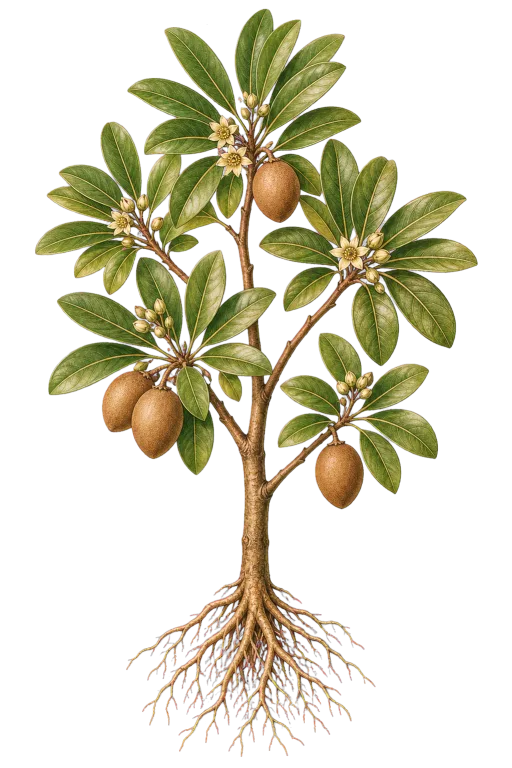
Sapotaceae
Sapodilla/Chicle family
Bakul belongs to the Sapotaceae family.
The illustration represents the family — not necessarily this exact species.
Explore the Sapotaceae familySnap it. Know it.
Point your camera at Bakul or any plant and SASYA identifies it instantly — on-device, offline, and private.
Common plant problems
If you are starting from symptoms instead of a diagnosis, use the plant disease symptom checker to narrow the cause before treating.
All plant problem & care guidesMore in Sapotaceae
View all SapotaceaeSources: GBIF — Mimusops elengi (India distribution & vernacular names) (CC BY 4.0) · Wikipedia — Mimusops elengi (background/comprehension only) (CC BY-SA 4.0)