
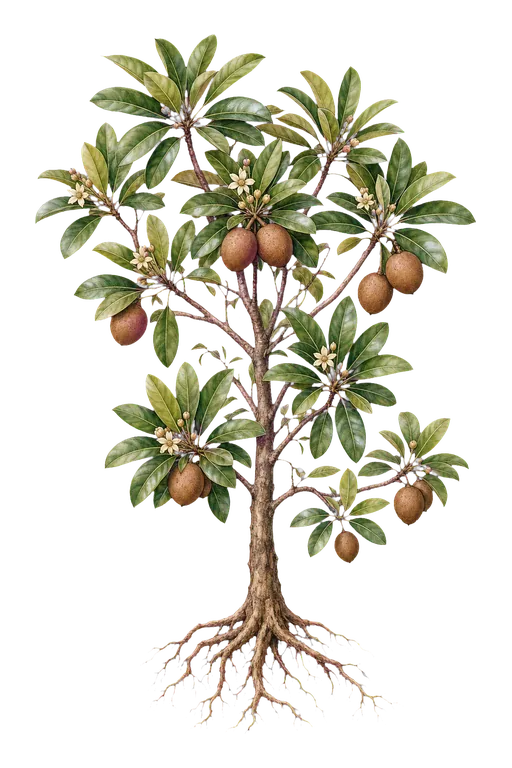
Chikoo / Sapota
Manilkara zapota
Also known as Nasebarry, Sapodilla
- Habit
- Tree
- Found in India
- Tamil Nadu, Kerala, Maharashtra & more
- Flowering
- Throughout the year
How to identify Chikoo
Identify Chikoo by combining habit, leaf characters, flower or fruit details, location, and its family pattern. Do not rely on one feature alone.
- Look for a tree habit.
- Check the distinctive field mark: Cultivated for sweet edible sapodilla fruit.
- Confirm leaf shape: Ovate.
- Confirm leaf margin: Entire.
- Confirm flower colour: White.
- Use the leaf pattern: alternate leaf arrangement, simple leaves, entire leaf margins, pinnate venation.
- In season, compare flowering and fruiting time: Throughout the year.
Plant Details
- Scientific name
- Manilkara zapota
- Genus
- Manilkara
- Family
- Sapotaceae
- Habit
- Tree
- Native to
- South America
- Distribution
- Tropics of the world
- Found in India
- Tamil Nadu, Kerala, Maharashtra, Andhra Pradesh, Karnataka, Telangana, West Bengal, Rajasthan, Gujarat, Madhya Pradesh, Delhi, Odisha, Puducherry, Assam, Uttarakhand, Bihar, Chhattisgarh, Daman & Diu, Goa, Himachal Pradesh, Jharkhand, Manipur, Uttar Pradesh
- Flowering & fruiting
- Throughout the year
Leaf characters
- Leaf shape
- OvaterecordedEgg-shaped, broader near the base.“Its leaves are elliptic to ovate 6–15 cm (2–6 in) long with entire margins on 1–3 cm (0–1 in) long petioles;” — Wikipedia, CC BY-SA 4.0
- Leaf margin
- EntirerecordedA smooth, unbroken edge with no teeth or notches.“Its leaves are elliptic to ovate 6–15 cm (2–6 in) long with entire margins on 1–3 cm (0–1 in) long petioles;” — Wikipedia, CC BY-SA 4.0
- Leaf surface
- Glabrous (smooth, hairless)recorded

Typical of the family
- Arrangement
- Alternate
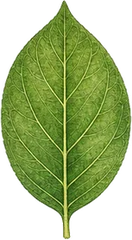

Characters marked “recorded” are for Chikoo itself; the rest are typical of the Sapotaceae family.
Flower & fruit characters
- Flower colour
- Whiterecorded“The white flowers are inconspicuous and bell-like, with a six-lobed corolla.” — Wikipedia, CC BY-SA 4.0
Typical of the family
- Flower symmetry
- Actinomorphic (radially symmetrical)
- Inflorescence
- Cyme
- Fruit
- Berry
Characters marked “recorded” are for Chikoo itself; the rest are typical of the Sapotaceae family — flowering plants only.
Local Names
- Hindi
- चीकू Chikoo,चीकू chiku
- Bengali
- সপেটা sapeta, সফেদা
- Tamil
- Chappotta, சீமையிலுப்பை Chimaiyiluppai, சப்போட்டா
- Telugu
- సీమ ఇప్పచెట్టు Sima ippacettu, సపోట, సపోటా
- Kannada
- ಚಿಕ್ಕು Chikku, ಸಪೋಟ Sapota, ಸಪೋಟ
- Malayalam
- സപ്പോട്ട
- Marathi
- चिकू chiku, चिक्कू chikku, चिक्कू
- Gujarati
- ચીકુ
- Odia
- ସପେଟା
- Punjabi
- ਚੀਕੂ
- Sinhala
- සැපදිල්ලා
Chikoo in India
Chiku is a popular sweet orchard fruit across warm India — चीकू Chikoo (Hindi), Chappotta (Tamil), సీమ ఇప్పచెట్టు Sima ippacettu (Telugu), ಚಿಕ್ಕು Chikku (Kannada), സപ്പോട്ട (Malayalam), चिकू chiku (Marathi). Manilkara zapota, from tropical America, is now widely grown and recorded across Andhra Pradesh, Tamil Nadu, Kerala, Maharashtra, Karnataka, Telangana.
Uses
The soft brown fruit is eaten fresh and blended into milkshakes, prized for its malty, caramel-like sweetness. The tree's latex (chicle) was the original base for chewing gum, and the hard wood is durable; minor parts have attributed traditional uses.
How to Identify Chikoo
A slow-growing evergreen with glossy, dark, elliptic leaves clustered at the branch tips. The round to oval fruit has a sandy-brown, slightly scurfy skin and grainy sweet brown flesh with a few shiny black seeds; unripe fruit is full of sticky white latex.
Frequently Asked Questions
- What is Sapota called in different Indian languages?
- चीकू Chikoo (Hindi); Chappotta (Tamil); సీమ ఇప్పచెట్టు Sima ippacettu (Telugu); ಚಿಕ್ಕು Chikku (Kannada); സപ്പോട്ട (Malayalam); चिकू chiku (Marathi); সপেটা sapeta (Bengali); ચીકુ (Gujarati); ସପେଟା (Odia); ਚੀਕੂ (Punjabi).
- How do you tell if a chiku is ripe?
- Ripe sapota gives slightly to the touch and is sweet and grainy inside; unripe fruit is hard, chalky and full of sticky latex.
- Is chewing gum linked to the sapota tree?
- Yes — the tree's milky latex, chicle, was the traditional natural base for chewing gum.
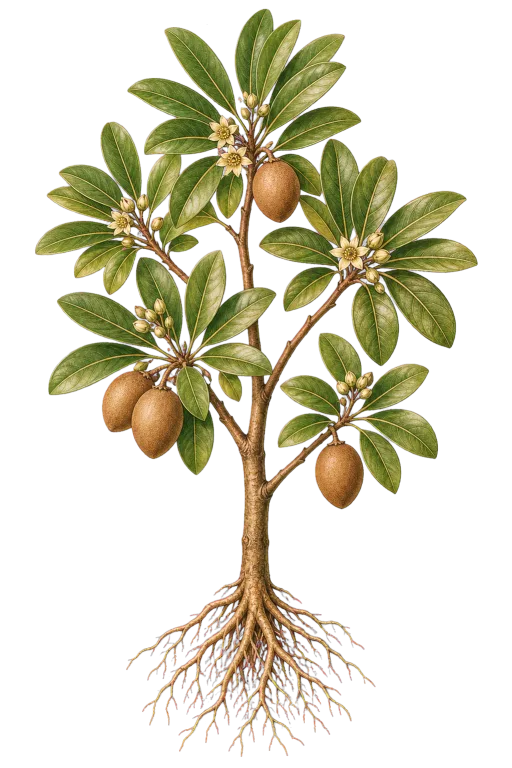
Sapotaceae
Sapodilla/Chicle family
Chikoo belongs to the Sapotaceae family.
The illustration represents the family — not necessarily this exact species.
Explore the Sapotaceae familySnap it. Know it.
Point your camera at Chikoo or any plant and SASYA identifies it instantly — on-device, offline, and private.
Common plant problems
If you are starting from symptoms instead of a diagnosis, use the plant disease symptom checker to narrow the cause before treating.
All plant problem & care guidesMore in Sapotaceae
View all SapotaceaeSources: GBIF — Manilkara zapota (India distribution & vernacular names) (CC BY 4.0) · iNaturalist — Manilkara zapota (regional names, India observations) (CC BY 4.0) · Wikipedia — Manilkara zapota (background/comprehension only) (CC BY-SA 4.0)