
Kendaala / Longan Eyeball Tree
Dimocarpus longan
Also known as Longan Tree
- Habit
- Tree
- Found in India
- Tamil Nadu, Karnataka, Maharashtra & more
- Flowering
- February-September
How to identify Kendaala
Identify Kendaala by combining habit, leaf characters, flower or fruit details, location, and its family pattern. Do not rely on one feature alone.
- Look for a tree habit.
- Check the distinctive field mark: Cultivated for sweet edible longan fruit.
- Confirm leaf arrangement: Alternate.
- Confirm leaf type: Pinnately compound.
- Confirm flower colour: Yellow.
- Confirm flower arrangement: Panicle.
- In season, compare flowering and fruiting time: February-September.
Plant Details
- Scientific name
- Dimocarpus longan
- Genus
- Dimocarpus
- Family
- Sapindaceae
- Habit
- Tree
- Habitat
- Evergreen and semi-Evergreen forests
- Habitat type
- Forest
- Native to
- Indo-Malaysia, Southeast Asia
- Distribution
- India, Sri Lanka, Myanmar, Thailand, Cambodia, Vietnam, China, Taiwan, Hainan, Malay Peninsula, Java, Borneo, Phillipines, New Guinea
- Found in India
- Tamil Nadu, Karnataka, Maharashtra, Kerala, West Bengal, Assam, Andaman & Nicobar Islands, Meghalaya, Arunachal Pradesh, Chhattisgarh
- Flowering & fruiting
- February-September
- Conservation status
- Not Evaluated (NE)
Leaf characters
- Leaf arrangement
- AlternaterecordedOne leaf per node, arranged in a spiral or zigzag up the stem.“The leaves are pinnately compounded and alternate.” — Wikipedia, CC BY-SA 4.0
- Leaf type
- Pinnately compoundrecordedLeaflets are arranged in rows along a central stalk, like a feather.“The leaves are pinnately compounded and alternate.” — Wikipedia, CC BY-SA 4.0
- Leaf shape
- OblongrecordedLonger than wide with roughly parallel sides, the ends rounded.“The leaves are oblong and blunt-tipped, usually 10–20 centimetres (4–8 in) long and 5 cm (2 in) wide.” — Wikipedia, CC BY-SA 4.0
- Leaf margin
- UndulaterecordedA wavy, rippled edge.“There are 6 to 9 pairs of leaflets per leaf and the upper surface is wavy and a dark, glossy-green.” — Wikipedia, CC BY-SA 4.0
Typical of the family
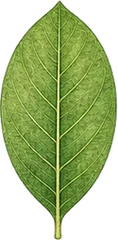
Characters marked “recorded” are for Kendaala itself; the rest are typical of the Sapindaceae family.
Flower & fruit characters
- Flower colour
- Yellowrecorded“The longan tree produces light-yellow inflorescences at the end of branches.” — Wikipedia, CC BY-SA 4.0
- Flower arrangement
- PaniclerecordedA branching cluster of clusters.“The inflorescence is commonly called a panicle;” — Wikipedia, CC BY-SA 4.0
Typical of the family
- Flower symmetry
- Actinomorphic (radially symmetrical)
- Inflorescence
- Panicle
- Fruit
- Capsule
Characters marked “recorded” are for Kendaala itself; the rest are typical of the Sapindaceae family — flowering plants only.
Local Names
- Bengali
- আঁশফল Ashphol, কাঠলিচু, আঁশফল
- Tamil
- நுரை, தேன்கூழா
- Kannada
- ಕೆಂದಾಳ Kendaala, ಕನೆಕೆಂದಾಳ Kanekendaala, ಕೆನೆಕೆಂದಾಳ Kenekandaala
- Malayalam
- പെമ്പുന്ന Pempunna, പെമ്പൂവം Pempuuvam, പൊരിപുന്ന Poripunna
- Marathi
- ओंब Omb, उंब Umb
About Kendaala
Longan Eyeball tree (Dimocarpus longan) belongs to the Sapindaceae family, where it grows as a tree. In India it has been recorded in Tamil Nadu, Karnataka, Maharashtra and 7 other states. It grows in evergreen and semi-Evergreen forests. Flowering and fruiting run from February to September.
Uses
Locally it is grown for parts that are eaten, long used in traditional medicine and stripped for fibre used in rope and matting. Those medicinal uses are traditional attributions, not medical advice.
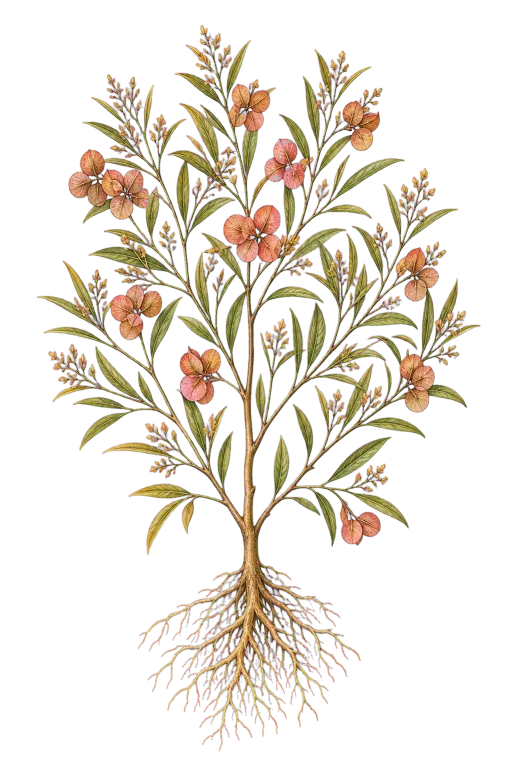
Sapindaceae
Soapberry/Lychee family
Kendaala belongs to the Sapindaceae family.
The illustration represents the family — not necessarily this exact species.
Explore the Sapindaceae familySnap it. Know it.
Point your camera at Kendaala or any plant and SASYA identifies it instantly — on-device, offline, and private.
Common plant problems
If you are starting from symptoms instead of a diagnosis, use the plant disease symptom checker to narrow the cause before treating.
All plant problem & care guides