

Semal / Silk Cotton Tree
Bombax ceiba
Also known as Malabar Semul
- Habit
- Tree
- Found in India
- Maharashtra, Tamil Nadu, Rajasthan & more
- Flowering
- February-May
How to identify Semal
Identify Semal by combining habit, leaf characters, flower or fruit details, location, and its family pattern. Do not rely on one feature alone.
- Look for a tree habit.
- Check the distinctive field mark: Bright red flowers before leaves emerge.
- Confirm flower colour: Red.
- Use the leaf pattern: alternate leaf arrangement, compound leaves, entire leaf margins, palmate venation.
- In season, compare flowering and fruiting time: February-May.
- In India, compare location records such as Maharashtra, Tamil Nadu, Rajasthan, Karnataka and nearby regions.
- Confirm it sits within the Bombacaceae family pattern, then compare close relatives before deciding it is Semal.
Plant Details
- Scientific name
- Bombax ceiba
- Genus
- Bombax
- Family
- Bombacaceae
- Habit
- Tree
- Native to
- Tropical Asia
- Distribution
- India, Tropical Asia extending to East-West New Guinea
- Found in India
- Maharashtra, Tamil Nadu, Rajasthan, Karnataka, Uttar Pradesh, Delhi, West Bengal, Kerala, Uttarakhand, Gujarat, Madhya Pradesh, Assam, Chhattisgarh, Andhra Pradesh, Goa, Telangana, Bihar, Odisha, Himachal Pradesh, Arunachal Pradesh, Jharkhand, Haryana, Manipur, Chandigarh, Meghalaya, Mizoram, Sikkim, Tripura, Dadra & Nagar Haveli, Daman & Diu, Jammu & Kashmir, Punjab
- Flowering & fruiting
- February-May
- Conservation status
- Not Evaluated (NE)
Leaf characters
- Arrangement
- Alternate
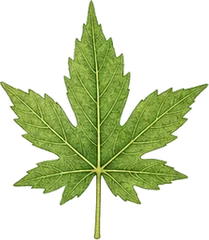
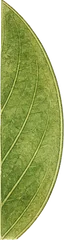
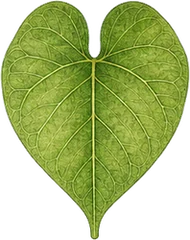
Characters marked “recorded” are for Semal itself; the rest are typical of the Bombacaceae family.
Flower & fruit characters
- Flower colour
- Redrecorded
Characters marked “recorded” are for Semal itself; the rest are typical of the Bombacaceae family — flowering plants only.
Local Names
- Hindi
- शाल्मली Shalmali, सेमल Semal
- Nepali
- सिमल Simal
- Bengali
- লাল শিমুল
- Tamil
- Sittan, Sanmali, கோங்கு
- Telugu
- బూరుగ
- Kannada
- ಕೆಂಪುಬೂರಗ Kempu booraga, ಕೆಂಪುಬೂರುಗ Kempu booruga, ಎಲವ Elava
- Malayalam
- Unnamurika, ഇലവ്, മുള്ളിലം
- Sanskrit
- शाल्मली
- Marathi
- काटेसावर
- Gujarati
- શીમળો
Semal in India
The semal lights up the late-winter landscape with large red flowers on bare branches — शाल्मली Shalmali (Hindi), Sittan (Tamil), బూరుగ (Telugu), ಕೆಂಪುಬೂರಗ Kempu booraga (Kannada), Unnamurika (Malayalam), काटेसावर (Marathi). Bombax ceiba is recorded across Maharashtra, Tamil Nadu, Rajasthan, Karnataka, Uttar Pradesh, NCT of Delhi, a giant of village groves and forests.
Uses
The silky floss from its pods (the 'silk cotton') is used to stuff pillows and mattresses, the young flowers and calyx are eaten as a vegetable in some regions, and parts of the tree feature in attributed traditional medicine. The flowers are a rich nectar source for birds.
How to Identify Semal
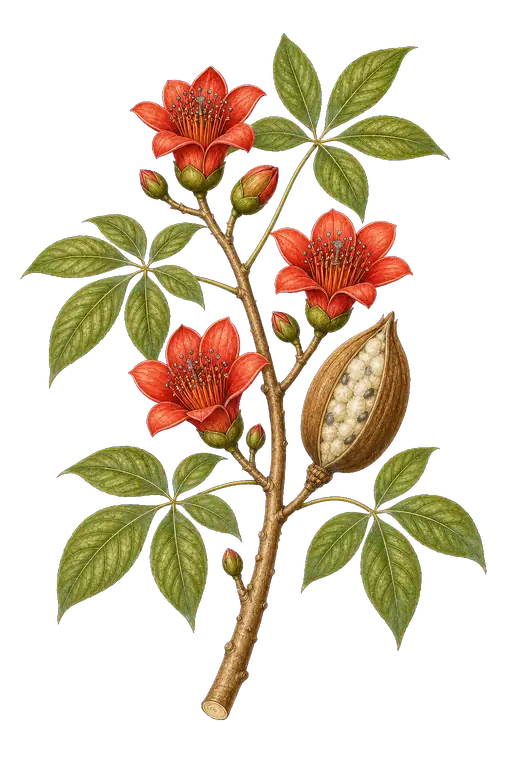
A tall tree with a straight trunk often armed with conical prickles and branches in distinct tiers. Large, fleshy, cup-shaped red flowers appear when the tree is leafless; the leaves are palmate with several finger-like leaflets, and the pods split to release cotton-like floss.
Frequently Asked Questions
- What is Silk Cotton Tree called in different Indian languages?
- शाल्मली Shalmali (Hindi); Sittan (Tamil); బూరుగ (Telugu); ಕೆಂಪುಬೂರಗ Kempu booraga (Kannada); Unnamurika (Malayalam); काटेसावर (Marathi); লাল শিমুল (Bengali); શીમળો (Gujarati); शाल्मली (Sanskrit).
- What is the cotton from the semal tree used for?
- The silky floss (semal cotton / kapok-like fibre) from its pods is traditionally used to stuff pillows, cushions and mattresses.
- When does the semal tree flower?
- Semal flowers in late winter to spring (around February–March) on leafless branches, making its big red blooms very conspicuous.
Bombacaceae
Bombax Or Kapok Family
Semal belongs to the Bombacaceae family.
The illustration represents the family — not necessarily this exact species.
Explore the Bombacaceae familySnap it. Know it.
Point your camera at Semal or any plant and SASYA identifies it instantly — on-device, offline, and private.
Common plant problems
If you are starting from symptoms instead of a diagnosis, use the plant disease symptom checker to narrow the cause before treating.
All plant problem & care guidesMore in Bombacaceae
View all BombacaceaeSources: GBIF — Bombax ceiba (India distribution & vernacular names) (CC BY 4.0) · iNaturalist — Bombax ceiba (regional names, India observations) (CC BY 4.0) · Wikipedia — Bombax ceiba (background/comprehension only) (CC BY-SA 4.0)