
Illustrative leaf, not this species
Pontederia crassipes
Jal Kumbhi / Common Water Hyacinth जल कुम्भी
Hindi name · See all regional names ↓
- Found in India
- Kerala, Tamil Nadu, Maharashtra & more
Jal Kumbhi in regional languages
Find the name you know, then compare it with the botanical profile. Columns list recorded aliases; they are not paired translations. A Latin spelling appears only when it is present in the source record.
| Language | Regional script | Recorded Latin spelling |
|---|---|---|
| Hindi | जल कुम्भी | Jal Kumbhi |
| Kannada | Not recorded | antara taavare, antaragange |
| Manipuri | ꯀꯕꯣꯛꯀꯥꯡ · ꯀꯕꯣꯀꯥꯡ | Kabokkang, Kabokang |
| Mizo | Not recorded | Dum-awr-puar |
| Nepali | जल कुम्भी | Jal Kumbhee |
| Sanskrit | जल कुम्भी | Jalakumbhi, Variparni |
| Tamil | Not recorded | Venkayattamarai |
| Telugu | Not recorded | Budaga tamara, Gurra pudekka moka |
See the original recorded names
- Hindi
- जल कुम्भी Jal Kumbhi
- Kannada
- antara taavare, antaragange
- Manipuri
- ꯀꯕꯣꯛꯀꯥꯡ Kabokkang, ꯀꯕꯣꯀꯥꯡ Kabokang
- Mizo
- Dum-awr-puar
- Nepali
- जल कुम्भी Jal Kumbhee
- Sanskrit
- जल कुम्भी Jalakumbhi, Variparni
- Tamil
- Venkayattamarai
- Telugu
- Budaga tamara, Gurra pudekka moka
Ecological pressure
Reports about this plant in particular places. Evidence from one region or a wider genus doesn’t establish the same effect everywhere.
Named in the 2023 national invasion study
- 01
Thick mats can strip water of oxygen and cause fish kills
Read source ↗︎ - 02
Fish production in West Bengal fell sharply as cover increased
Read source ↗︎ - 03
Blocks irrigation intakes and boat traffic
Read source ↗︎ - 04
Gives habitat to hosts and vectors of malaria and schistosomiasis
Read source ↗︎
Ecology & growing context
- Native status · Kew WCVP
- WCVP records it as introduced in Andaman Is., Assam, India Kew dataset ↗︎
Kew WCVP dataset; accepted-name match. Dataset matching is separate from an individual regional review. Recorded worldwide native range: S. Trop. America.
- Explore nearby plants
- Kerala →Tamil Nadu →Maharashtra →
Occurrence records show where a plant has been recorded; they do not establish that it is native there. Compare local habitat and growing conditions when choosing plants for a garden.
How to identify Jal Kumbhi
Identify Jal Kumbhi by combining habit, leaf characters, flower or fruit details, location, and its family pattern. Do not rely on one feature alone.
- Check the distinctive field mark: Free-floating with inflated bulbous leaf stalks and lavender flowers (water hyacinth).
- Confirm leaf shape: Ovate.
- Confirm flower colour: Pink.
- Confirm flower arrangement: Spike.
- In India, compare location records such as Kerala, Tamil Nadu, Maharashtra, West Bengal and nearby regions.
- Confirm it sits within the Pontederiaceae family pattern, then compare close relatives before deciding it is Jal Kumbhi.
Plant Details
- Scientific name
- Pontederia crassipes
- Genus
- Pontederia
- Family
- Pontederiaceae
- Found in India
- Kerala, Tamil Nadu, Maharashtra, West Bengal, Assam, Karnataka, Telangana, Uttar Pradesh, Uttarakhand, Odisha, Andhra Pradesh, Goa, Delhi, Gujarat, Rajasthan, Bihar, Arunachal Pradesh, Madhya Pradesh, Haryana, Chhattisgarh, Tripura, Puducherry, Punjab, Himachal Pradesh, Manipur, Jammu & Kashmir, Jharkhand, Meghalaya, Sikkim
- Conservation status
- Not Evaluated (NE)
Leaf characters
- Leaf shape
- OvaterecordedEgg-shaped, broader near the base.“With broad, thick, glossy, ovate leaves, water hyacinth may rise above the surface of the water as much as 1 m (3 ft) in height.” — Wikipedia, CC BY-SA 4.0
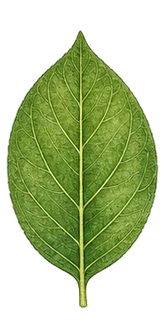
Characters marked “recorded” are for Jal Kumbhi itself; the rest are typical of the Pontederiaceae family.
Flower & fruit characters
- Flower colour
- Pinkrecorded“An erect stalk supports a single spike of 8–15 conspicuously attractive flowers, mostly lavender to pink in colour with six petals.” — Wikipedia, CC BY-SA 4.0
- Flower arrangement
- SpikerecordedFlowers arranged directly on a central stem without individual stalks.“An erect stalk supports a single spike of 8–15 conspicuously attractive flowers, mostly lavender to pink in colour with six petals.” — Wikipedia, CC BY-SA 4.0
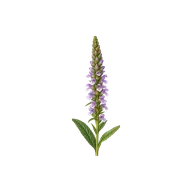
Characters marked “recorded” are for Jal Kumbhi itself; the rest are typical of the Pontederiaceae family — flowering plants only.
About Jal Kumbhi
Common water hyacinth (Pontederia crassipes) belongs to the Pontederiaceae family. In India it has been recorded in Kerala, Tamil Nadu, Maharashtra and 26 other states.
Uses
It is grown for parts that are eaten, cut for timber and furniture and stripped for fibre used in rope and matting. Parts of this plant are reported as poisonous — treat it as unsafe to eat and wash your hands after handling.
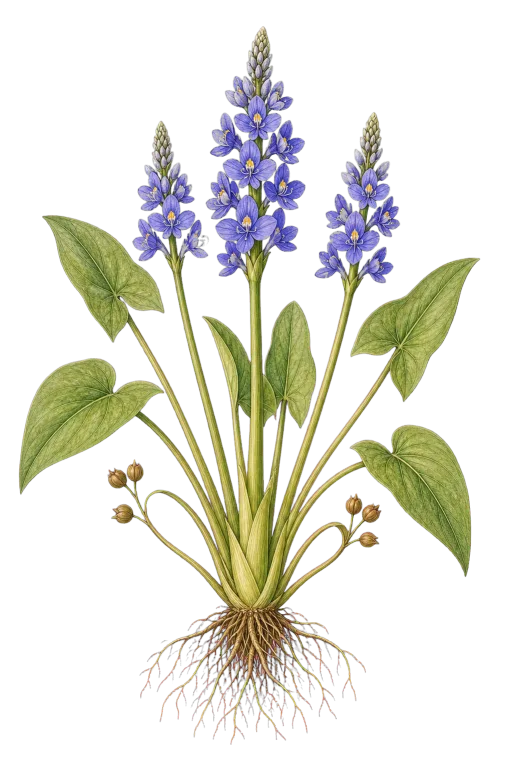
Pontederiaceae
Pickerel-Weed Family
Jal Kumbhi belongs to the Pontederiaceae family.
The illustration represents the family — not necessarily this exact species.
Explore the Pontederiaceae familySnap it. Know it.
Point your camera at Jal Kumbhi or any plant and SASYA identifies it instantly — on-device, offline, and private.
Common plant problems
If you are starting from symptoms instead of a diagnosis, use the plant disease symptom checker to narrow the cause before treating.
All plant problem & care guides