
Singapore Cherry
Muntingia calabura
Also known as Bird's Cherry, Cotton Candy Berry, Calabur, Jam Tree, Manzanil
- Habit
- Tree
- Found in India
- Karnataka, Maharashtra, Tamil Nadu & more
- Flowering
- Throughout the year
How to identify Singapore Cherry
Identify Singapore Cherry by combining habit, leaf characters, flower or fruit details, location, and its family pattern. Do not rely on one feature alone.
- Look for a tree habit.
- Check the distinctive field mark: Small sweet red edible cherry-like fruit (Singapore cherry).
- Confirm leaf arrangement: Alternate.
- Confirm leaf shape: Lanceolate.
- Confirm flower colour: White.
- Confirm flower arrangement: Solitary.
- In season, compare flowering and fruiting time: Throughout the year.
Plant Details
- Scientific name
- Muntingia calabura
- Genus
- Muntingia
- Family
- Elaeocarpaceae
- Habit
- Tree
- Habitat
- Garden plant
- Habitat type
- Cultivated
- Native to
- Tropical America
- Distribution
- Introduced in other tropics
- Found in India
- Karnataka, Maharashtra, Tamil Nadu, Telangana, Kerala, Andhra Pradesh, Gujarat, West Bengal, Odisha, Assam, Madhya Pradesh, Rajasthan, Goa, Puducherry, Chhattisgarh, Bihar, Lakshadweep, Delhi
- Flowering & fruiting
- Throughout the year
- Conservation status
- Not Evaluated (NE)
Leaf characters
- Leaf arrangement
- AlternaterecordedOne leaf per node, arranged in a spiral or zigzag up the stem.“The leaves are alternate, distichous, oblong or lanceolate, 4–15 cm long and 1–6 cm wide, with toothed margin and covered in short hairs.” — Wikipedia, CC BY-SA 4.0
- Leaf shape
- LanceolaterecordedLong and narrow, tapering to a point, like a lance head.“The leaves are alternate, distichous, oblong or lanceolate, 4–15 cm long and 1–6 cm wide, with toothed margin and covered in short hairs.” — Wikipedia, CC BY-SA 4.0
- Leaf margin
- ToothedrecordedA saw-like or jagged edge (serrate or dentate).“The leaves are alternate, distichous, oblong or lanceolate, 4–15 cm long and 1–6 cm wide, with toothed margin and covered in short hairs.” — Wikipedia, CC BY-SA 4.0

Typical of the family
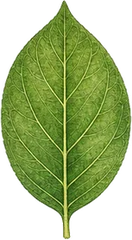
Characters marked “recorded” are for Singapore Cherry itself; the rest are typical of the Elaeocarpaceae family.
Flower & fruit characters
- Flower colour
- Whiterecorded“The flowers are small (up to 3 cm wide), solitary or in inflorescences of two or three flowers, with five lanceolate sepals, hairy, five obovate white petals, many stamens with yel” — Wikipedia, CC BY-SA 4.0
- Flower arrangement
- SolitaryrecordedA single flower borne alone, not in a cluster.“The flowers are small (up to 3 cm wide), solitary or in inflorescences of two or three flowers, with five lanceolate sepals, hairy, five obovate white petals, many stamens with yel” — Wikipedia, CC BY-SA 4.0
- Fruit type
- BerryrecordedA fleshy fruit with seeds embedded directly in the pulp, no central stone.“Its fruit is an edible berry about 1.5 cm in diameter and with smooth, thin skin;” — Wikipedia, CC BY-SA 4.0
Typical of the family
- Flower symmetry
- Actinomorphic (radially symmetrical)
- Fruit
- Drupe
Characters marked “recorded” are for Singapore Cherry itself; the rest are typical of the Elaeocarpaceae family — flowering plants only.
Local Names
- Tamil
- தேன் பழம் ten pazham, தேன் பழம், சிங்கப்பூர் செர்ரி
- Telugu
- Nakkaraegu
- Kannada
- ಗಸಗಸೆ ಹಣ್ಣಿನ ಮರ
- Malayalam
- ജമൈക്കൻ ചെറി
- Marathi
- Paanchara पांचारा
Singapore Cherry in India
This fast-growing tree, known as தேன் பழம் ten pazham (Tamil), Nakkaraegu (Telugu), ಗಸಗಸೆ ಹಣ್ಣಿನ ಮರ (Kannada), ജമൈക്കൻ ചെറി (Malayalam), Paanchara पांचारा (Marathi), produces small, sweet fruit popular with both people and birds. Muntingia calabura is found across Karnataka, Maharashtra, Tamil Nadu, Telangana, Kerala, Andhra Pradesh, often on roadsides and waste ground.
Uses
Its small, soft, sweet red fruit is eaten fresh, particularly enjoyed by children, and the tree's fast growth and dense canopy also make it a quick, if short-lived, shade tree.
How to Identify Singapore Cherry
A fast-growing tree with slightly asymmetrical, toothed, hairy leaves. Small white five-petalled flowers are followed by small round berries that ripen from green to red, with a soft, sweet, fig-like flesh full of tiny seeds.
Frequently Asked Questions
- What is Singapore cherry called in different Indian languages?
- தேன் பழம் ten pazham (Tamil); Nakkaraegu (Telugu); ಗಸಗಸೆ ಹಣ್ಣಿನ ಮರ (Kannada); ജമൈക്കൻ ചെറി (Malayalam); Paanchara पांचारा (Marathi).
- Is Singapore cherry a true cherry?
- No — despite the name, it's unrelated to true cherries (Prunus species); the name simply reflects its small, cherry-like fruit size and colour.
- How long does the tree live?
- It's fast-growing but relatively short-lived and brittle-wooded compared to many shade trees, often naturalising readily from its abundant seed.
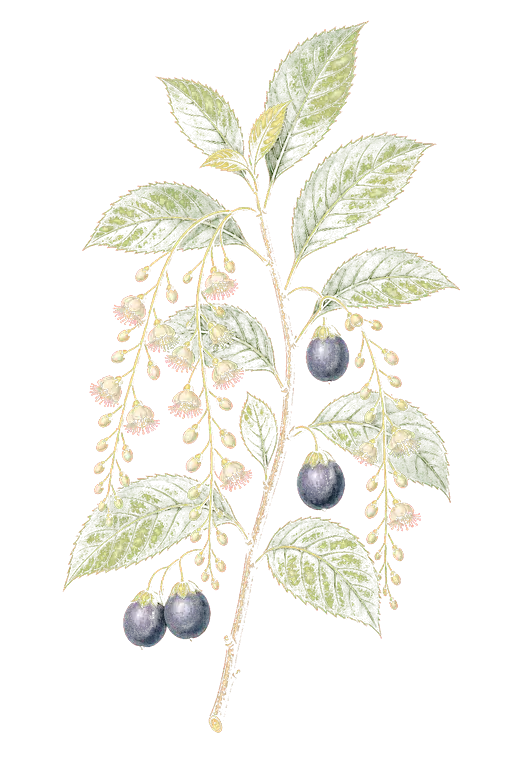
Elaeocarpaceae
Olivnut Family
Singapore Cherry belongs to the Elaeocarpaceae family.
The illustration represents the family — not necessarily this exact species.
Explore the Elaeocarpaceae familySnap it. Know it.
Point your camera at Singapore Cherry or any plant and SASYA identifies it instantly — on-device, offline, and private.
Common plant problems
If you are starting from symptoms instead of a diagnosis, use the plant disease symptom checker to narrow the cause before treating.
All plant problem & care guidesMore in Elaeocarpaceae
View all ElaeocarpaceaeSources: GBIF — Muntingia calabura (India distribution & vernacular names) (CC BY 4.0) · Wikipedia — Muntingia calabura (background/comprehension only) (CC BY-SA 4.0)